
A client with schizophrenia and cannabis use presents with both psychiatric and addiction needs. What planning implication follows from co-occurring disorders understanding?
Select an answer to reveal the explanation.
Short Explanation
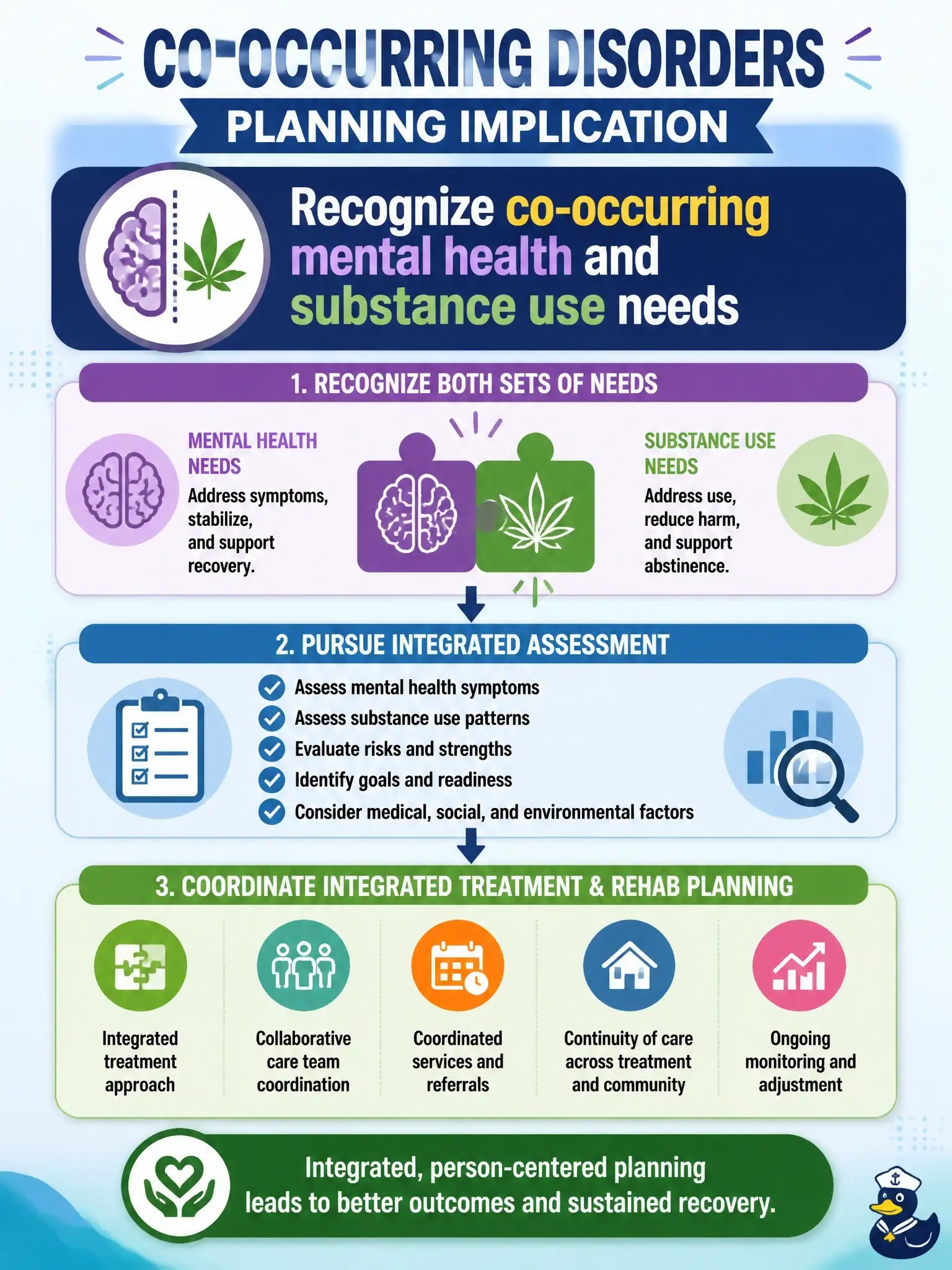
Two problems showing up in one person isn't a coin flip where you pick only one side. With schizophrenia and cannabis use, you need to recognize both needs and pursue integrated assessment and coordinated treatment–rehab planning.
Full Explanation
Schizophrenia with cannabis use illustrates co-occurring disorders: recognize both psychiatric and substance-use needs and pursue integrated assessment and coordinated treatment–rehab planning. Civic rehab outcomes worsen when either psychosis or addiction is ignored, minimized, or siloed without authorized information sharing among providers who share the same client. The approach that treats only cannabis use and assumes psychosis will resolve without mental health care fails because psychotic disorders require appropriate psychiatric treatment and rehab supports. The approach that treats only schizophrenia and ignores cannabis because addiction never affects psychiatric rehab fails because substance use can destabilize psychiatric rehab, medication adherence, and employment. The approach that plans separately with no information sharing because co-occurring conditions cannot be addressed together fails; co-occurring care models specifically call for coordination rather than parallel isolation. Exam caveat: integrated does not always mean one clinician does everything—it means shared formulation and coordinated plans across providers. Operational check: obtain releases, complete assessment covering both domains, align medication/SUD and vocational goals, schedule cross-provider updates when substance use or symptoms change, and educate the client on how the domains interact.