
A counselor coordinates with an outpatient SUD program so vocational goals do not sabotage early recovery. Which timing judgment is most sound?
Select an answer to reveal the explanation.
Short Explanation
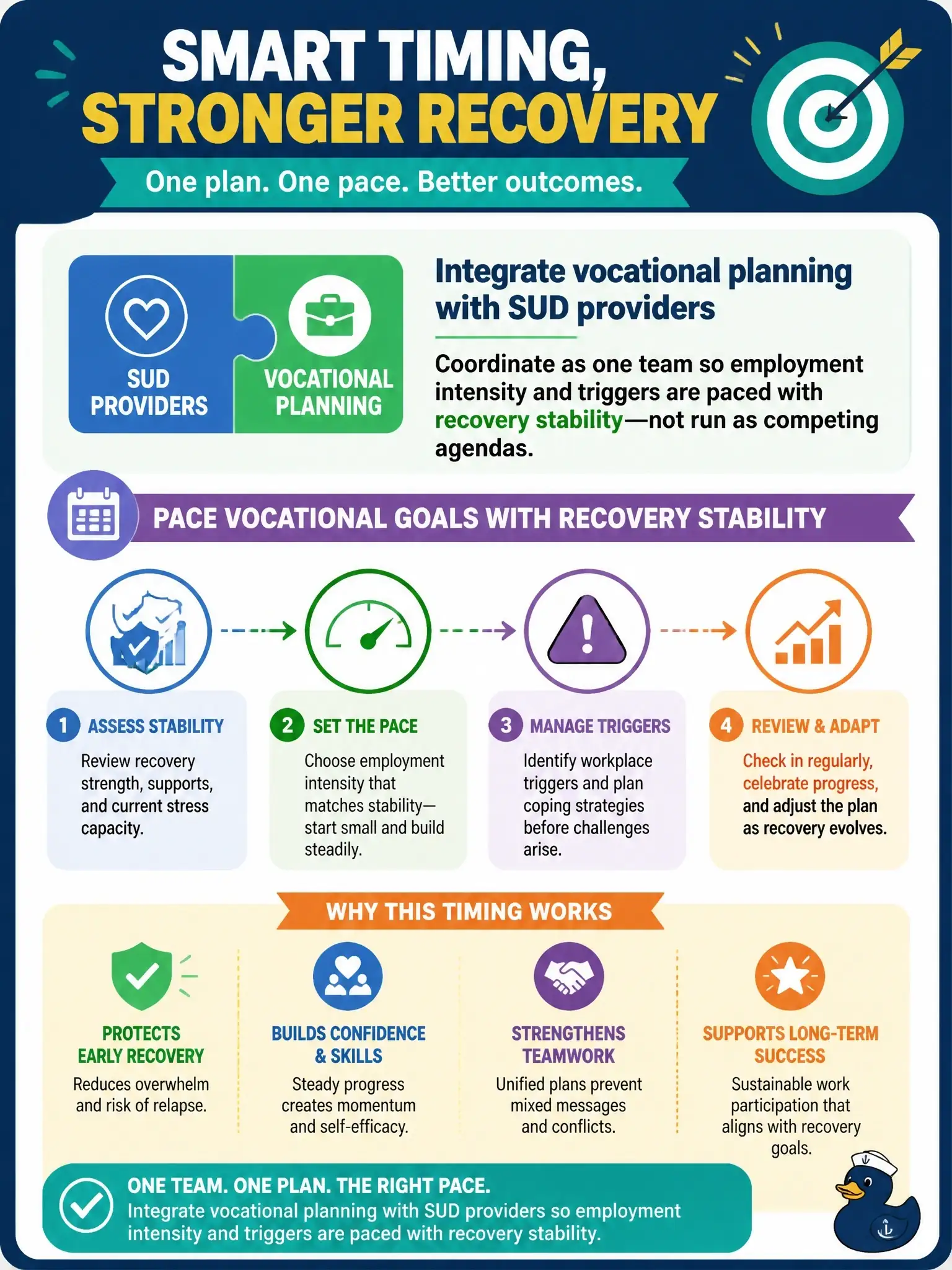
You shouldn't let early recovery and a sudden full-time job push become two trains on a collision course. Coordinate with the SUD team, pace work stress, and keep both tracks aimed at stability and a sustainable job instead of forcing an either/or.
Full Explanation
Coordinating with outpatient SUD care so vocational goals do not sabotage early recovery requires integrating vocational planning with SUD providers so employment intensity and triggers are paced with recovery stability rather than run as competing agendas. Civic systems serve whole people; treatment and VR should be collaborative and mutually informing, not mutually exclusive silos that force false choices.
Pushing full-time placement in week one regardless of treatment recommendations fails by concept as premature intensity that can elevate relapse risk and undermine both recovery and job retention. Ending all vocational discussion until five years of continuous abstinence fails as arbitrary exclusion from employment goals that many clients need for recovery capital. Requiring a choice of either SUD treatment or VR, never both, fails because integrated dual recovery and employment supports are often indicated.
Exam caveat: pacing is individualized—some clients tolerate earlier work with strong supports; the principle is integration with clinical guidance, not a fixed calendar myth. Operational check: hold joint planning with releases, identify workplace triggers, stage hours and job types, align counseling appointments with work schedules, and revisit intensity at agreed recovery milestones.