
A client with alcohol use disorder repeatedly arrives intoxicated to placement appointments. What is the most appropriate rehab counseling response?
Select an answer to reveal the explanation.
Short Explanation
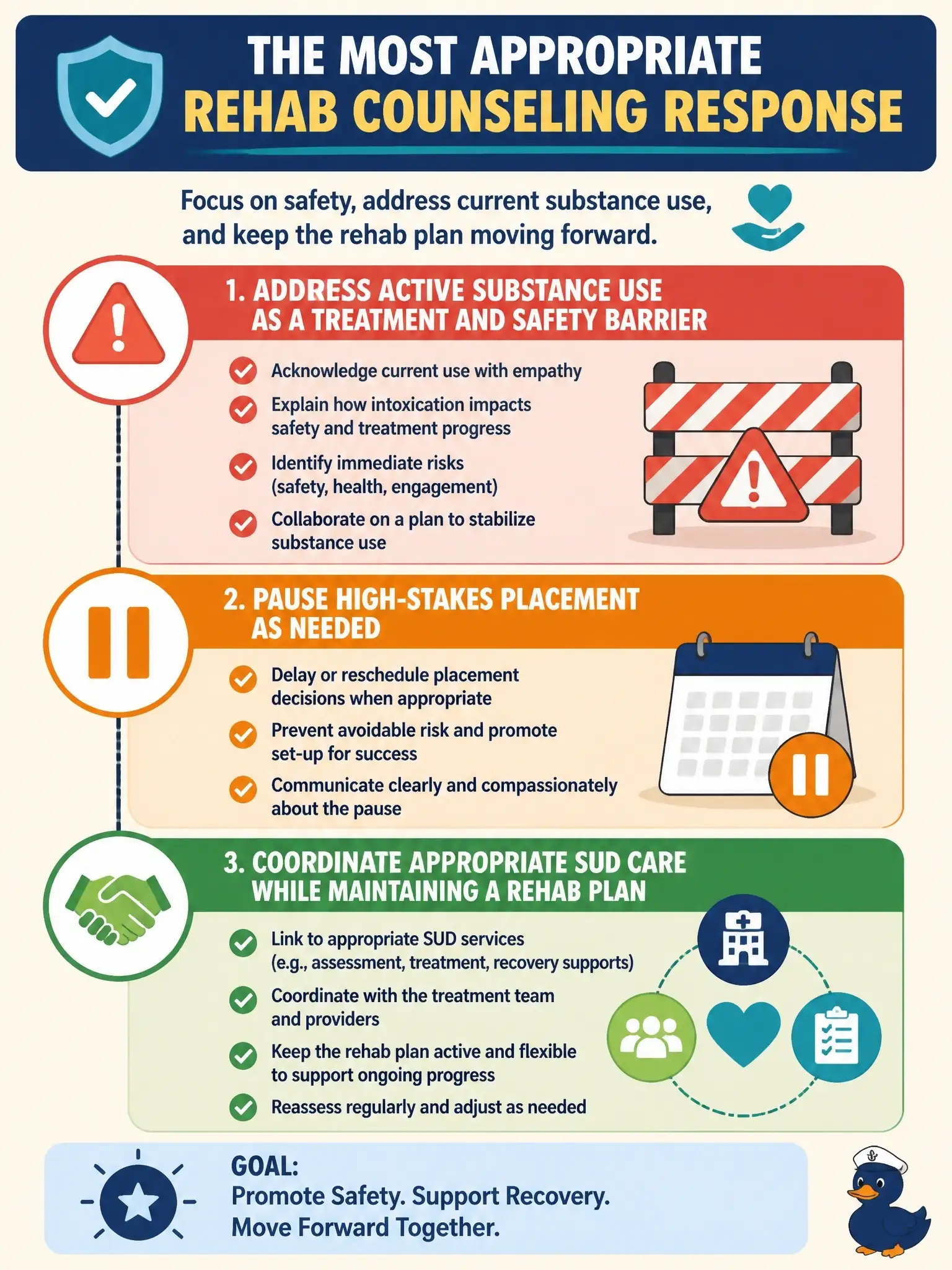
Showing up intoxicated to a placement meeting isn't a scheduling quirk — it's a flashing dashboard light. You don't floor it into an employer interview; you address safety and treatment, link to SUD help, and time vocational pushes so they don't wreck recovery or the job chance.
Full Explanation
When a client with alcohol use disorder repeatedly arrives intoxicated to placement appointments, the appropriate response is to address active substance use as a treatment and safety barrier, pause high-stakes placement as needed, and coordinate appropriate SUD care while maintaining a rehab plan. Civic employers, coworkers, and the client are harmed if counselors ignore intoxication to avoid awkward conversations or to protect placement numbers.
Ignoring intoxication and proceeding with employer interviews fails as unsafe and ethically negligent impression management. Permanently terminating all services after the first intoxicated arrival with no referral fails as punitive abandonment without a pathway to care. Providing alcohol at sessions to build rapport before job development fails as harmful and unethical enabling that worsens the disorder.
Exam caveat: pausing high-stakes placement does not mean forever closing the vocational door; sequence services with recovery supports and clear behavioral expectations. Operational check: do not proceed to employer contact while intoxicated, document the incident factually, arrange SUD assessment or referral, set sobriety expectations for appointments, and resume placement intensity as recovery stability allows.