
Person-centered reflective listening is used with a discouraged SSI applicant before setting vocational goals. What is the main counseling purpose of this technique here?
Select an answer to reveal the explanation.
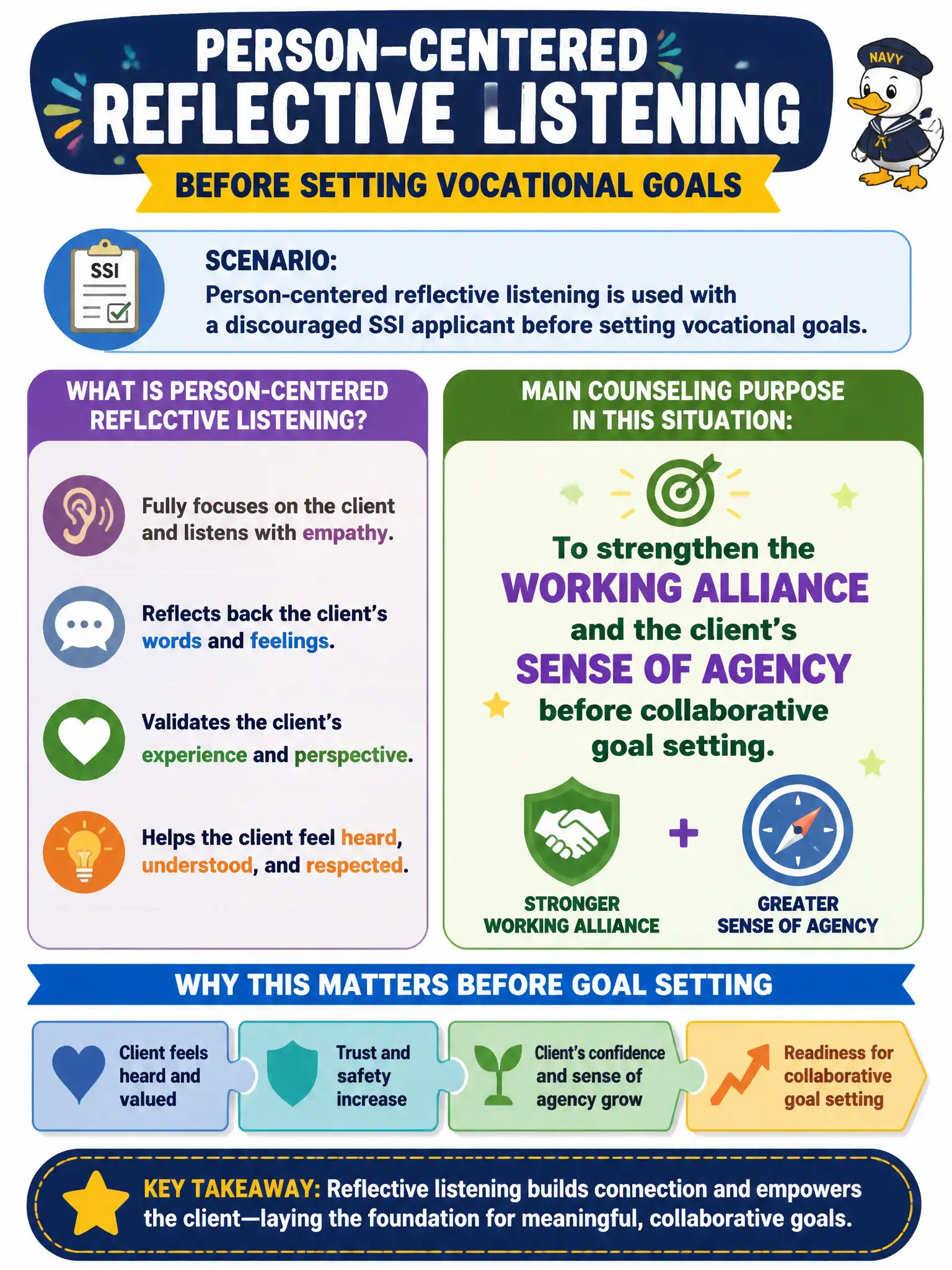
Short Explanation
When someone's flattened by the system, jumping straight into 'pick a job goal' can feel like yelling directions at a stalled car. Reflective listening fills a bit of gas — feeling heard rebuilds agency — so goal setting can be a shared drive, not a tow.
Full Explanation
Person-centered reflective listening with a discouraged SSI applicant before goal setting aims to strengthen the working alliance and the client’s sense of agency before collaborative vocational planning. Civic counselors often meet applicants whose prior systems contacts felt bureaucratic or shaming; empathy, unconditional positive regard operationalized through reflection, and careful pacing restore conditions for informed choice rather than coerced goal picking.
Using reflection as a setup to confront weekly until goals are chosen under pressure fails by concept as coercive and contrary to person-centered spirit. Completing paperwork silently without acknowledging affect fails by ignoring the relational purpose of reflective listening. Diagnosing personality disorders through reflection alone fails because reflective listening is not a standalone diagnostic method and overpathologizes discouragement.
Exam caveat: alliance-building does not indefinitely postpone planning; it creates the interpersonal foundation for collaborative goals within a reasonable timeframe. Operational check: reflect feelings and meanings about disability and benefits, check understanding, invite the client’s priorities in their own words, and only then co-draft initial vocational goals with clear, client-endorsed next steps.