
A client recovering from injury asks for 'just Freudian analysis' as a quick path back to work. How should the counselor match theory to rehab goals?
Select an answer to reveal the explanation.
Short Explanation
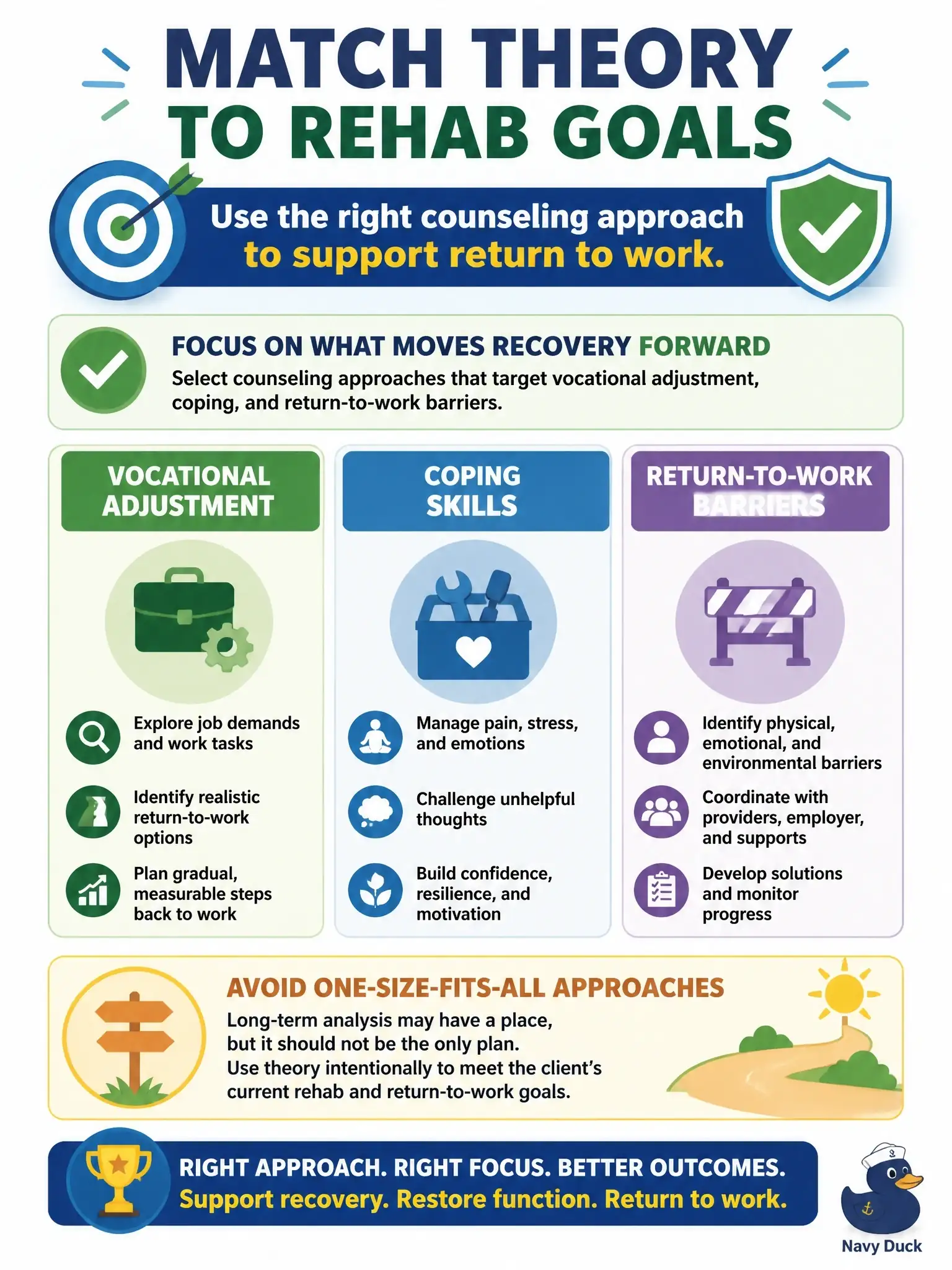
Wanting deep couch-style analysis for a quick return-to-work is like booking a year-long cruise to cross a short bridge. You need to match the counseling approach to the rehab goal—coping, adjustment, and getting back to work—not every theory just because it's famous.
Full Explanation
When a recovering client asks for 'just Freudian analysis' as a quick path back to work, theory-goal matching selects counseling approaches that target vocational adjustment, coping, and return-to-work barriers rather than defaulting to unrelated long-term analysis as the sole plan. Rehabilitation counseling uses psychological frameworks purposefully; it does not refuse all theory, nor treat classical analysis as the fastest return-to-work method. Agreeing that long-term classical psychoanalysis is always the fastest return-to-work method fails by concept because time frame and vocational targets usually fit more focused approaches. Refusing all counseling theories because vocational rehabilitation never uses psychological frameworks fails because counseling theory informs rehab practice. Using only projective testing and delaying vocational planning indefinitely fails by substituting assessment rituals for timely vocational intervention. Exam caveat: client preference matters in collaborative planning, but counselors still provide informed guidance about fit, evidence, and rehab goals. Operational check: explain how proposed counseling will address return-to-work barriers, offer evidence-informed options such as cognitive behavioral therapy for catastrophic fear and adjustment counseling, and set vocational milestones alongside any longer-term therapy referral.