
A counselor helps a client with visual impairment learn compensatory strategies for workplace navigation. Which focus best reflects appropriate rehab techniques for sensory disability?
Select an answer to reveal the explanation.
Short Explanation
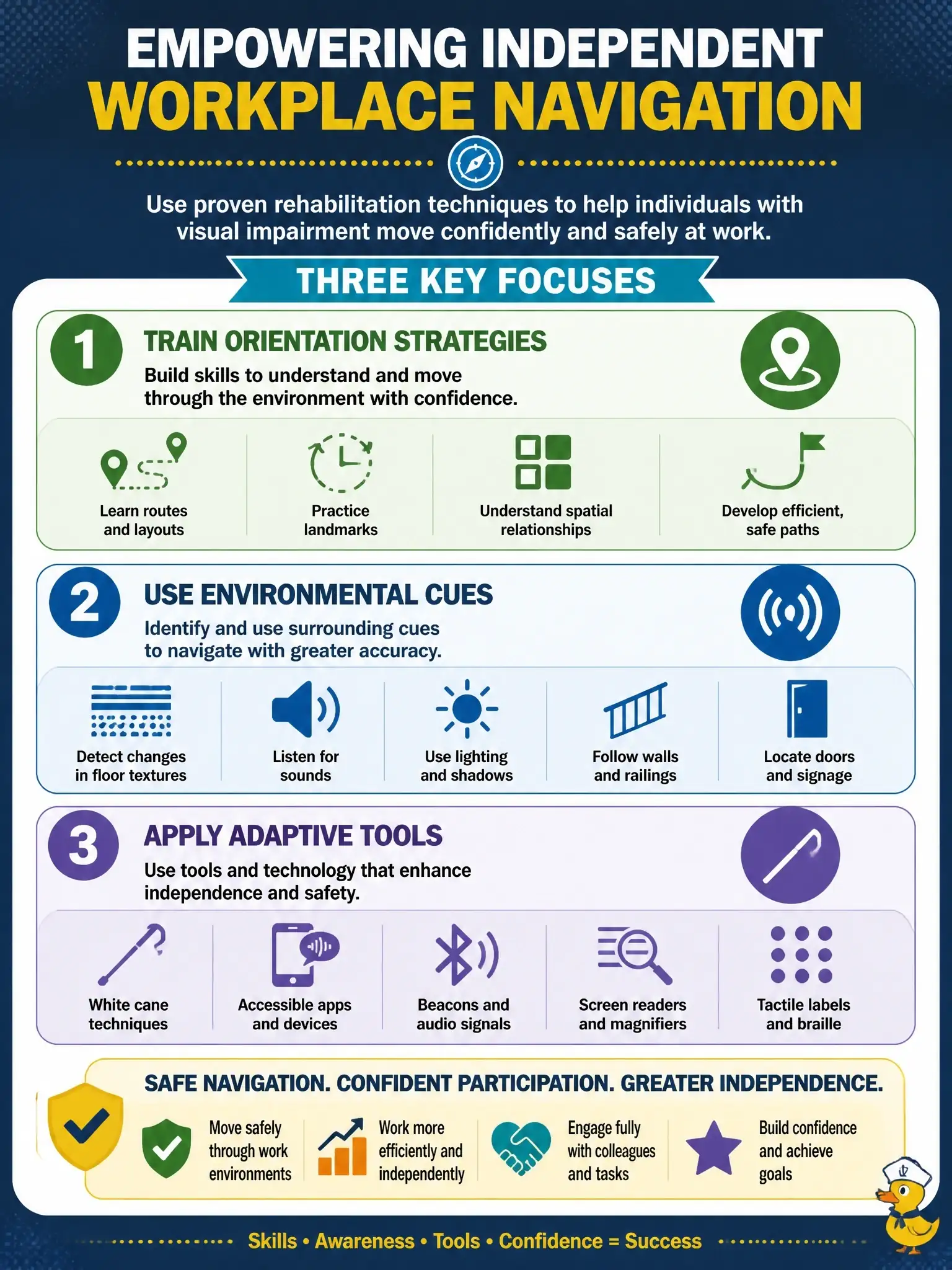
Compensatory strategies are the workarounds that let someone do the job when sight isn't the main tool—landmarks, cane or guide techniques, apps, labeled routes. You're teaching a navigation kit for the workplace, not waiting for eyesight to magically return.
Full Explanation
For visual impairment, appropriate sensory-disability rehab techniques train orientation strategies, environmental cues, and adaptive tools so the client can navigate work settings safely and efficiently. Civic employment inclusion depends on teaching compensatory performance in real environments rather than waiting for skills to appear spontaneously after hire.
The option that assumes workplace navigation skills will appear spontaneously after hire with no training fails by concept as neglect of needed compensatory instruction. The option that prohibits all workplace mobility and limits the client to remote work only as policy fails by overgeneralizing and removing choice and opportunity. The option that replaces all compensatory training with repeated visual acuity testing alone fails because acuity data without skill building does not produce workplace navigation competence.
Exam caveat: remote work may be an appropriate accommodation for some roles, but it is not a universal substitute for orientation and mobility skill development when on-site work is the goal. Operational check: arrange O&M or related training, practice in the actual or simulated worksite, introduce assistive technology as needed, and document safe independent travel criteria before placement finalization.