
A client with a mobility impairment needs practical rehabilitation techniques for community mobility before job search. Which approach best matches disability-specific rehab technique selection?
Select an answer to reveal the explanation.
Short Explanation
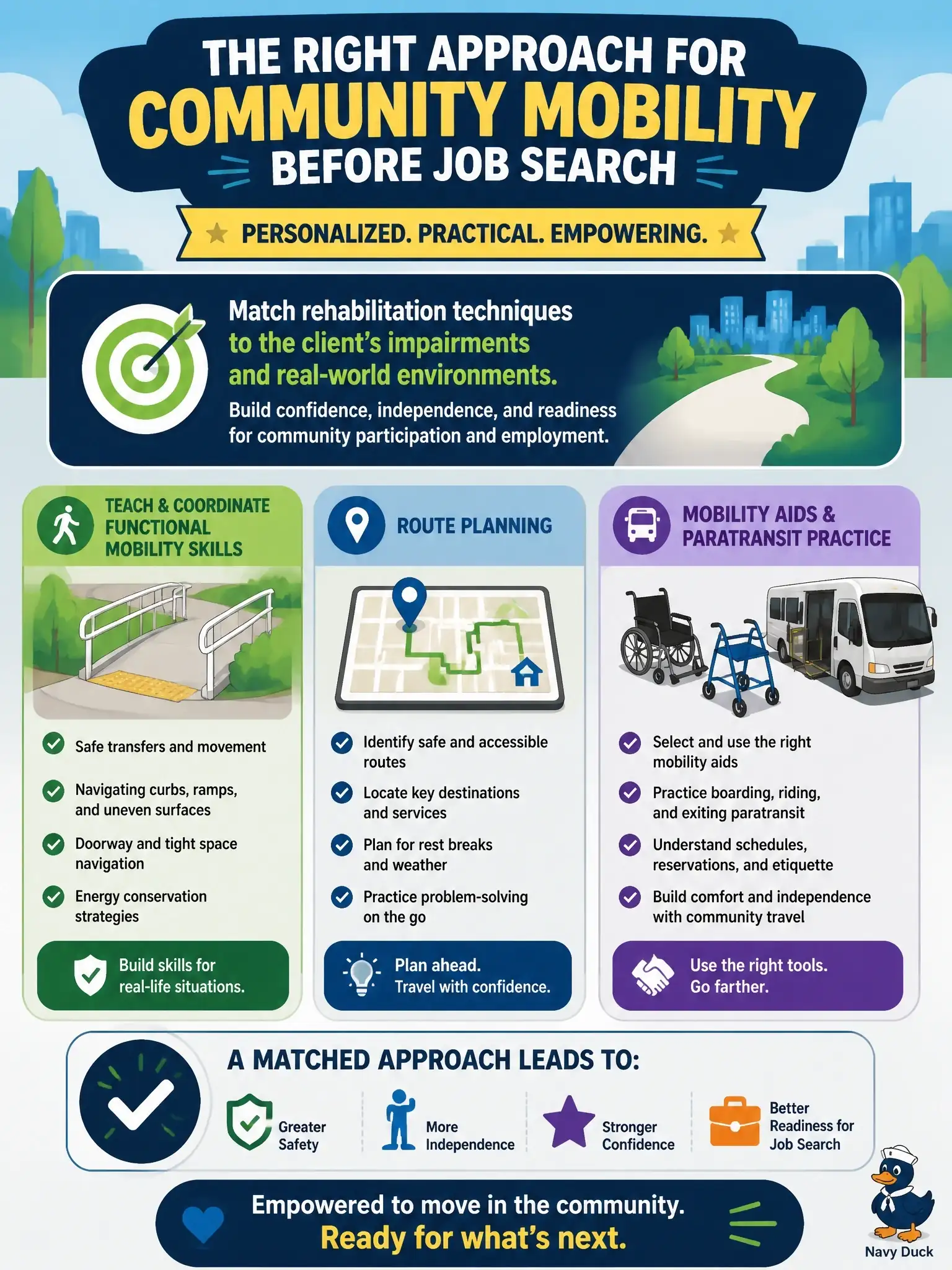
Job search falls apart if the client can’t get around, so you teach functional mobility skills, route planning, and needed aids or paratransit practice matched to their impairments and environments. Cold-calling, dream work, or athletic retraining don’t solve the access barrier.
Full Explanation
For community mobility before job search, disability-specific rehab technique selection teaches and coordinates functional mobility skills, route planning, and needed mobility aids or paratransit practice matched to impairments and environments. Civic participation in employment begins with usable access to the community, not with mismatched insight therapy or athletic gatekeeping. Skipping mobility practice to cold-call employers and build confidence through rejection fails by concept because it leaves the access barrier unaddressed and can reinforce failure. Prescribing psychoanalytic dream work as the primary community mobility intervention fails by mismatch of technique to functional need. Requiring full athletic retraining before any outing fails as an unnecessary prerequisite that delays community participation. Exam caveat: psychosocial counseling may still support anxiety about travel, but it does not replace mobility skill and systems training when access is the presenting barrier. Operational check: assess routes to likely worksites, arrange travel training or OT/mobility supports as needed, practice paratransit or transit with the client, and only then intensify employer contacts that assume community mobility.