
After a failed job tryout, two next steps look plausible: revise the vocational goal or add on-the-job supports. What best demonstrates structured clinical problem-solving?
Select an answer to reveal the explanation.
Short Explanation
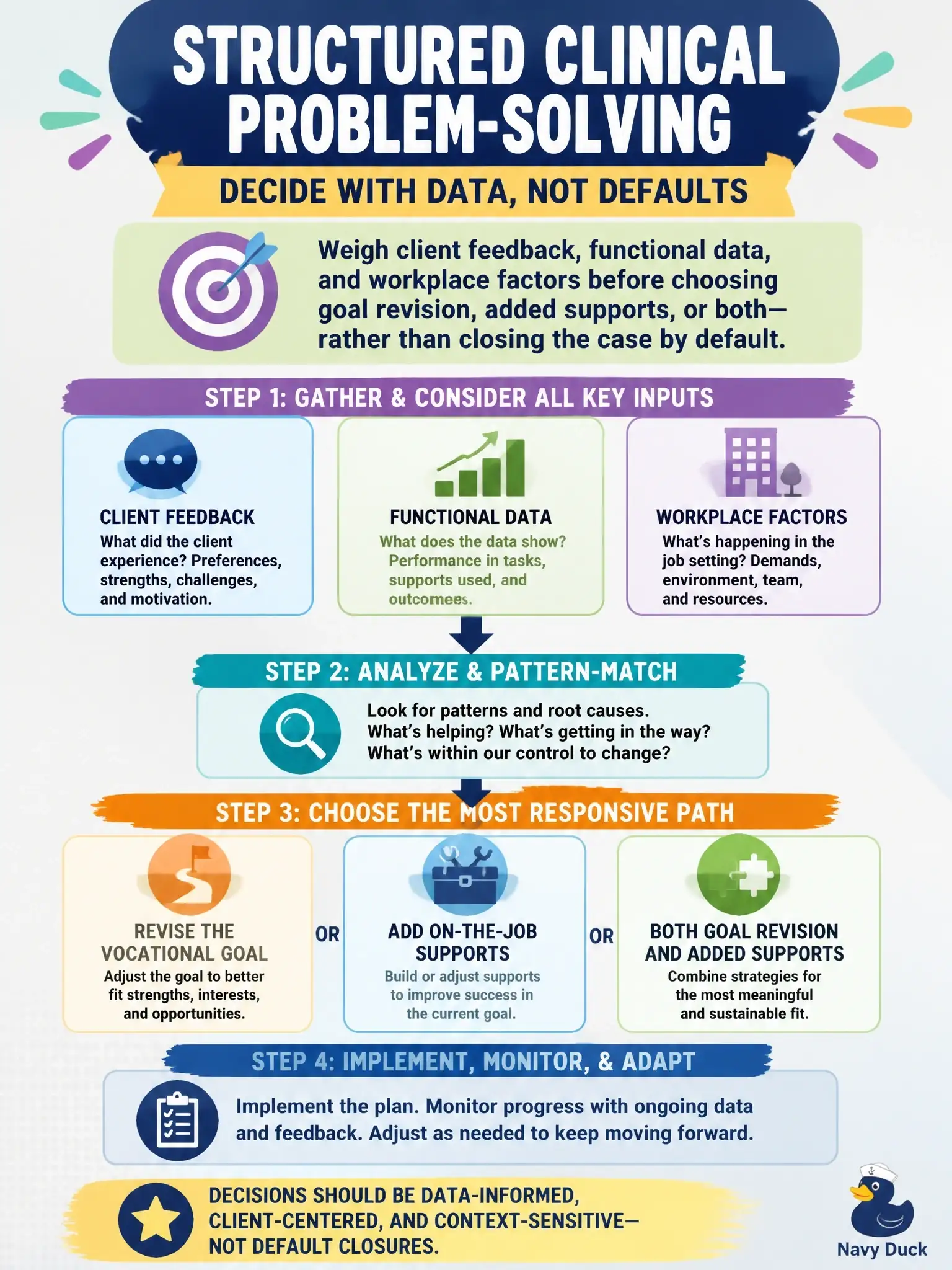
One failed tryout isn’t automatic game over or automatic career switch. You weigh client feedback, functional data, and workplace factors, then decide whether to revise the goal, add supports, or do both.
Full Explanation
After a failed job tryout, structured clinical problem-solving weighs client feedback, functional data, and workplace factors before choosing goal revision, added supports, or both—rather than closing the case by default. Civic rehab quality depends on using tryout evidence to refine formulation, not on protecting statistics through reflexive closure or one-size reactions. One failed tryout is data, not destiny.
The approach that always closes the case after one failed tryout to protect agency statistics fails because performance optics are not a clinical decision rule. The approach that always changes the career goal after any tryout difficulty while ignoring whether supports were adequate fails by abandoning potentially fitting goals without testing environmental fixes such as coaching or accommodations. The approach that adds every possible support forever without reviewing whether the goal still fits the client fails as unfocused escalation without reformulation.
Exam caveat: sometimes both goal revision and supports are needed; structured thinking compares hypotheses to evidence rather than picking a favorite reflex. Operational check: debrief the tryout with the client and employer as authorized, list what failed (skills, endurance, job match, supervision, stigma), choose the next step that matches that analysis, and set a dated review to prevent endless unsupported placement.