
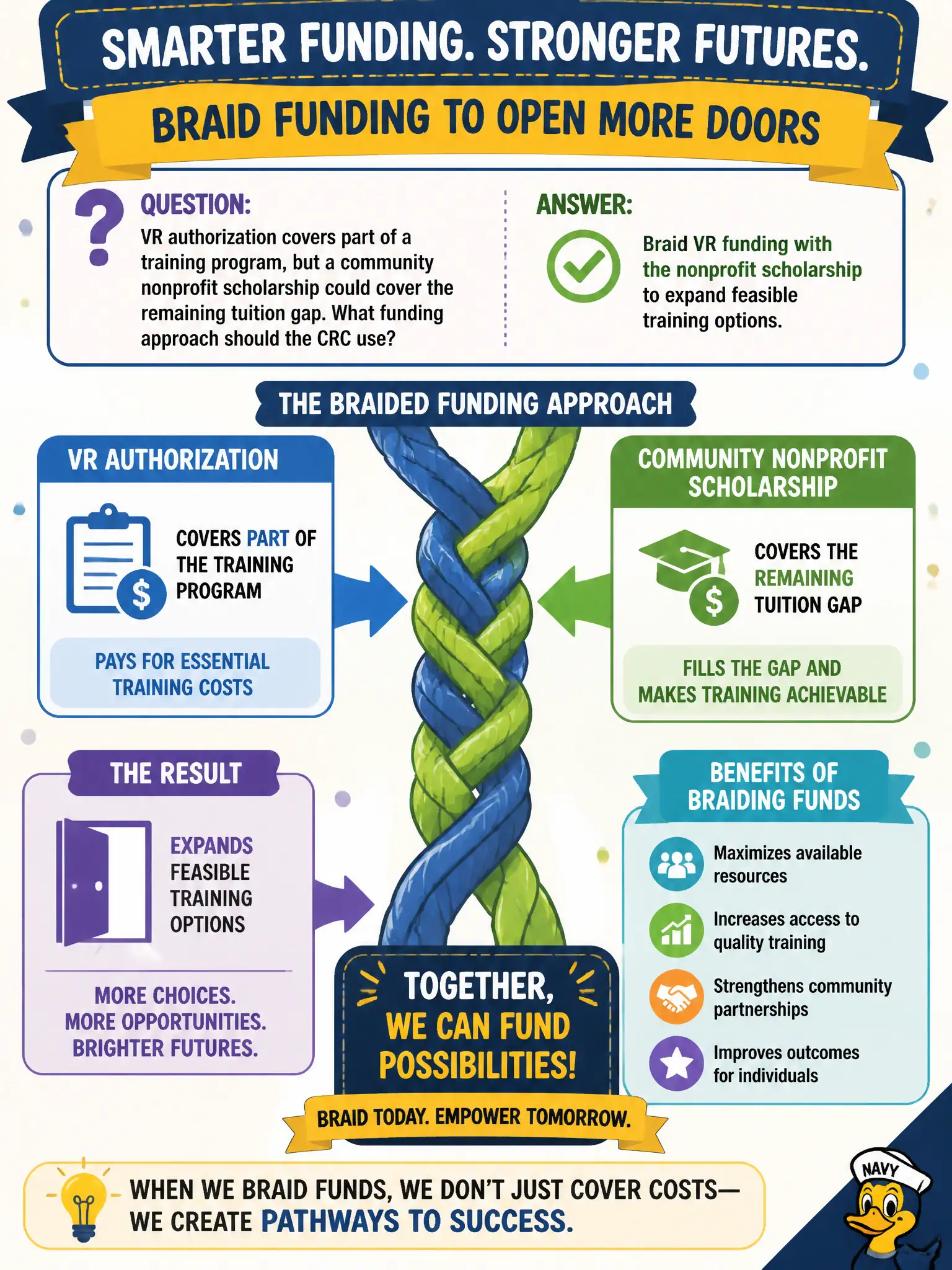
VR authorization covers part of a training program, but a community nonprofit scholarship could cover the remaining tuition gap. What funding approach should the CRC use?
Select an answer to reveal the explanation.
Short Explanation
When VR covers some tuition and a nonprofit covers the rest, that's braided funding—two streams woven into one training plan. Use both cleanly so the client isn't stuck halfway to a credential.
Full Explanation
Funding sources and community resources for rehabilitation services often require braiding multiple payers—state or municipal VR authorizations, scholarships, workforce grants, and nonprofit aid—to make training attainable. Coordinating complementary authorizations expands civic training options while respecting each funder's rules and documentation requirements. The CRC facilitates clear cost-sharing and partnership paperwork rather than treating a single payer as the only acceptable path when a tuition gap remains. Refusing nonprofit dollars because blending funds always violates VR policy by default is an overgeneralization that can strand clients halfway through needed credentials. Telling the client to drop VR services so only the scholarship can be used unnecessarily discards a primary public rehabilitation funding stream. Paying the full gap from the counselor's personal funds avoids paperwork at the cost of boundary violations, unsustainable practice, and inequitable access for other clients. Exam caveat: braiding is not unrestricted pooling—each civic funder may prohibit duplicate payment for the same line item, so authorizations must be coordinated for complementary costs, not double-billed identical tuition. Operational check: before training start, map which costs VR will authorize, which the nonprofit scholarship covers, obtain written confirmation from both sources, and place the braided funding plan in the case file with dates and contact names.