
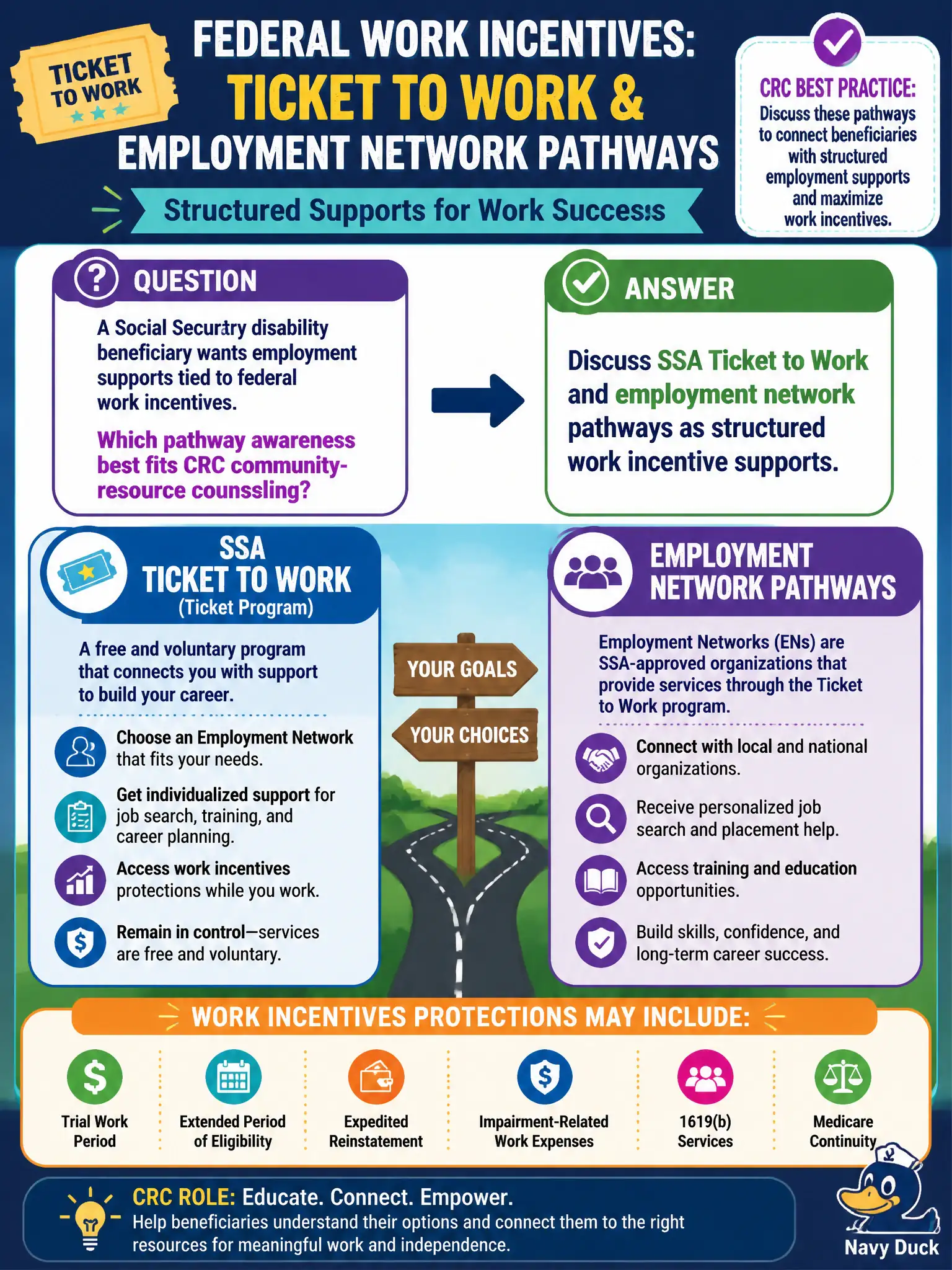
A Social Security disability beneficiary wants employment supports tied to federal work incentives. Which pathway awareness best fits CRC community-resource counseling?
Select an answer to reveal the explanation.
Short Explanation
SSA isn't only a 'never work' gate—there are on-ramps like Ticket to Work and employment networks that pair benefits with job supports. Point the client to those pathways so work and benefits planning travel together.
Full Explanation
Rehabilitation counselors need working knowledge of Social Security programs, benefits, and work incentives, including publicly named pathways such as Ticket to Work and Employment Networks. These structures help municipal beneficiaries pursue employment while navigating benefit rules with assigned employment supports. Accurate pathway awareness supports informed choice and appropriate referral without promising outcomes or inventing unpublished SSA rules. Advising that SSA disability benefits permanently forbid any competitive employment is a disincentive myth that can trap clients out of civic labor-market participation. Recommending that the client quit benefits first and seek private loans before any work attempt ignores designed work-incentive pathways and can create unnecessary financial risk. Limiting counseling to resume tips and treating SSA work incentives as an employer HR topic only misplaces federal beneficiary supports onto private HR and abandons the CRC's community-resource counseling role. Exam caveat: Ticket to Work and related incentives have eligibility, assignment, and protection rules that change over time; counselors educate and refer rather than certify SSA eligibility or guarantee continuing disability payments. Operational check: when a Social Security disability beneficiary in a civic caseload seeks work supports, discuss Ticket to Work or Employment Network options as structured pathways, document the information shared, and record any referral to a benefits specialist or EN contact for follow-through.