
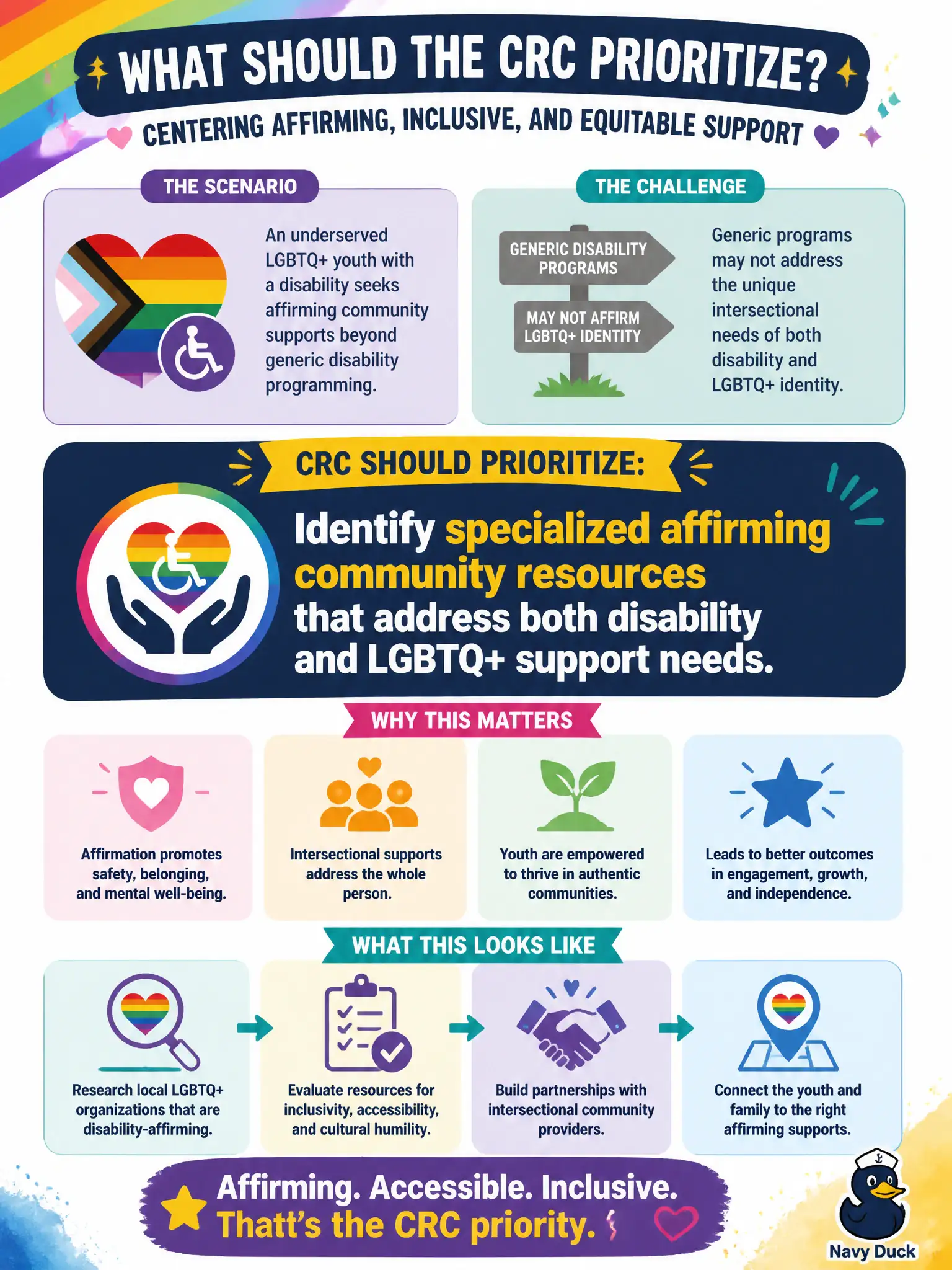
An underserved LGBTQ+ youth with a disability seeks affirming community supports beyond generic disability programming. What should the CRC prioritize?
Select an answer to reveal the explanation.
Short Explanation
One-size disability clubs can miss half the story when a youth also needs LGBTQ+ affirming space. Hunt down resources that get both—disability access and identity safety—so the person isn't splitting themselves to get help.
Full Explanation
Programs and services for specific and underserved populations include affirming municipal and community resources for clients with intersecting marginalized identities. An LGBTQ+ youth with a disability may need partnerships that are both disability-accessible and identity-affirming rather than generic disability clubs or siloed referrals that force an either-or choice. The CRC screens for cultural responsiveness, identifies specialized supports, and integrates them into community resource planning so civic belonging is not partial. Steering the youth only toward disability-blind mainstream groups and ignoring identity-affirming needs erases half of the access problem and can recreate unsafe spaces. Requiring the youth to choose either disability services or LGBTQ+ services but never both treats intersectionality as a logistics inconvenience rather than a planning requirement. Delaying community referrals until gender or sexual identity topics are removed from the rehab plan pathologizes identity and blocks timely supports. Exam caveat: affirming referrals must still respect confidentiality, guardian and consent rules for minors where applicable, and local resource quality screening—specialization alone does not guarantee safety or accessibility. Operational check: when serving an underserved civic youth with intersecting identities, document at least one resource screened for both disability access and LGBTQ+ affirmation, record the client's preference, and note backup options if the primary partner cannot meet both needs.