
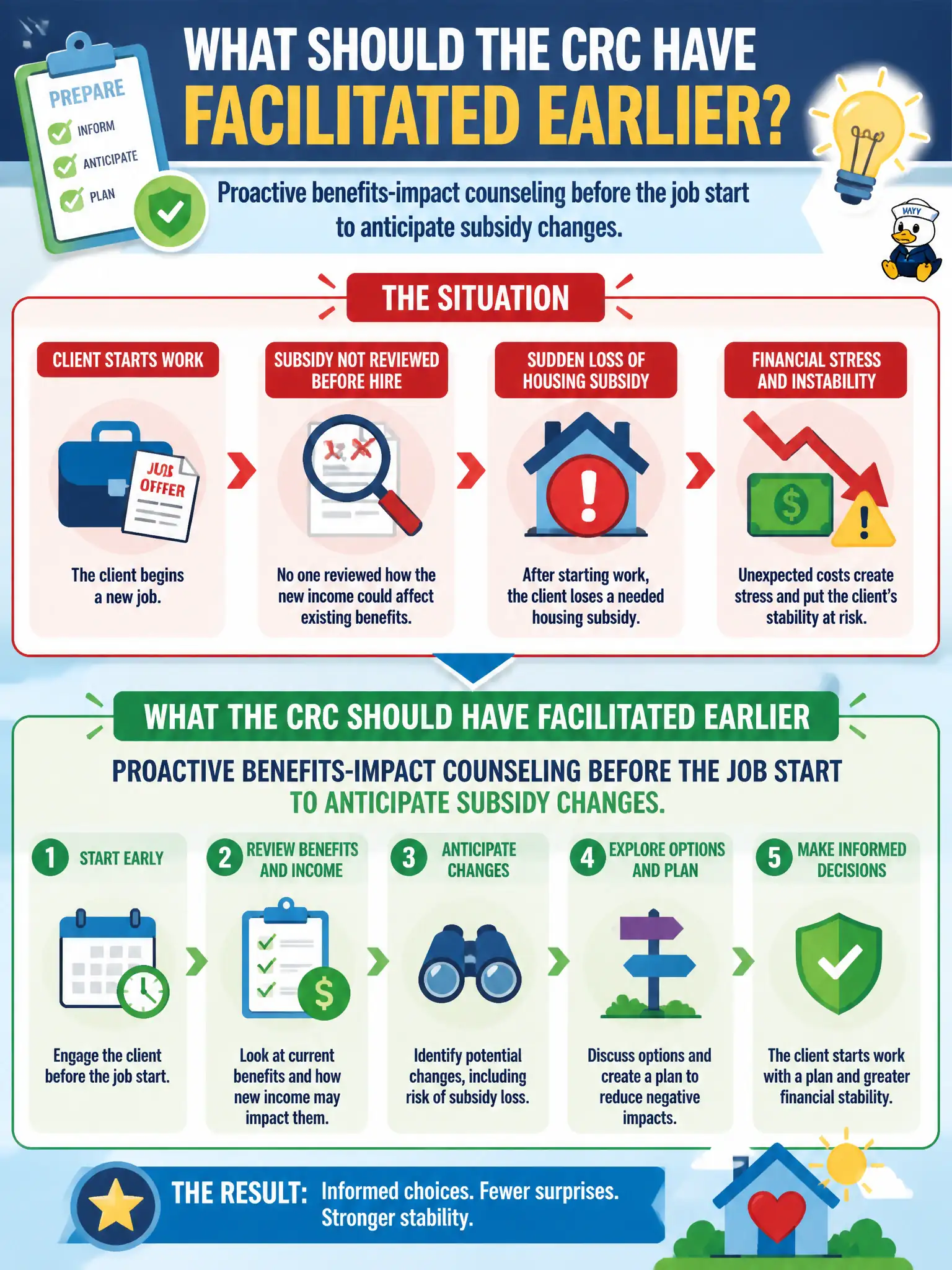
A client starts work and suddenly loses a needed housing subsidy that no one reviewed before the hire. What should the CRC have facilitated earlier?
Select an answer to reveal the explanation.
Short Explanation
Starting work without a benefits check is like changing lanes without looking—someone gets clipped. The counselor should have mapped how the new wage would hit housing and other supports before the first day.
Full Explanation
When employment begins without prior benefits-impact counseling, municipal clients may suddenly lose housing subsidies or related civic supports that no one reviewed before the hire. Domain practice expects facilitation of counseling on how wages affect community services and benefits before work start so reporting, transitions, and incentives can be planned. Early planning supports smoother moves into work, reduces crisis housing loss, and keeps the counselor's community-resource role active through the employment transition. A policy of never discussing benefits so clients feel free to accept any wage offer prioritizes placement volume over informed consent and financial safety. Immediate case closure at hire because employment supposedly ends the counselor's community-resource role abandons continuity exactly when subsidy interactions surface. Referral only to a credit counselor with no review of public subsidy rules addresses private debt tools while missing the public-benefit mechanisms that actually triggered the housing loss. Exam caveat: unexpected subsidy loss after hire does not automatically prove counselor malpractice in every case, but the exam frames proactive pre-employment benefits counseling as the expected preventive practice when community supports are known to be wage-sensitive. Operational check: on any civic case approaching hire, confirm a documented benefits-impact conversation (or specialist referral) occurred before the start date, list which subsidies were reviewed, and note interim contingency plans if housing or health coverage may change with earnings.