
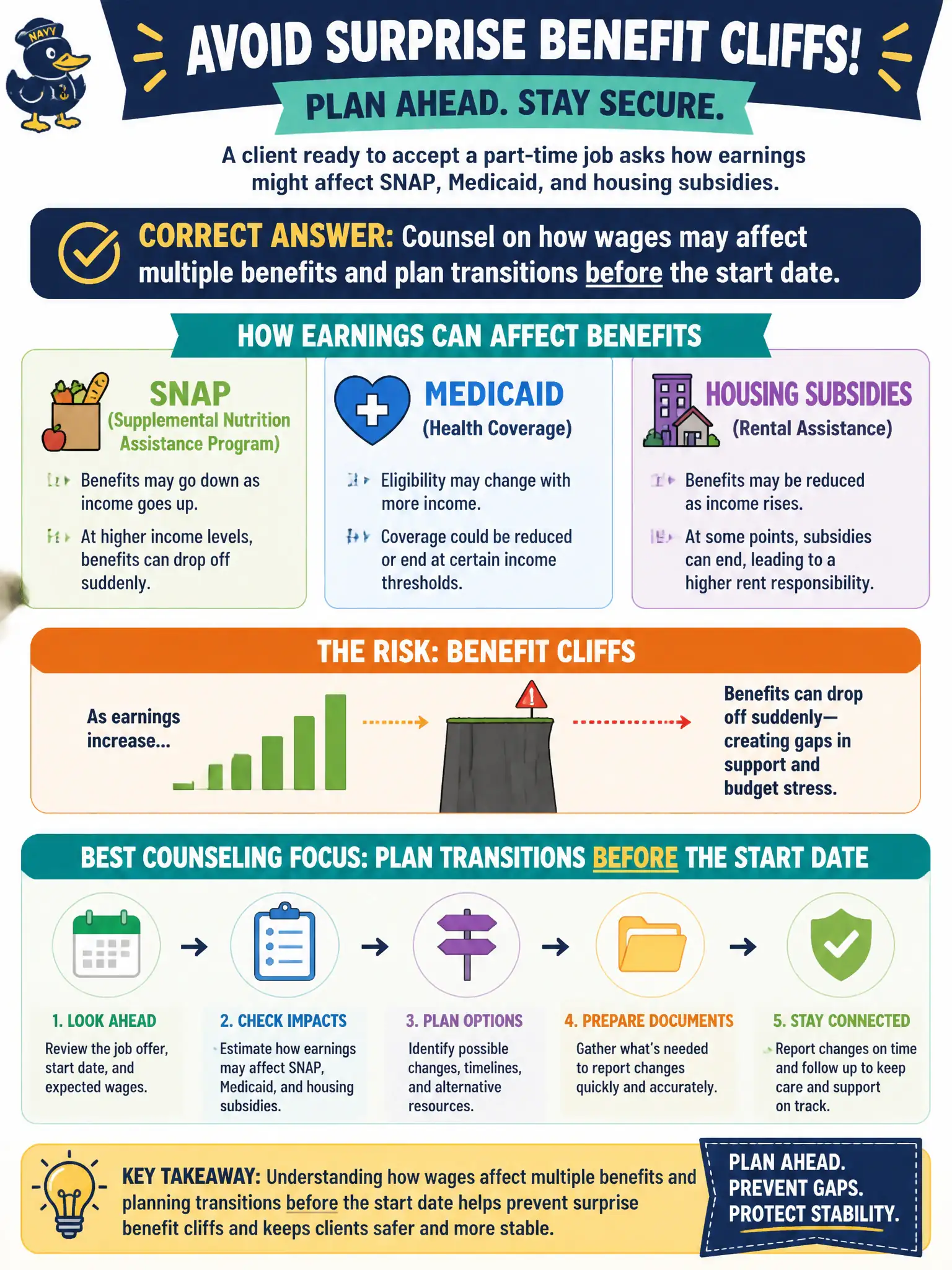
A client ready to accept a part-time job asks how earnings might affect SNAP, Medicaid, and housing subsidies. What counseling focus best prevents surprise benefit cliffs?
Select an answer to reveal the explanation.
Short Explanation
Landing a job and then watching SNAP or housing vanish overnight is a classic cliff dive. Walk through wage effects on each benefit before day one so the client is steering the boat, not getting surprised by the drop.
Full Explanation
Counseling on the employment impact of community services and benefits helps municipal clients anticipate how wages interact with SNAP, Medicaid, housing subsidies, and related civic supports before a part-time job start. Proactive discussion supports informed choice about hours, reporting duties, and available work incentives so public benefit cliffs do not erase housing or health coverage overnight. The CRC coordinates accurate information—often with benefits specialists—rather than treating placement as unrelated to the city's benefits landscape. Reassuring the client that wages never interact with public benefits once work begins is factually false and invites preventable instability. Telling the client to hide new wages from benefits agencies until a performance review is complete encourages nonreporting that can trigger overpayments, sanctions, and ethical breaches. Focusing only on resume polish and delaying benefits discussion until the first paycheck arrives postpones the counseling that should precede hire so transitions can be planned. Exam caveat: CRCs facilitate benefits counseling and referrals; they do not replace certified benefits planners or invent unpublished agency rules, and advice must stay within competence and local program guidance. Operational check: before a civic client accepts wages, complete a benefits-impact checklist covering SNAP, Medicaid or similar coverage, housing subsidy reporting, and work incentives; document the discussion date, referrals made, and the client's planned reporting steps in the case record.