
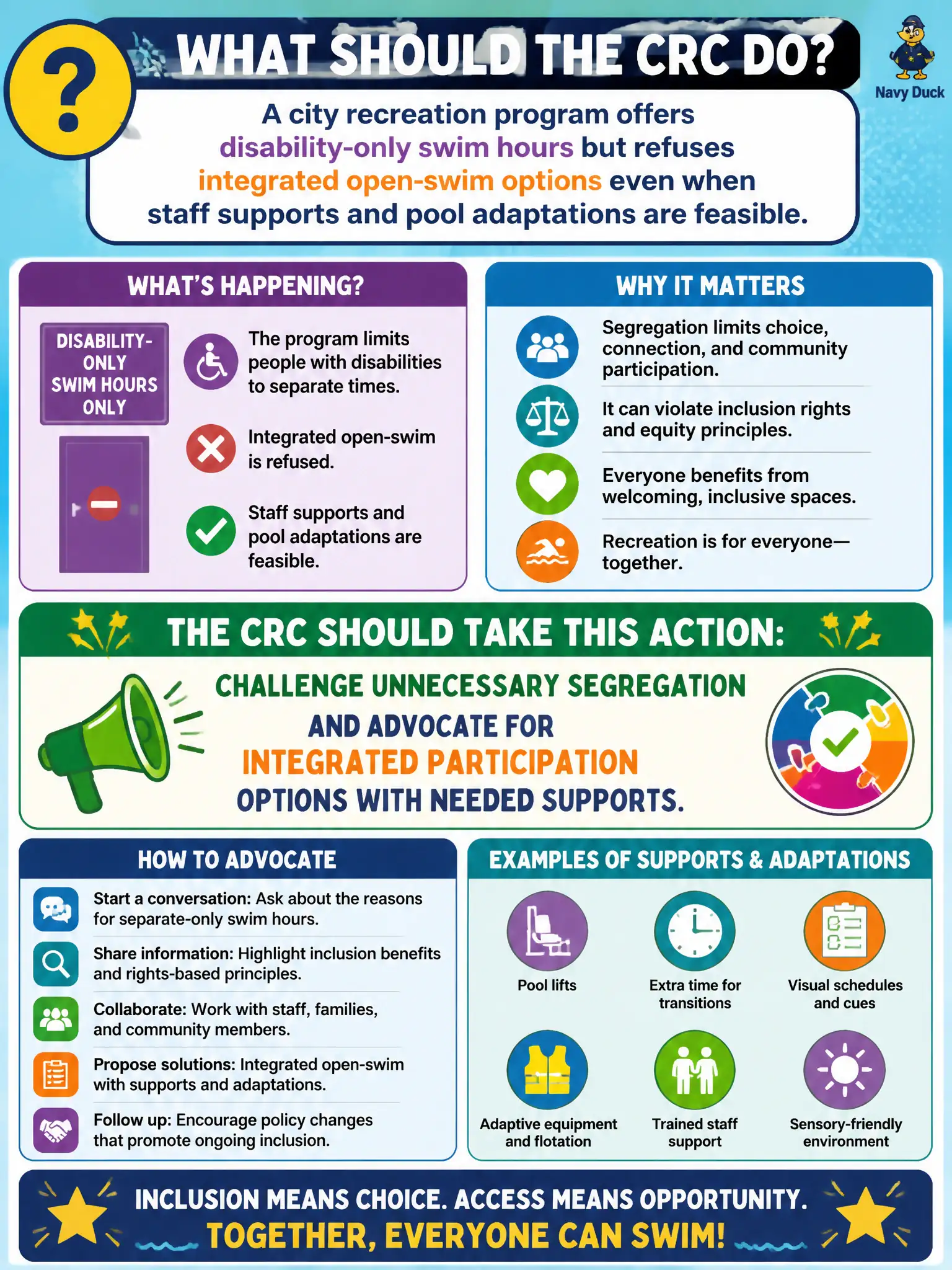
A city recreation program offers disability-only swim hours but refuses integrated open-swim options even when staff supports and pool adaptations are feasible. What inclusion advocacy action should the CRC take?
Select an answer to reveal the explanation.
Short Explanation
Separate-only hours can feel like a special gift, but if the person can join everyone else with a little support, walling them off is segregation dressed up as kindness. Push for integrated options—same pool, same community—plus the adaptations that make it work.
Full Explanation
Community inclusion advocacy in municipal recreation means challenging unnecessary segregation when integrated participation is feasible with reasonable supports. A city swim program that offers disability-only hours while refusing open-swim access despite workable staff supports and pool adaptations restricts full civic membership. The CRC documents the barrier, partners with recreation leadership on accommodations, and advocates for mainstream options so residents with disabilities can choose integrated recreation rather than accepting separate slots as the only pathway. Treating separate-only hours as automatically equivalent community access collapses inclusion into token scheduling and ignores Olmstead-aligned community integration principles when integration is workable. Advising the client to wait until a specialized disability agency builds its own pool abandons systems advocacy and shifts the burden of civic access onto scarcity of segregated facilities. Filing only an employment discrimination claim because recreation is supposedly outside rehabilitation counseling misreads the CRC role in community resource and inclusion advocacy beyond the workplace. Exam caveat: disability-specific programming can remain a valid individual preference; the teaching point is opposing forced or default segregation when integrated participation with supports is feasible, not eliminating all specialized options. Operational check: before accepting a municipal recreation schedule as final, verify whether staff supports and physical adaptations could enable integrated hours, document the feasibility discussion with the recreation provider, and record the client's informed preference for integrated versus specialized participation in the civic case plan.