
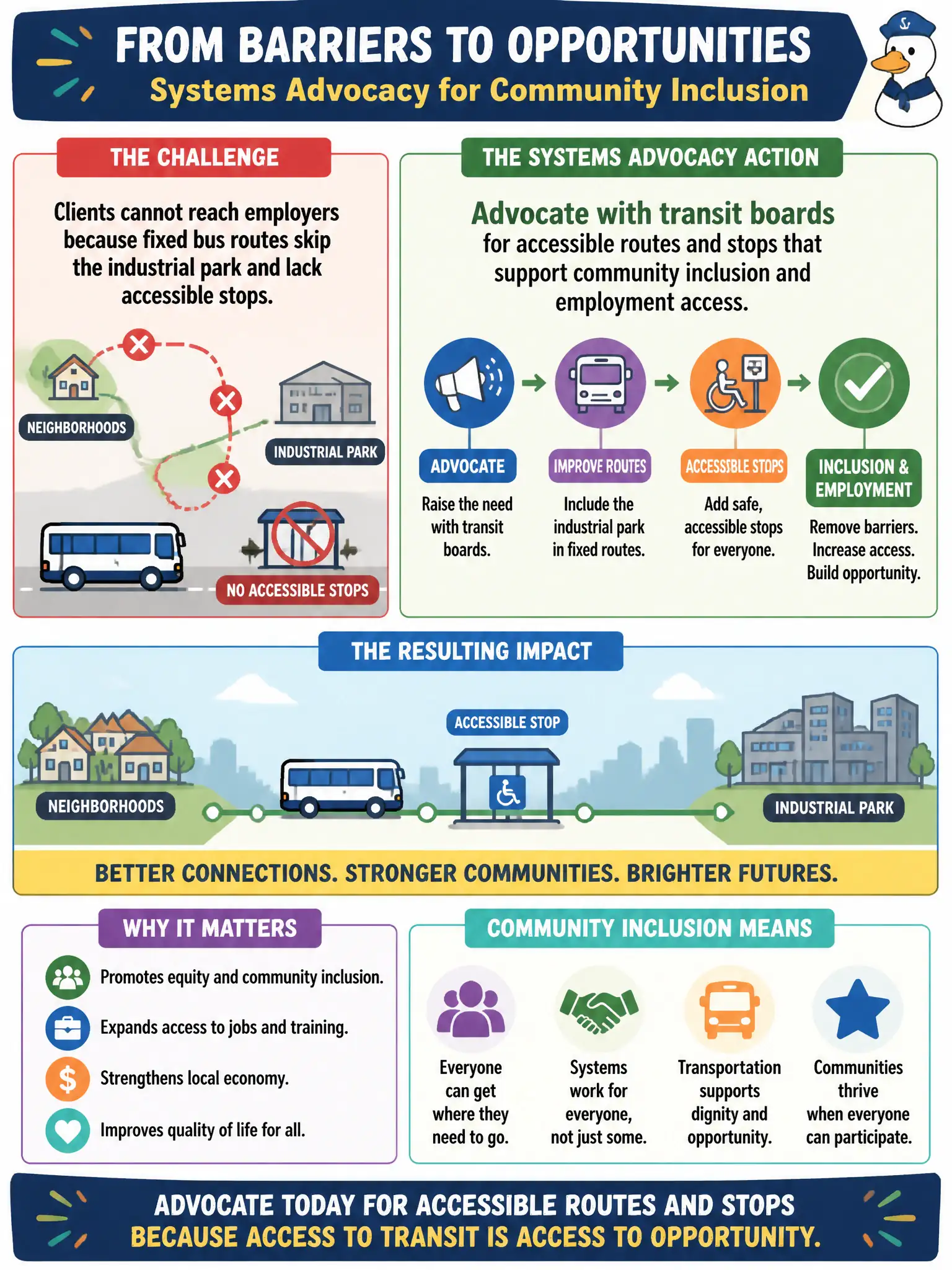
Clients cannot reach employers because fixed bus routes skip the industrial park and lack accessible stops. What systems advocacy action aligns with community inclusion?
Select an answer to reveal the explanation.
Short Explanation
If the bus never goes where the jobs are—or the stop is not accessible—clients are stuck before the interview starts. Speaking up with transit boards is systems advocacy, not side noise. Inclusion rides on real routes.
Full Explanation
When clients cannot reach employers because fixed bus routes skip the industrial park and lack accessible stops, advocating with transit boards for accessible routes and stops that support community inclusion and employment access is a systems advocacy action aligned with Domain 9. Transit access is an employment accommodation at the community level. Telling clients that inaccessible transit is a personal motivation failure fails by blaming individuals for infrastructure gaps. Ending placement services in any community that currently lacks perfect transit fails because services and advocacy should proceed together, not as an all-or-nothing retreat. Advising employers that transit advocacy is never part of rehabilitation counseling fails because community inclusion and resource advocacy are within the CRC role. Exam caveat: systems advocacy is usually collaborative and incremental; counselors balance case-level transport workarounds with longer-term policy advocacy and should not promise rapid route changes. Operational check: document employment sites blocked by missing accessible stops, join or submit comment to the transit board with client stories (with consent), and simultaneously arrange interim transport options so job search does not freeze during advocacy.