
Stable employment is collapsing because a landlord appears to be discriminating based on disability. What partnership action fits Domain 9 advocacy resources?
Select an answer to reveal the explanation.
Short Explanation
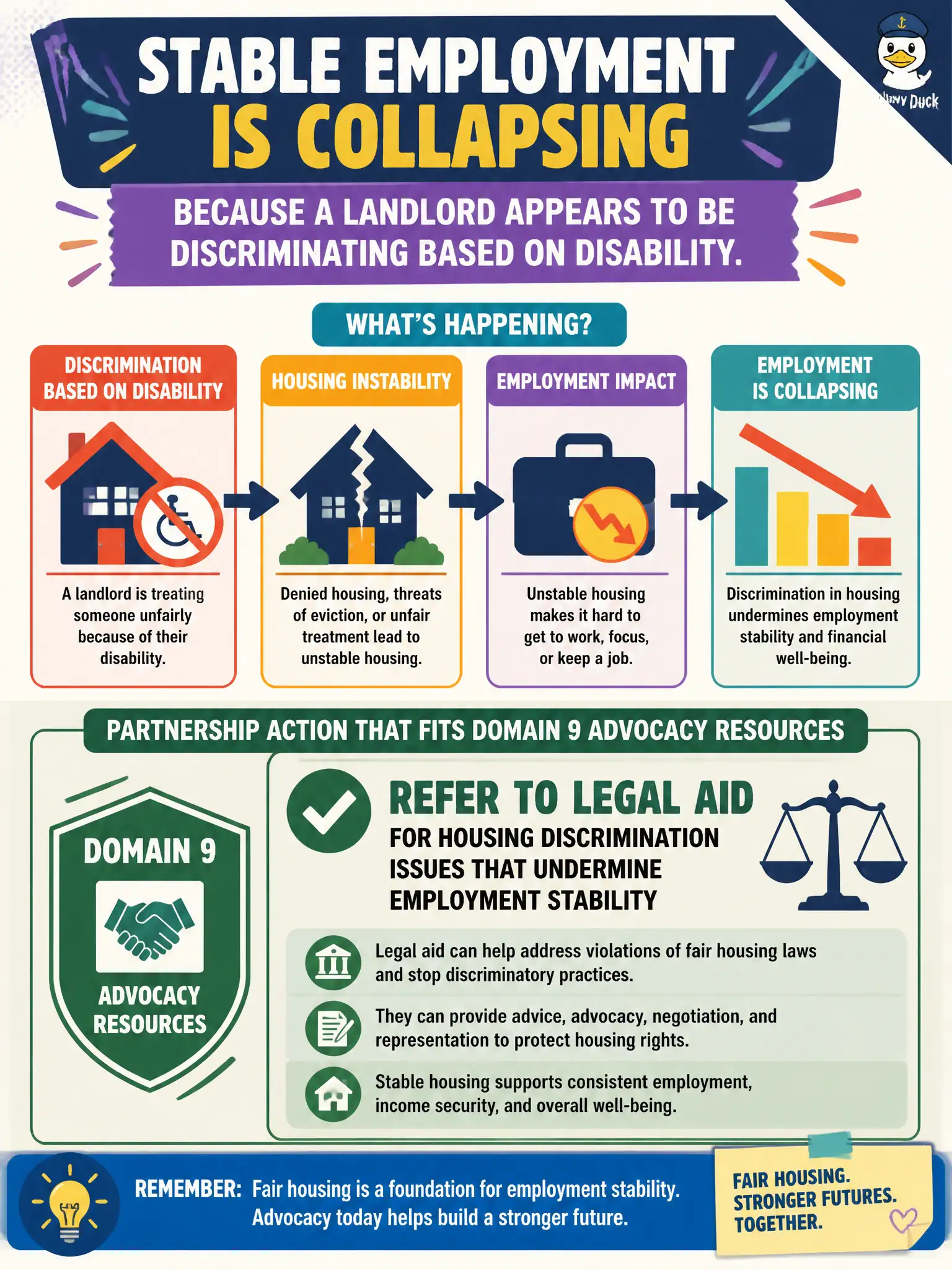
If a landlord is slamming doors because of disability, the job plan wobbles too. Legal aid can tackle housing discrimination while you keep the vocational side moving. Stability at home props up stability at work.
Full Explanation
When stable employment is collapsing because a landlord appears to be discriminating based on disability, referring to legal aid for housing discrimination issues that undermine employment stability fits Domain 9 advocacy-resource practice. Housing injustice is a vocational threat when it destabilizes attendance and health. Ignoring housing problems because they are never relevant to rehabilitation outcomes fails because homelessness risk quickly erases placement gains. Instructing the client to quit the job so housing conflict becomes moot fails because sacrificing employment does not remedy discrimination and deepens harm. Requiring the counselor to litigate personally without external partners fails because CRCs coordinate legal advocacy resources rather than serving as the client’s housing attorney. Exam caveat: counselors should not promise legal outcomes; they facilitate access to qualified advocates and continue vocational supports during the dispute when possible. Operational check: document how housing instability is affecting work, provide a legal aid or fair-housing referral with appointment support, and adjust job supports (schedule flexibility, transport) while the housing issue is addressed.