
A client's authorized VR services are being wrongly delayed despite repeated follow-up. Which advocacy referral is most appropriate?
Select an answer to reveal the explanation.
Short Explanation
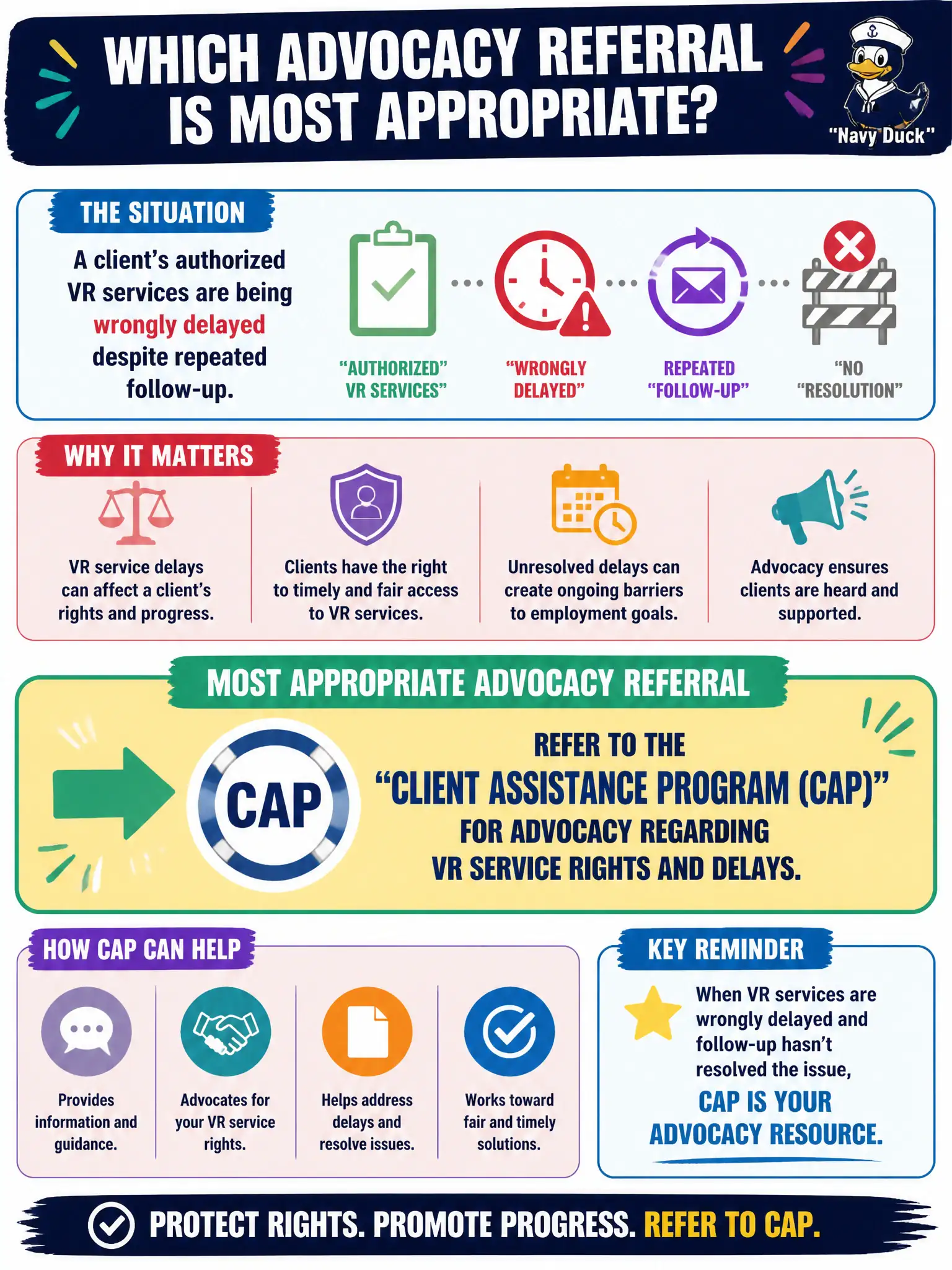
When VR stalls in the wrong ways, you are not stuck whispering into the void. CAP—the Client Assistance Program—exists for exactly this kind of rights-and-delays advocacy. Refer early; document along the way.
Full Explanation
When authorized VR services are being wrongly delayed despite repeated follow-up, referral to the Client Assistance Program (CAP) for advocacy regarding VR service rights and delays is the appropriate advocacy resource. CAP exists specifically to help applicants and clients navigate disputes and delays inside the public VR system. Advising the client to abandon VR permanently and stop documenting concerns fails because organized documentation and external advocacy can unlock services the client still needs for employment. Telling the client that no external advocacy exists for VR disputes fails factually where CAP and related protections are available. Recommending falsifying urgency criteria on applications to jump the queue fails ethically and can destroy credibility with the agency. Exam caveat: CAP referral does not replace the counselor’s own timely case action and supervisory escalation; counselors should still push internally while supporting CAP access. Operational check: help the client organize a dated timeline of requests and delays, provide CAP contact information with a warm handoff, and continue required casework and supervisory follow-up rather than freezing all activity pending advocacy.