
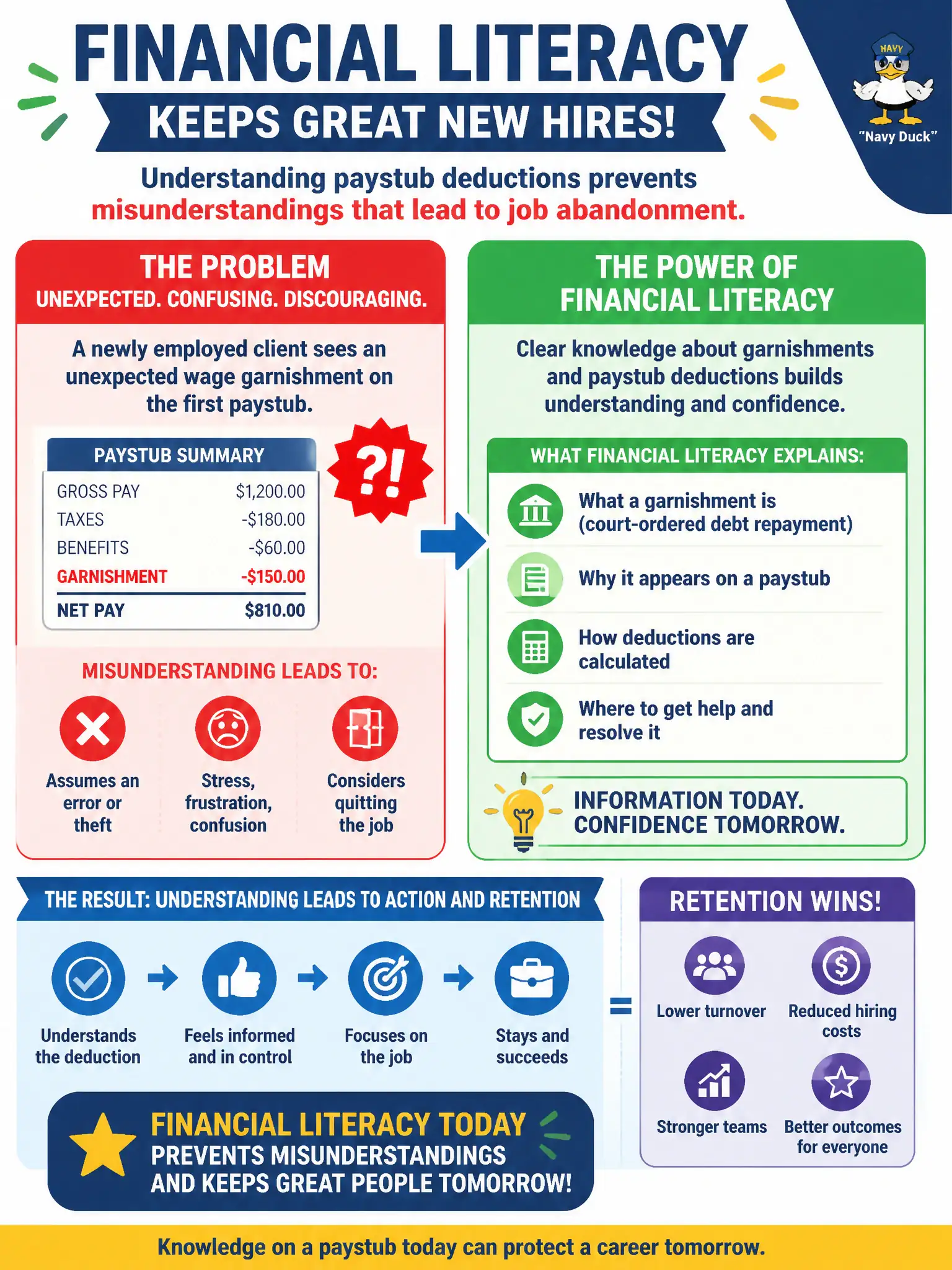
A newly employed client almost quits after seeing an unexpected wage garnishment on the first paystub. How does financial literacy relate to retention?
Select an answer to reveal the explanation.
Short Explanation
A surprise garnishment can feel like the job itself is broken. Walk through the paystub so the client sees process—not betrayal—and stays employed. Money literacy is retention insurance.
Full Explanation
Financial literacy that explains garnishments and paystub deductions can prevent job abandonment driven by misunderstanding when a newly employed client almost quits after seeing an unexpected wage garnishment. Retention counseling in rehabilitation practice includes demystifying the paycheck so fear does not erase a hard-won placement. Interpreting garnishments as proof the job is illegal and must end immediately fails because lawful garnishments appear on otherwise legitimate employment and are processed through payroll systems. Claiming financial surprises at work are inevitable and counseling should not address them fails because predictable education prevents impulsive quits that both client and employer regret. Advising clients to refuse all garnishments regardless of court orders fails because unlawful refusal can create deeper legal and financial trouble. Exam caveat: counselors explain mechanisms and connect clients to legal aid or financial counselors for disputed debts; they do not give clients permission to ignore valid orders. Operational check: when a shocking deduction appears, pause quit plans, identify the deduction type on the stub, verify legitimacy with HR or a legal aid partner if contested, and coach a short-term budget adjustment before any resignation.