
A client starting work is confused about paystubs, taxes withheld, and how earnings may interact with benefits. What should the counselor facilitate?
Select an answer to reveal the explanation.
Short Explanation
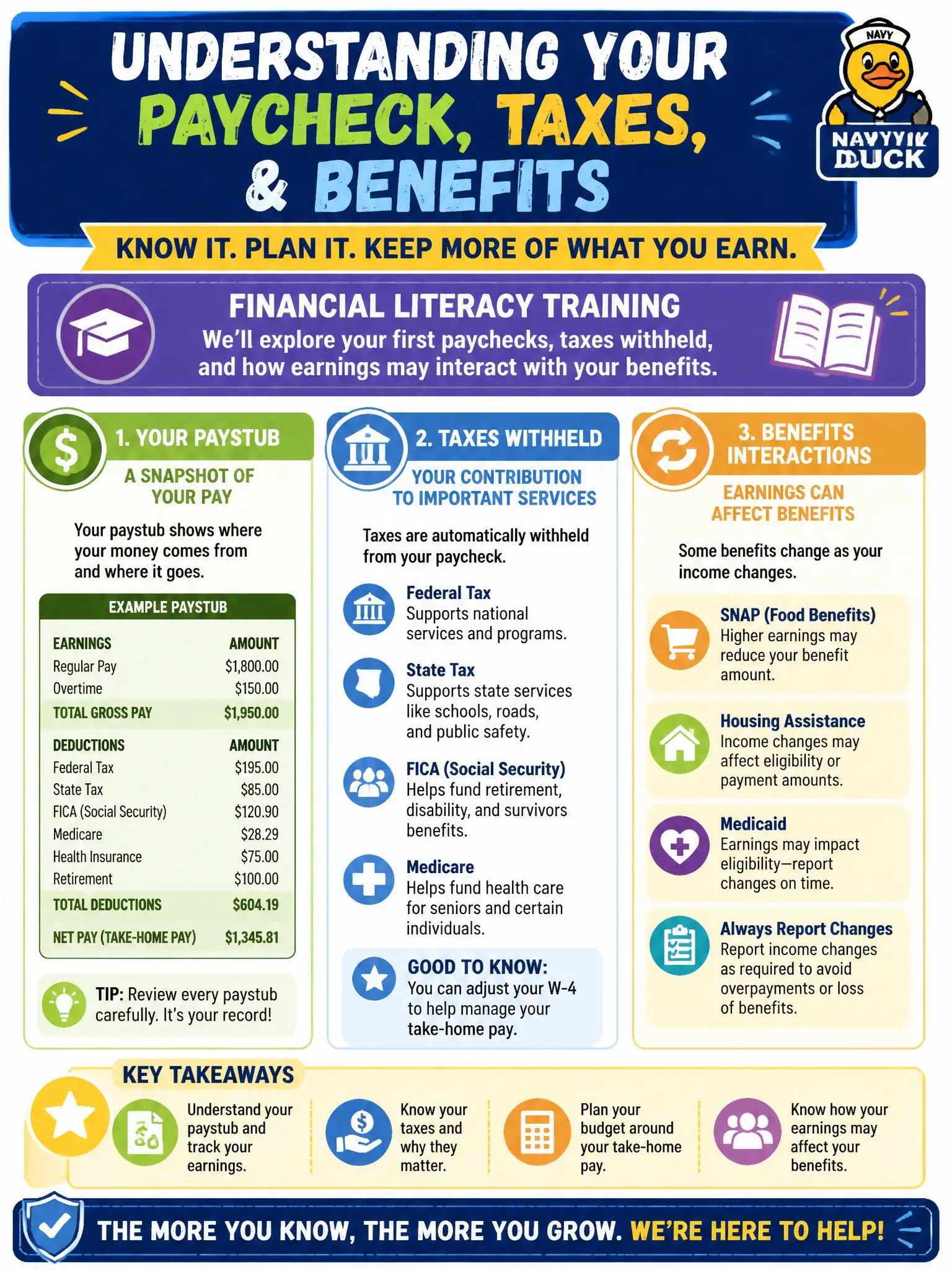
First paystubs look like alphabet soup—taxes, deductions, weird acronyms. Pair that with benefits rules and it is no wonder clients freeze. Teach the money basics so the first paycheck is a win, not a panic attack.
Full Explanation
When a newly working client is confused about paystubs, taxes withheld, and how earnings may interact with benefits, the counselor should facilitate financial literacy training covering first paychecks, taxes, and benefits interactions. Early money confusion is a preventable retention risk on public VR and CRP caseloads. Telling the client to ignore paystubs because financial details are irrelevant to rehab fails because misunderstanding deductions and benefits often triggers unnecessary job exits. Instructing the client to cash checks only and never open bank or benefits questions fails because avoidance blocks skill building, direct deposit stability, and accurate income reporting. Guaranteeing that taxes and benefits never change after employment begins fails factually and sets up betrayal when the first complex paystub arrives. Exam caveat: counselors facilitate literacy and referrals; they are not personal accountants or tax preparers for complex filings, and benefits calculations may still need a specialist. Operational check: review a sample or real paystub line by line with the client, schedule financial literacy or benefits counseling, and set a check-in after the second paycheck to catch garnishment or tax surprises early.