
A client's job search stalls because housing instability and missed transit keep disrupting interviews. What community-resource approach fits best?
Select an answer to reveal the explanation.
Short Explanation
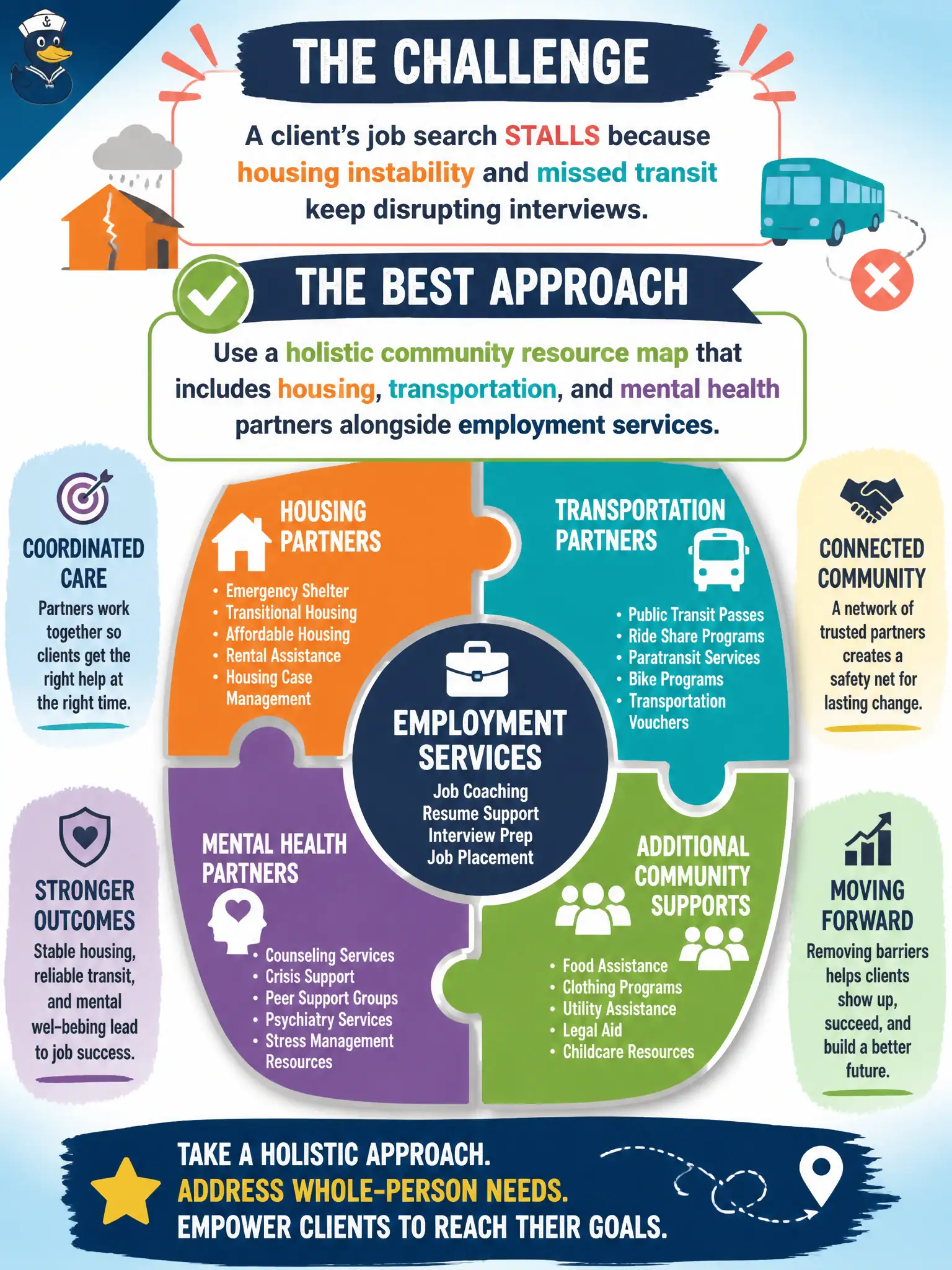
You cannot interview from a bus stop you cannot reach or a couch you might lose tomorrow. Map housing, transit, and mental health partners right next to the job stuff. Holistic resources keep the plan alive.
Full Explanation
When housing instability and missed transit keep disrupting interviews, a holistic community resource map that includes housing, transportation, and mental health partners alongside employment services fits rehabilitation counseling practice. Vocational progress collapses when basic stability partners are ignored. Focusing only on résumé formatting while ignoring housing or transit partners fails because document polish cannot create a place to sleep or a ride to the interview. Treating non-vocational needs as entirely outside rehabilitation counseling fails because CRCs routinely coordinate community resources that enable vocational goals. Requiring the client to solve housing alone before any job-related referral is allowed fails as an unnecessary sequential barrier when parallel supports are possible. Exam caveat: counselors coordinate and refer within scope—they do not become landlords or clinicians outside competence—and housing emergencies may temporarily slow job search without ending the vocational goal. Operational check: open a simple resource map with named housing, transit, mental health, and employment contacts; make at least one stability referral in the same week as job-search tasks rather than waiting for perfect housing first.