
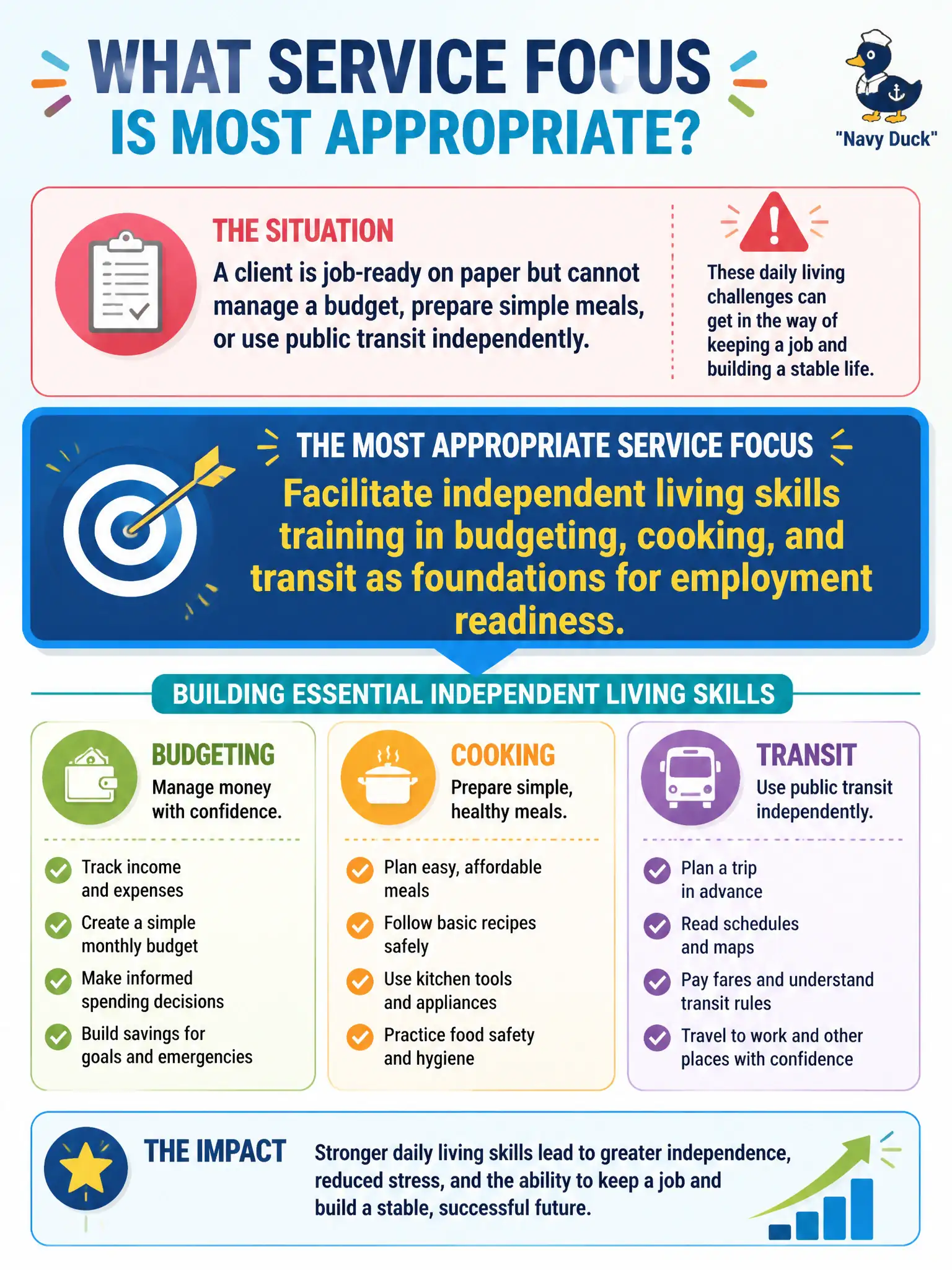
A client is job-ready on paper but cannot manage a budget, prepare simple meals, or use public transit independently. What service focus is most appropriate?
Select an answer to reveal the explanation.
Short Explanation
A great resume cannot catch the bus or stretch a first paycheck. Budgeting, cooking, and transit skills are employment infrastructure, not side hobbies. Build the living skills so the job has somewhere solid to land.
Full Explanation
When a client is job-ready on paper but cannot manage a budget, prepare simple meals, or use public transit independently, facilitating independent living skills training in those areas is an appropriate foundation for employment readiness. IL skills often determine whether a placement survives the first month. Placing immediately and assuming living skills will appear on the job fails because workplaces are poor classrooms for basic community living when failure costs a job. Concluding that independent living skills are unrelated to vocational success fails by ignoring the ecological supports competitive work requires. Replacing employment goals with indefinite day programming only fails when the client’s goal is work; IL training should enable—not replace—employment objectives. Exam caveat: IL training intensity should match assessed gaps; not every job seeker needs a full IL curriculum, but documented deficits in budgeting, cooking, or transit warrant intervention before or alongside search. Operational check: assess the three skill areas with observation or checklist, authorize or refer for targeted IL training, and set mastery criteria tied to the commute and first-paycheck tasks before intensive placement.