
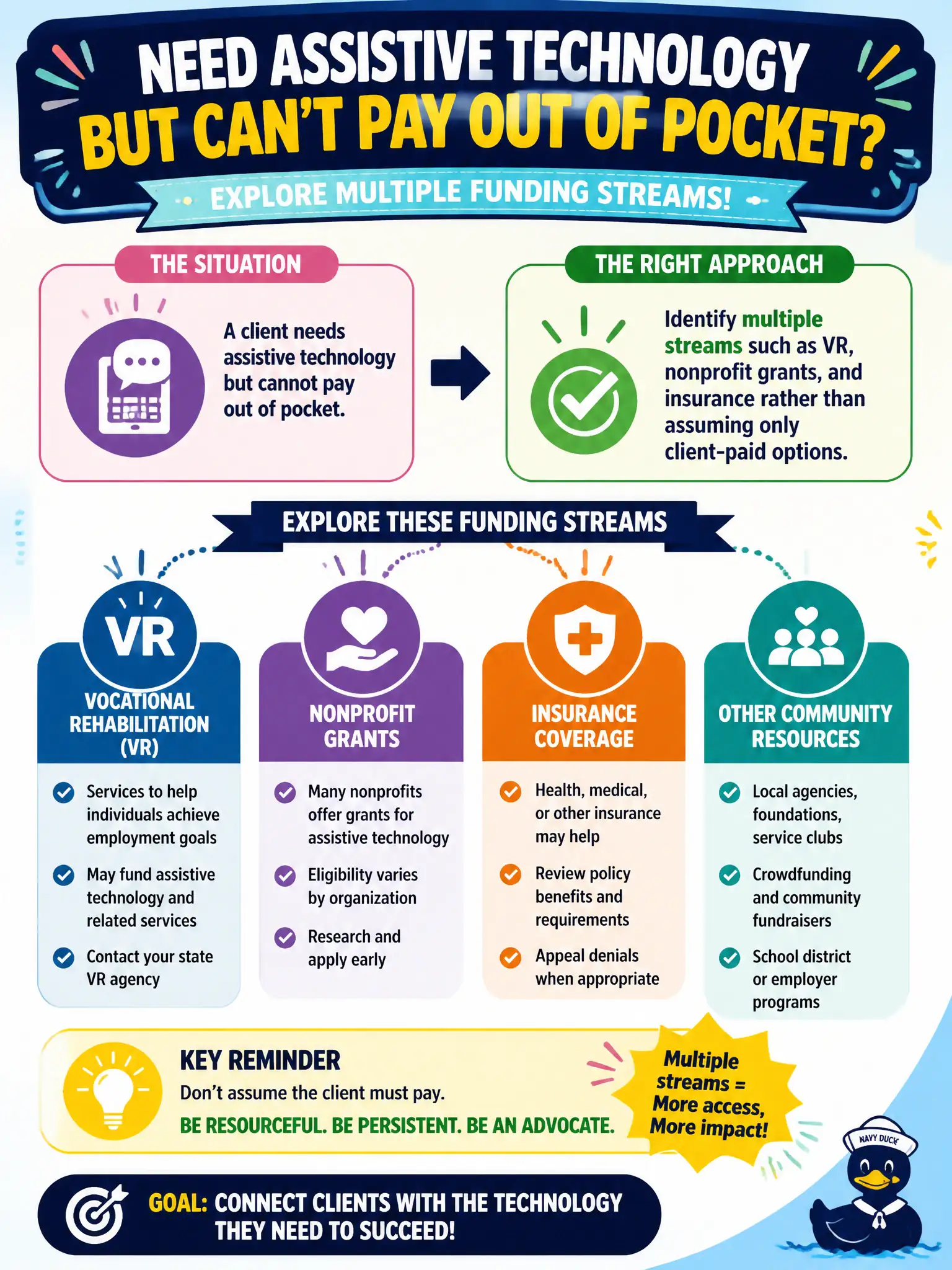
A client needs assistive technology but cannot pay out of pocket. Which funding approach should the counselor explore?
Select an answer to reveal the explanation.
Short Explanation
AT money is not only whatever is in the client's wallet. VR, nonprofits, and insurance can all be doors—knock on more than one. Diversify the hunt before declaring the tool unaffordable.
Full Explanation
When a client needs assistive technology but cannot pay out of pocket, counselors should identify multiple funding streams such as VR authorization, nonprofit grants, and insurance rather than assuming only client-paid options. Resource braiding is core Domain 9 practice in public rehabilitation. Telling the client AT is available only through personal savings or credit cards fails because it ignores the very systems designed to fund disability-related technology. Waiting until the client is employed so the employer must buy every device automatically fails because many devices are needed to get employed, and employer obligations are not a universal automatic purchase of every preferred tool. Limiting requests to paper pamphlets because technology funding never exists fails by defeatism contradicted by VR, insurance, and community grant realities. Exam caveat: eligibility, comparable benefits, and medical necessity rules differ by funder; exploring streams is not a promise that every device will be approved. Operational check: list at least three potential funding sources with application steps and timelines, check comparable benefits first when required, and document denials before moving to the next stream.