
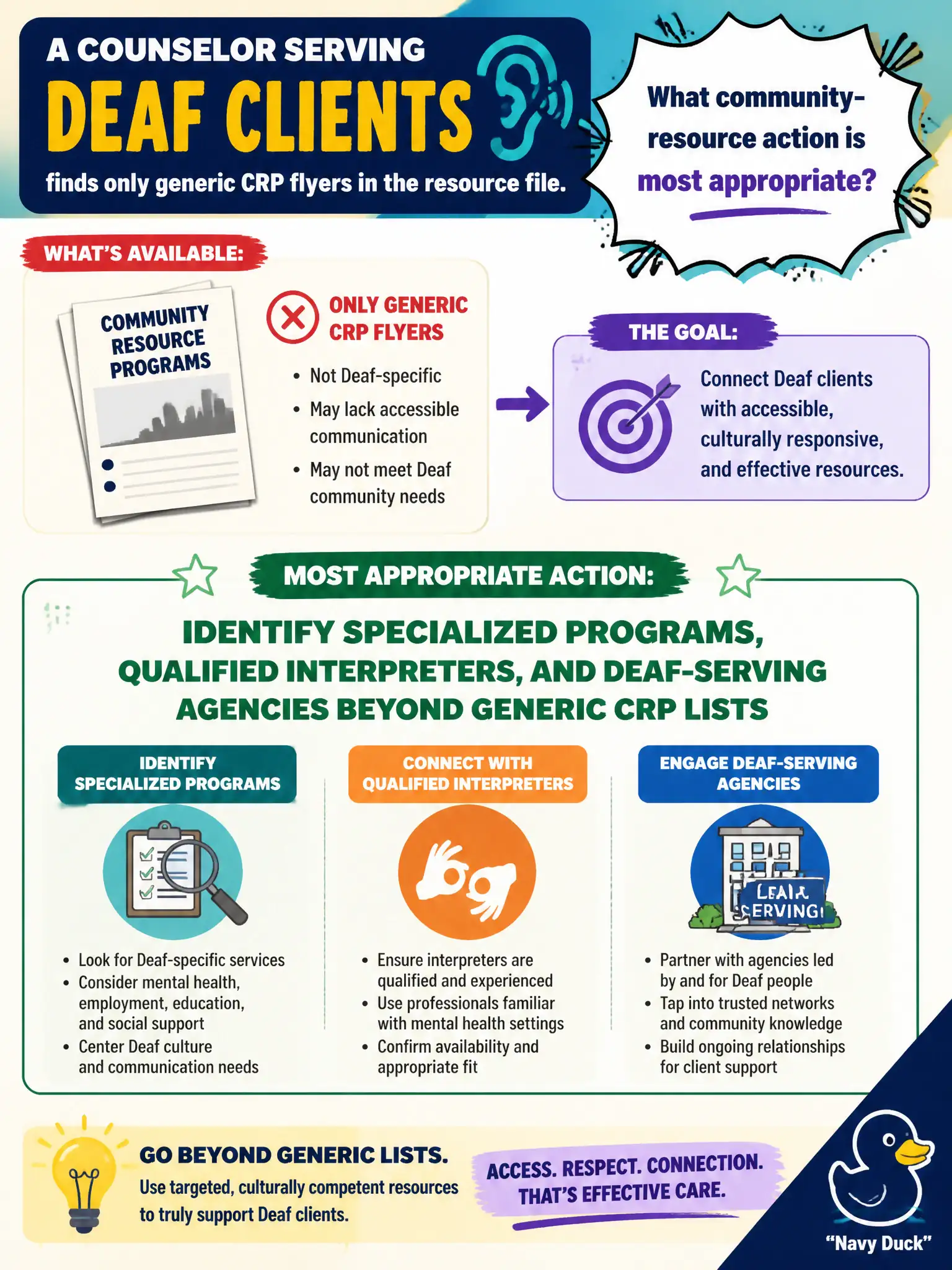
A counselor serving Deaf clients finds only generic CRP flyers in the resource file. What community-resource action is most appropriate?
Select an answer to reveal the explanation.
Short Explanation
Generic flyers will not cut it when clients need ASL-fluent, Deaf-aware services. Dig for specialized programs and qualified interpreters. Underserved communities deserve a real Rolodex, not a one-size-fits-none pamphlet.
Full Explanation
Serving Deaf clients with only generic CRP flyers in the resource file is inadequate. Counselors should identify specialized programs, qualified interpreters, and Deaf-serving agencies beyond generic lists so language access and cultural competence are real, not assumed. Assuming generic vocational programs always meet ASL and Deaf-culture needs fails because many “open to all” programs lack interpreter capacity and cultural fluency. Advising that community partnerships are unnecessary if VR authorizes job coaching fails because coaching alone does not create a culturally affirmative service network. Referring exclusively to hearing-centered providers to accelerate placement speed fails because speed gained by excluding access becomes placement failure and ethical harm. Exam caveat: not every Deaf client wants only Deaf-specific programs; informed choice may include mainstream settings with strong interpreting—but the counselor must be able to offer specialized options, not only generic ones. Operational check: maintain a living resource list of Deaf-serving agencies, interpreter vendors, and ASL-accessible training programs; verify interpreter quality before referral rather than relying on flyer language alone.