
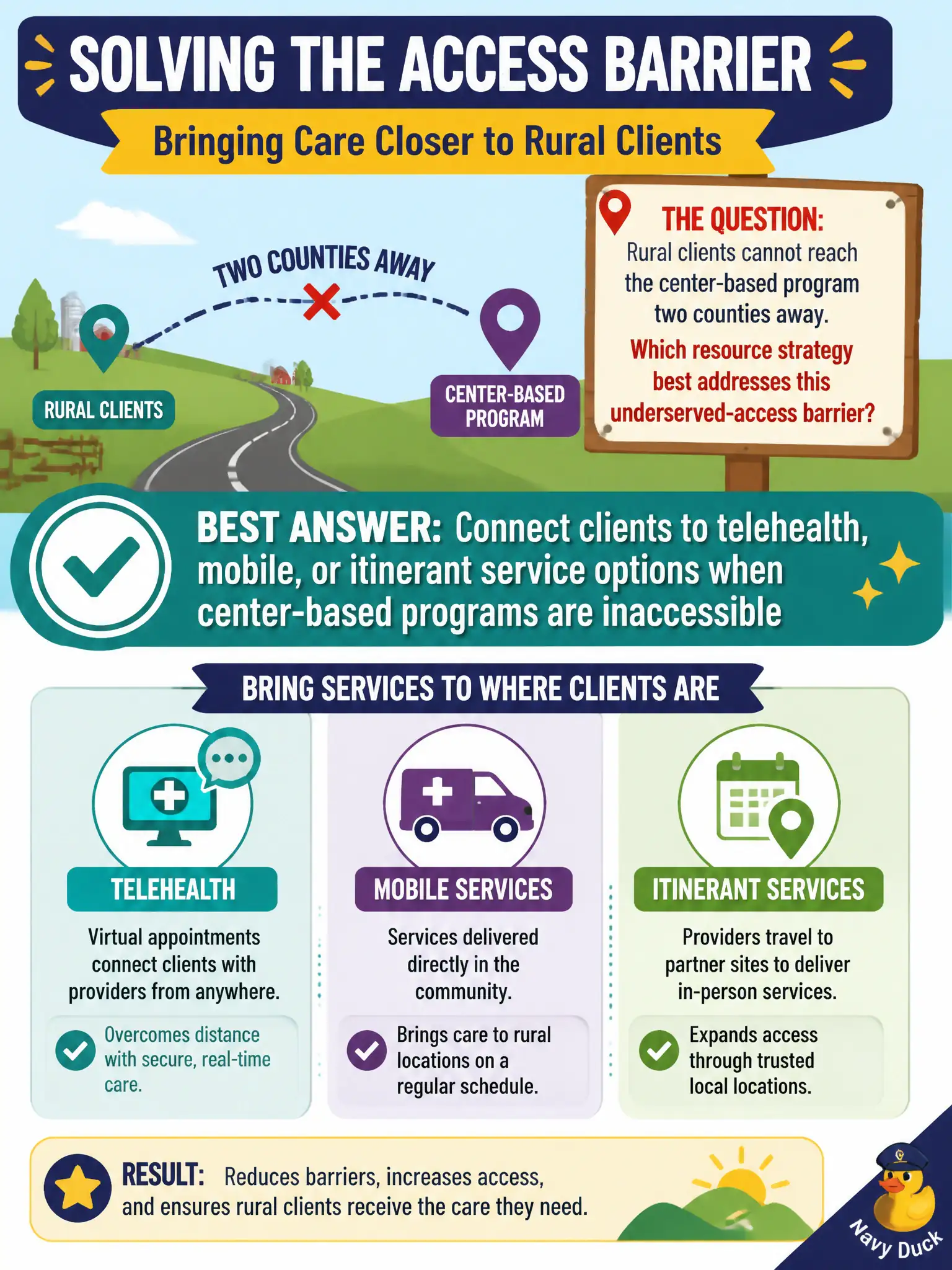
Rural clients cannot reach the center-based program two counties away. Which resource strategy best addresses this underserved-access barrier?
Select an answer to reveal the explanation.
Short Explanation
A two-county drive is a brick wall, not a motivation problem. When the center is out of reach, bring services closer—telehealth, mobile clinics, itinerant staff. Rural access is a resource design issue.
Full Explanation
When rural clients cannot reach a center-based program two counties away, connecting them to telehealth, mobile, or itinerant service options best addresses underserved-access barriers. Geography should reshape service modality in public VR and partner systems, not become a compliance weapon against people who lack transport. Closing cases as noncompliant for missing in-person appointments fails because the barrier is access infrastructure, not character. Requiring relocation to the city before any services can begin fails as an unreasonable precondition that many clients with disabilities and limited income cannot meet. Limiting services to mailing brochures with no interactive support fails because passive mailers do not replace counseling, skills training, or placement help. Exam caveat: telehealth and mobile options must still meet confidentiality, clinical appropriateness, and funder rules; some services truly require in-person assessment and should be scheduled with travel supports rather than abandoned. Operational check: offer at least one accessible modality (telehealth, mobile clinic, itinerant counselor day, or transport assistance), document the offer, and only then evaluate attendance concerns.