
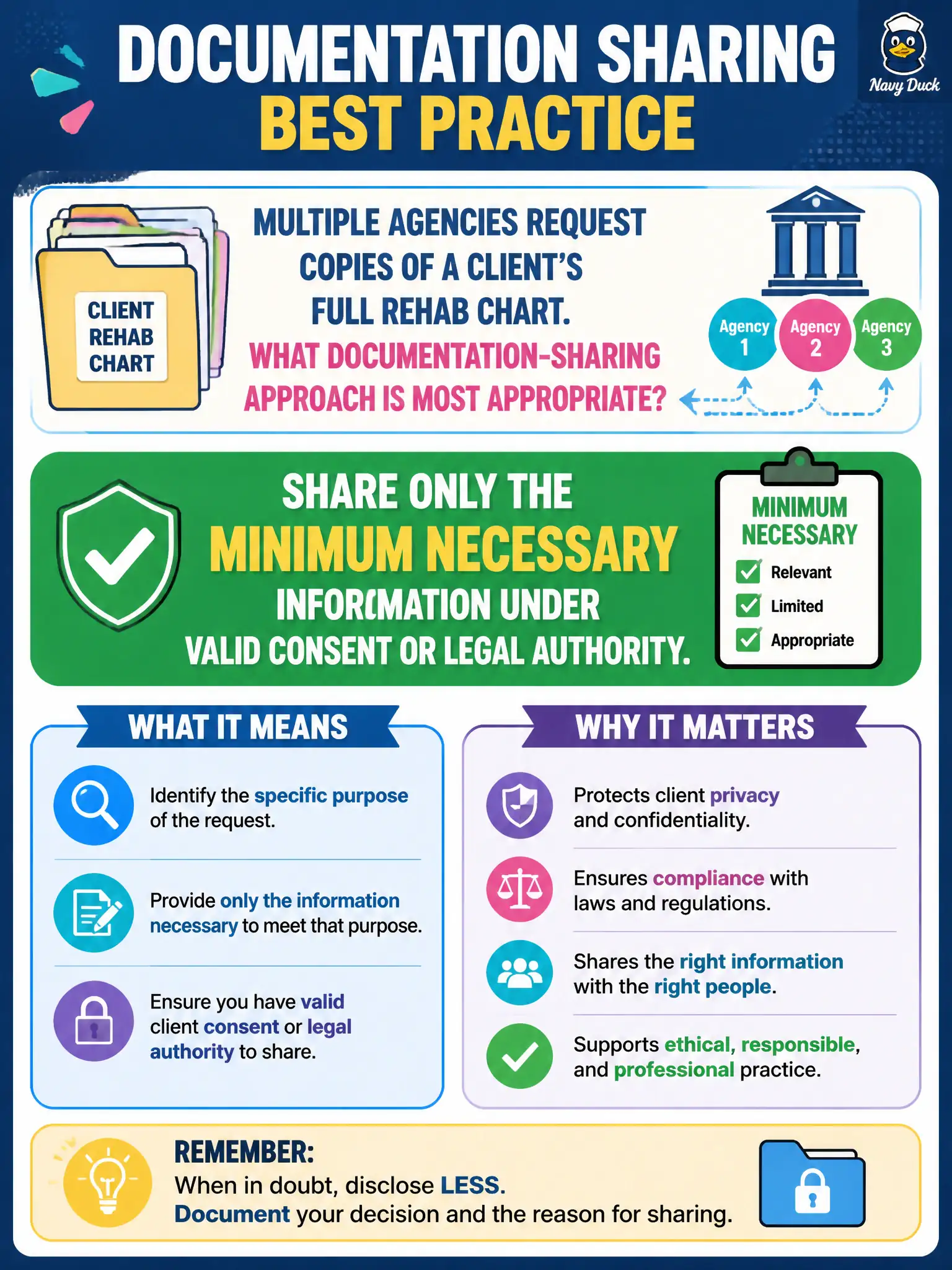
Multiple agencies request copies of a client's full rehab chart. What documentation-sharing approach is most appropriate?
Select an answer to reveal the explanation.
Short Explanation
Partners don't need the whole diary—just the pages that unlock the next door. Minimum necessary plus real consent keeps collaboration ethical. Dumping the full chart 'to be helpful' isn't helpful.
Full Explanation
When multiple municipal agencies request a client's full rehab chart, the appropriate approach is to share only the minimum necessary information under valid consent or legal authority. Privacy stewardship protects trust and complies with counseling ethics and applicable health-information rules in civic service systems. Blanket distribution of entire charts for convenience is rarely justified and multiplies breach risk. Emailing the entire unredacted chart to every requester maximizes exposure and often exceeds authorization scope. Refusing all sharing even when the client authorizes a limited release blocks legitimate coordination the client wants and can stall multi-agency support. Posting case notes to a public folder so partners can browse freely is a confidentiality breach incompatible with professional practice. Exam caveat: court orders, mandated reports, or specific statutes may compel disclosure beyond ordinary consent—but even then, disclose what is required, not everything convenient for partners. Operational check: for each requester, verify a valid release or legal basis, disclose only fields needed for the stated purpose, log what was sent and when, and decline full-chart dumps that exceed the civic authorization.