
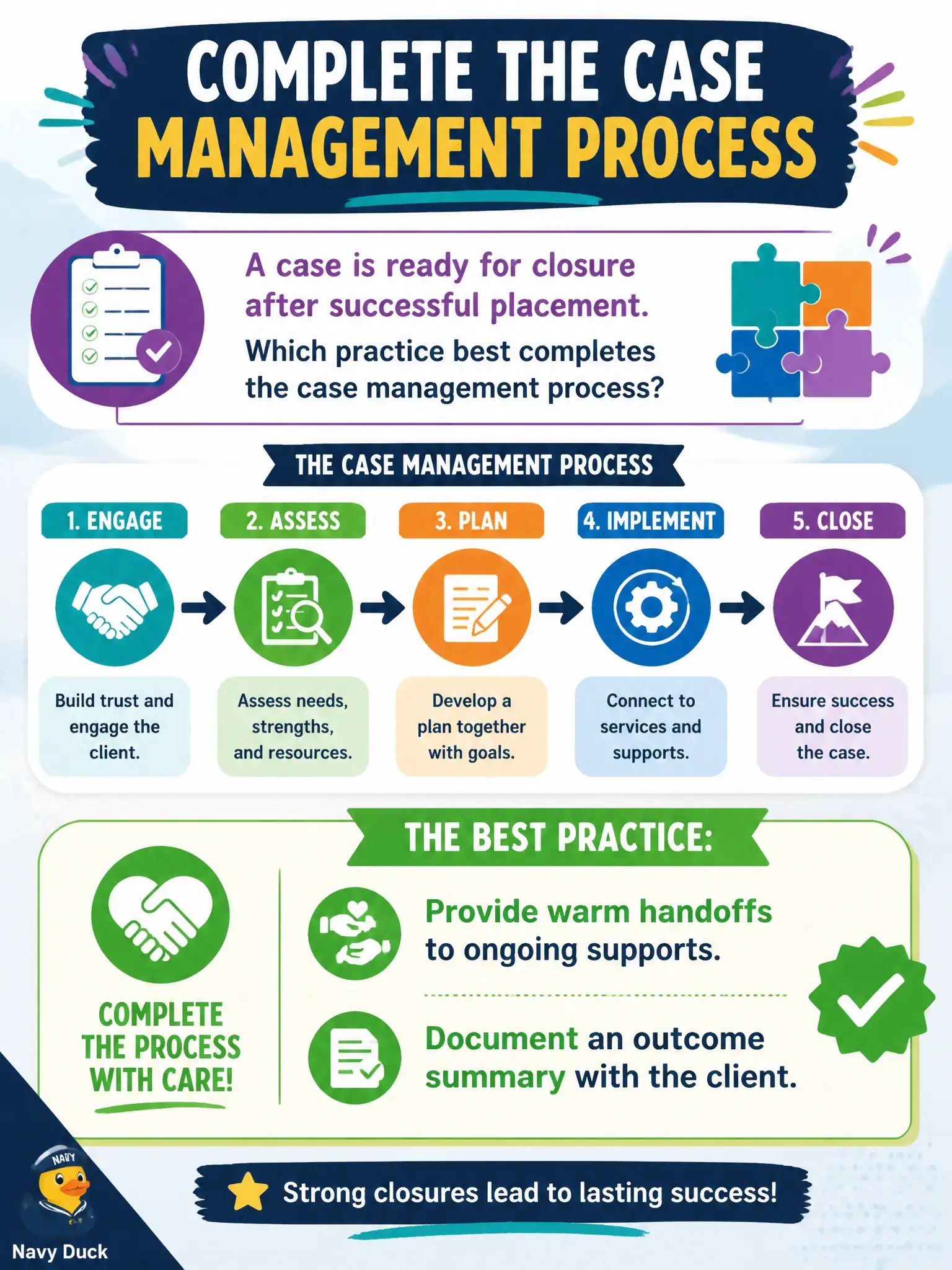
A case is ready for closure after successful placement. Which practice best completes the case management process?
Select an answer to reveal the explanation.
Short Explanation
Closure isn't slamming a filing cabinet. Hand people off warmly, sum up what worked, and leave a clean trail. Ghosting at the finish line undoes a lot of good rehab work.
Full Explanation
Successful closure after placement in municipal rehabilitation is completed with warm handoffs to ongoing supports and an outcome summary documented with the client. Closure is a planned transition, not a silent file shutdown. Continuity to natural supports, employers, benefits counselors, or community providers protects gains made during the case and reduces early job loss after formal services end. Closing the file without notifying the client or receiving providers abandons transition ethics and can strand the worker without knowing who to call. Deleting progress notes so future agencies start with a blank record destroys continuity and may violate record-retention rules in public programs. Keeping the case open indefinitely with no goals to avoid transition work inflates caseloads and avoids accountable closure. Exam caveat: warm handoff content must follow consent and minimum-necessary rules when sharing with civic partners, and some cases need stepped-down monitoring before full closure. Operational check: before closure status is entered, review outcomes with the client, complete consented handoffs to named supports, file an outcome summary, and confirm the client knows whom to contact after the municipal case ends.