
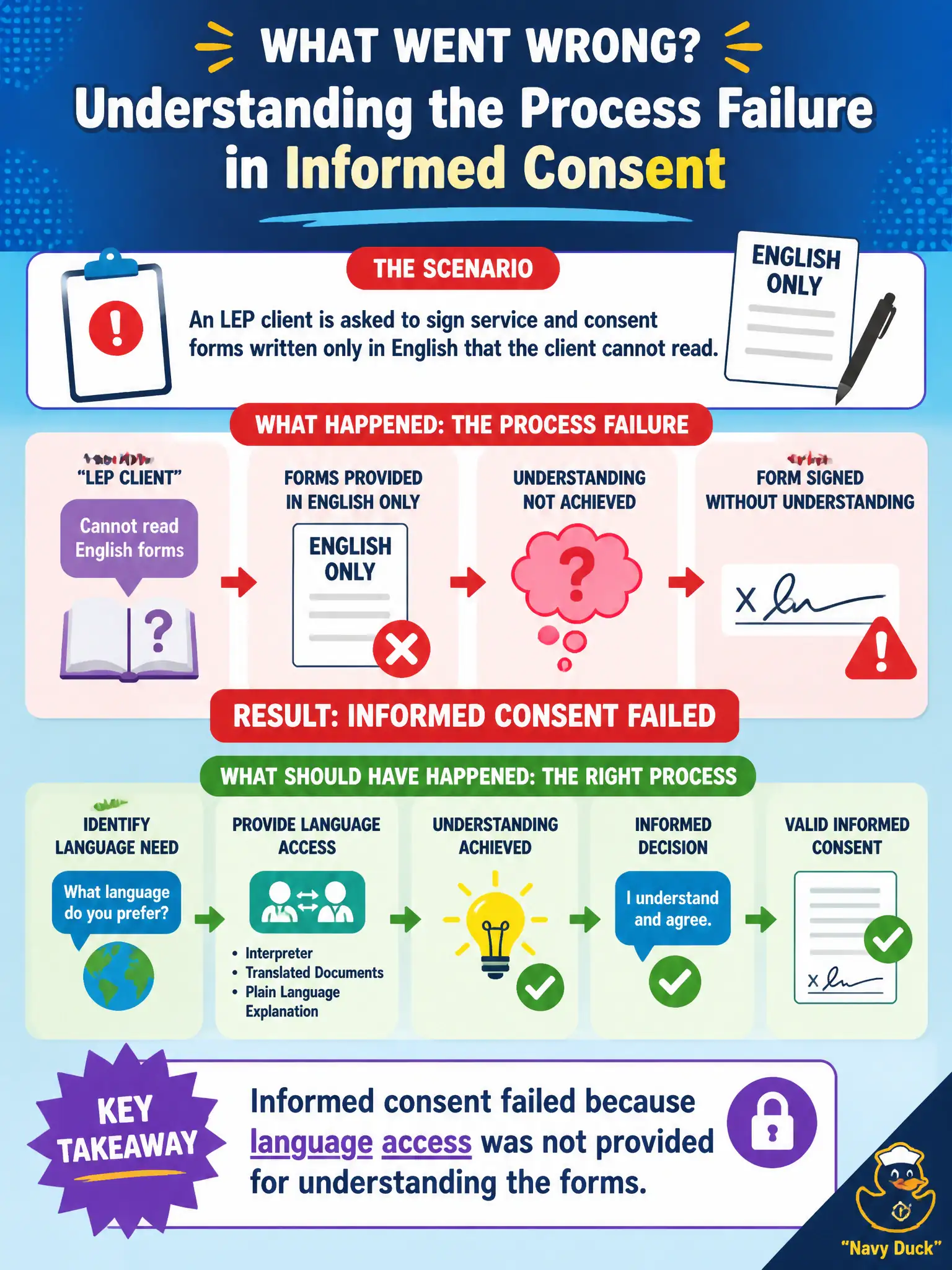
An LEP client is asked to sign service and consent forms written only in English that the client cannot read. What process failure has occurred?
Select an answer to reveal the explanation.
Short Explanation
A signature without understanding is just ink. If the forms aren't in a language the client can use—or explained through proper interpretation—consent didn't really happen. Fix language access first.
Full Explanation
Informed consent fails when a limited-English-proficient municipal client is asked to sign service and consent forms written only in English that the client cannot read. Language access is required for understanding rights, risks, costs, and agreements; a signature without comprehension is not meaningful consent in rehabilitation ethics or sound civic practice. Rehabilitation counselors share responsibility for accessible consent processes rather than treating forms as a clerical checkbox. Claiming consent is valid whenever a signature appears, regardless of comprehension, elevates paperwork theater over autonomy and often over legal language-access expectations. Asserting that only medical providers—not rehab counselors—must ensure language access for forms wrongly narrows language-access duties in VR and CRP settings. Treating LEP status as voiding the need for consent because services are presumed accepted strips autonomy from the client. Exam caveat: emergency exceptions and implied consent doctrines are narrow; routine municipal VR or CRP intake forms still require understandable language access before signature. Operational check: stop signature collection until qualified interpretation or translated forms are provided, document language preference, and confirm teach-back of key consent points before filing the civic forms.