
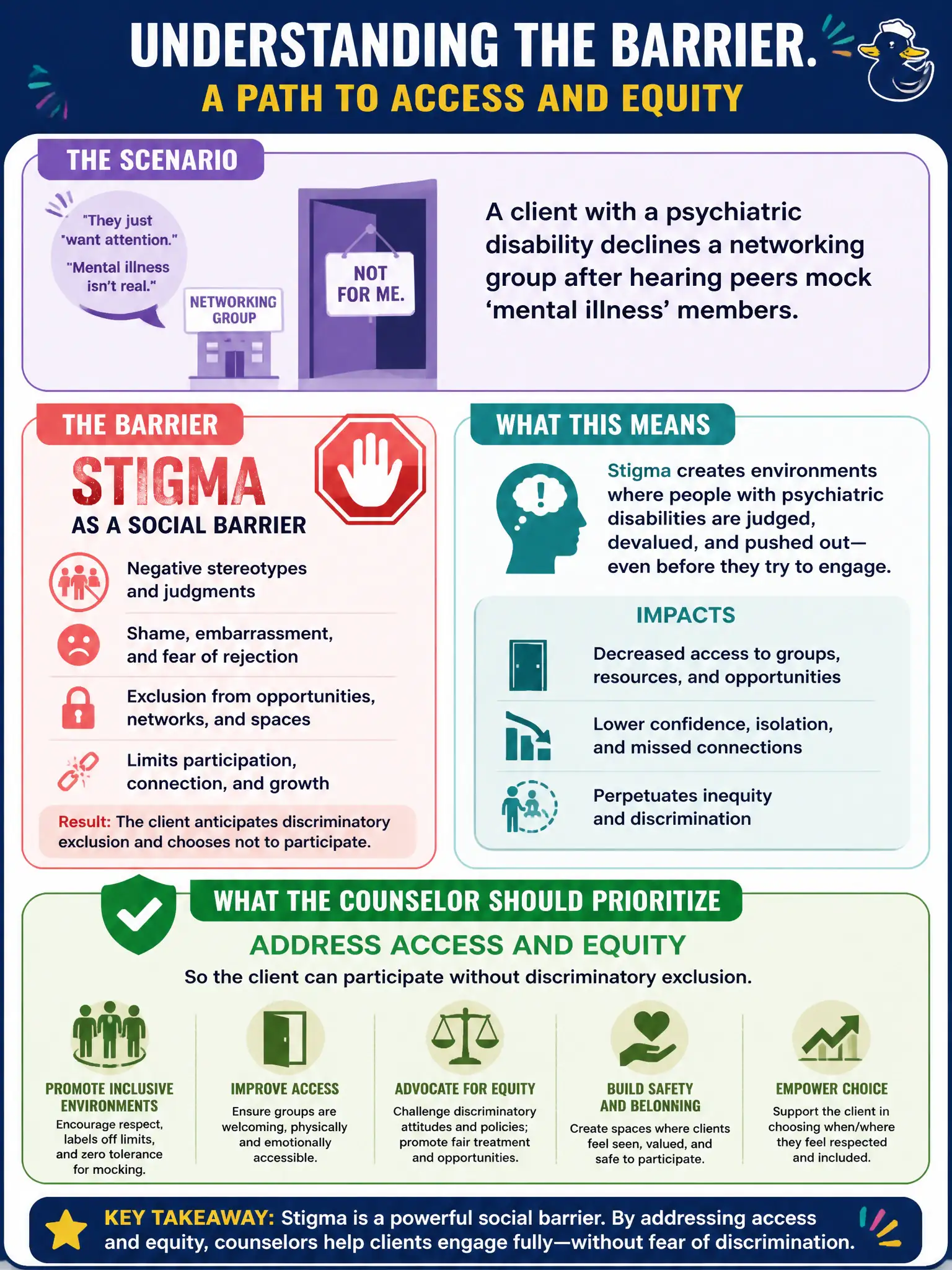
A client with a psychiatric disability declines a networking group after hearing peers mock 'mental illness' members. What social barrier is most clearly illustrated, and what should the counselor prioritize?
Select an answer to reveal the explanation.
Short Explanation
Stigma is a locked club door—skills ready, invitation withheld. When mockery keeps someone out of a networking group, treat it as an equity barrier and fix the access climate, not the client's courage.
Full Explanation
Stigma is a social barrier when a municipal networking group mocks members associated with mental illness and a client with a psychiatric disability declines participation. The counselor should prioritize access and equity interventions so the client can participate without discriminatory exclusion—addressing group norms, facilitating alternative affirming networks, or advocating for inclusive facilitation rather than forcing unprotected attendance. Focusing only on transportation cost while ignoring stigma and pushing attendance without supports misidentifies the barrier. Treating the incident as proof that networking groups are never appropriate for any client with disability overgeneralizes from a hostile setting to all civic networking. Interpreting the event as evidence the client must conceal the disability permanently and avoid all groups entrenches stigma instead of challenging it. Exam caveat: clients retain the right to decline groups; equity work expands safe options and addresses discriminatory climates without coercing disclosure or unsafe exposure. Operational check: document stigma as the barrier, discuss safer networking alternatives with the client, and if the original group is to be used, require facilitator expectations against mocking disability before any return attempt.