
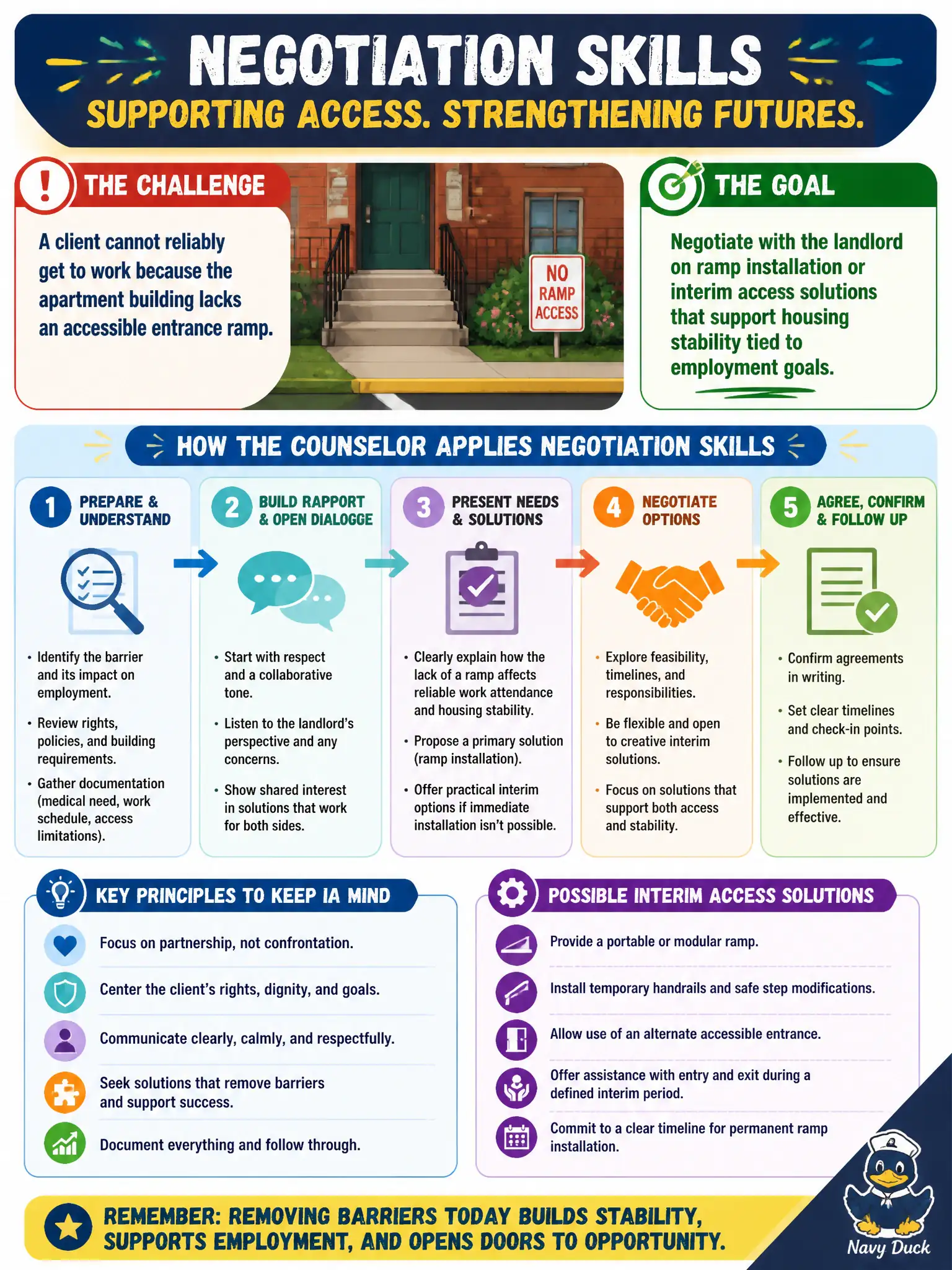
A client cannot reliably get to work because the apartment building lacks an accessible entrance ramp. How should the counselor apply negotiation skills?
Select an answer to reveal the explanation.
Short Explanation
Sometimes the real placement barrier is the front door, not the résumé. Talking with a landlord about a ramp is still rehab negotiation—it keeps housing and work from collapsing together.
Full Explanation
Negotiation skills in rehabilitation case management extend to housing access when a municipal client's apartment building lacks an accessible entrance ramp that blocks reliable travel to work. Negotiating with the landlord for ramp installation or interim access solutions supports housing stability tied to employment goals and treats the environmental barrier as in-scope for civic rehab planning. Limiting negotiation to job vendors only and treating housing access as outside rehab scope ignores a decisive barrier to work attendance. Advising the client to quit the job until a different building becomes available years later sacrifices employment for an avoidable access failure. Filing training authorizations as a substitute for addressing the physical access barrier funds the wrong problem. Exam caveat: landlord negotiations must align with fair housing law, reasonable modification rules, and client consent; counselors advocate and coordinate rather than personally constructing ramps or giving legal ultimatums beyond competence. Operational check: document the access barrier's work impact, initiate landlord or property-manager negotiation (or fair-housing advocacy referral) for ramp or interim solutions, and set a dated follow-up before concluding that job loss is inevitable.