
After a critical incident involving a client, what documentation practice best supports risk management?
Select an answer to reveal the explanation.
Short Explanation
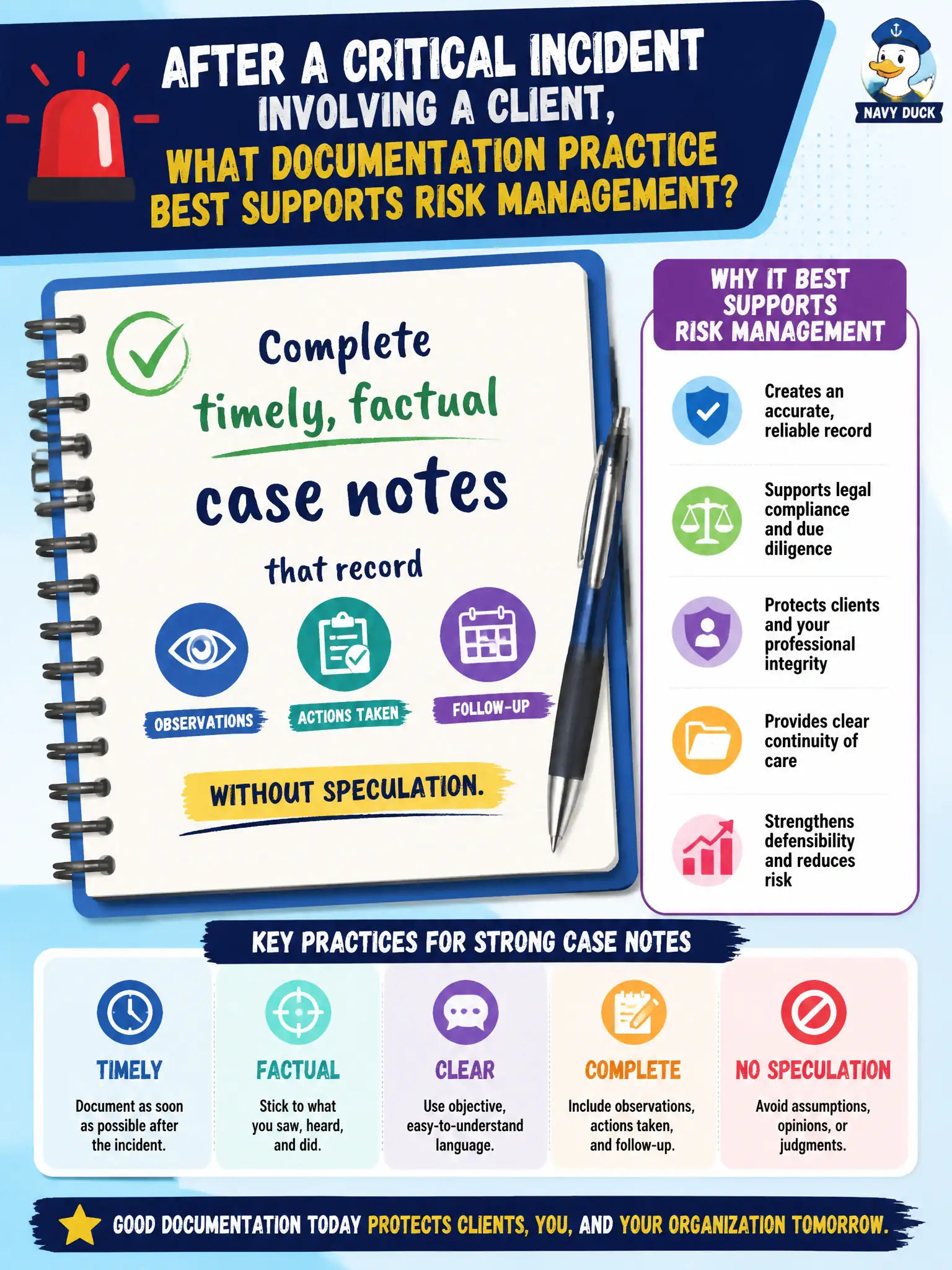
When something blows up, the chart is your flight recorder—write soon, stick to what you saw and did, skip the novel. Late, fuzzy, or blame-heavy notes help nobody when risk review starts.
Full Explanation
After a critical incident involving a municipal client, risk management is best supported by timely, factual case notes that record observations, actions taken, and follow-up without speculation. Contemporaneous objective documentation protects continuity, legal defensibility, and coordinated response across civic partners. Delay and opinion-heavy charts weaken both care and accountability. Waiting several weeks to write notes so emotions settle invites memory distortion exactly when accuracy matters most. Recording only opinions about who was at fault and omitting observable facts turns the chart into advocacy rhetoric rather than a professional record. Deleting prior case notes to keep the chart free of incident references destroys the audit trail and can constitute improper alteration of records. Exam caveat: factual notes still omit gratuitous blame and protected gossip; 'without speculation' means stick to what was observed and done, not that counselors may never document clinical impressions in the proper section. Operational check: complete an incident-related note the same day when possible, separate facts from impressions, list actions and follow-ups, and confirm prior notes remain intact in the official civic record.