
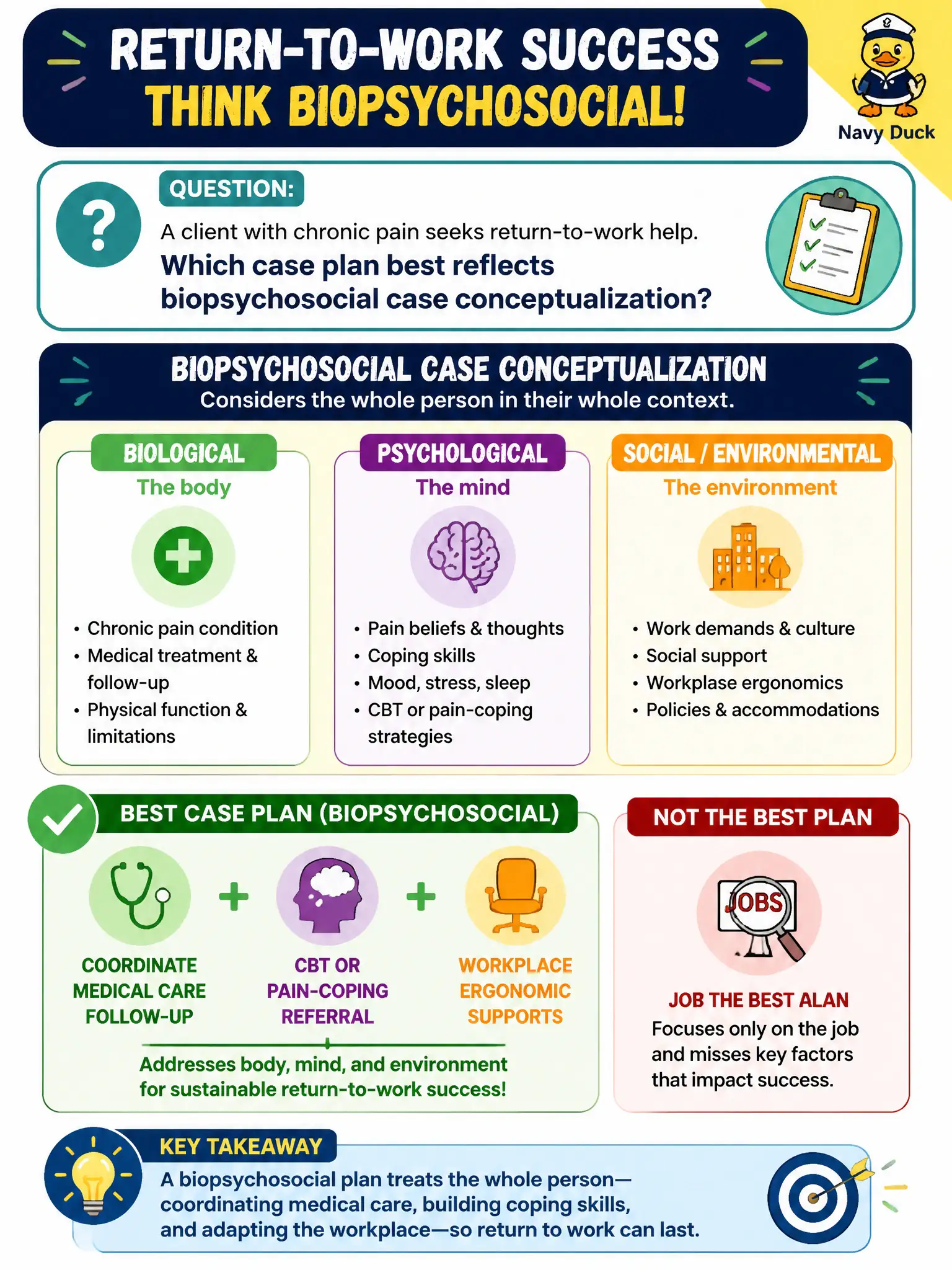
A client with chronic pain seeks return-to-work help. Which case plan best reflects biopsychosocial case conceptualization?
Select an answer to reveal the explanation.
Short Explanation
Chronic pain isn't a job board problem with a medical sticker on it. Good plans hit the body, the coping side, and the workstation—not just 'apply here.' Think three lanes of traffic moving together.
Full Explanation
Biopsychosocial case conceptualization for a municipal client with chronic pain seeking return-to-work coordinates medical care follow-up, CBT or pain-coping referral, and workplace ergonomic supports rather than job leads alone. Pain, coping, and work design interact; addressing only vacancies leaves the functional problem untouched. Integrated planning improves the odds that civic employment goals are realistic and sustainable. Providing only a list of open warehouse jobs without addressing pain or work design is placement-only thinking that invites early failure. Focusing exclusively on disability rating paperwork and skipping functional or psychosocial supports substitutes claims administration for rehabilitation. Advising the client to stop all medical treatment so job search can move faster can worsen impairment and violates collaborative disability management. Exam caveat: not every pain case requires identical CBT and ergonomics packages, but the exam contrasts multi-domain coordination with leads-only, paperwork-only, or anti-treatment shortcuts. Operational check: ensure the RTW plan lists a medical follow-up, a coping or behavioral health support if indicated, and a worksite or ergonomic action; verify each has an owner and date before mass job-lead distribution.