
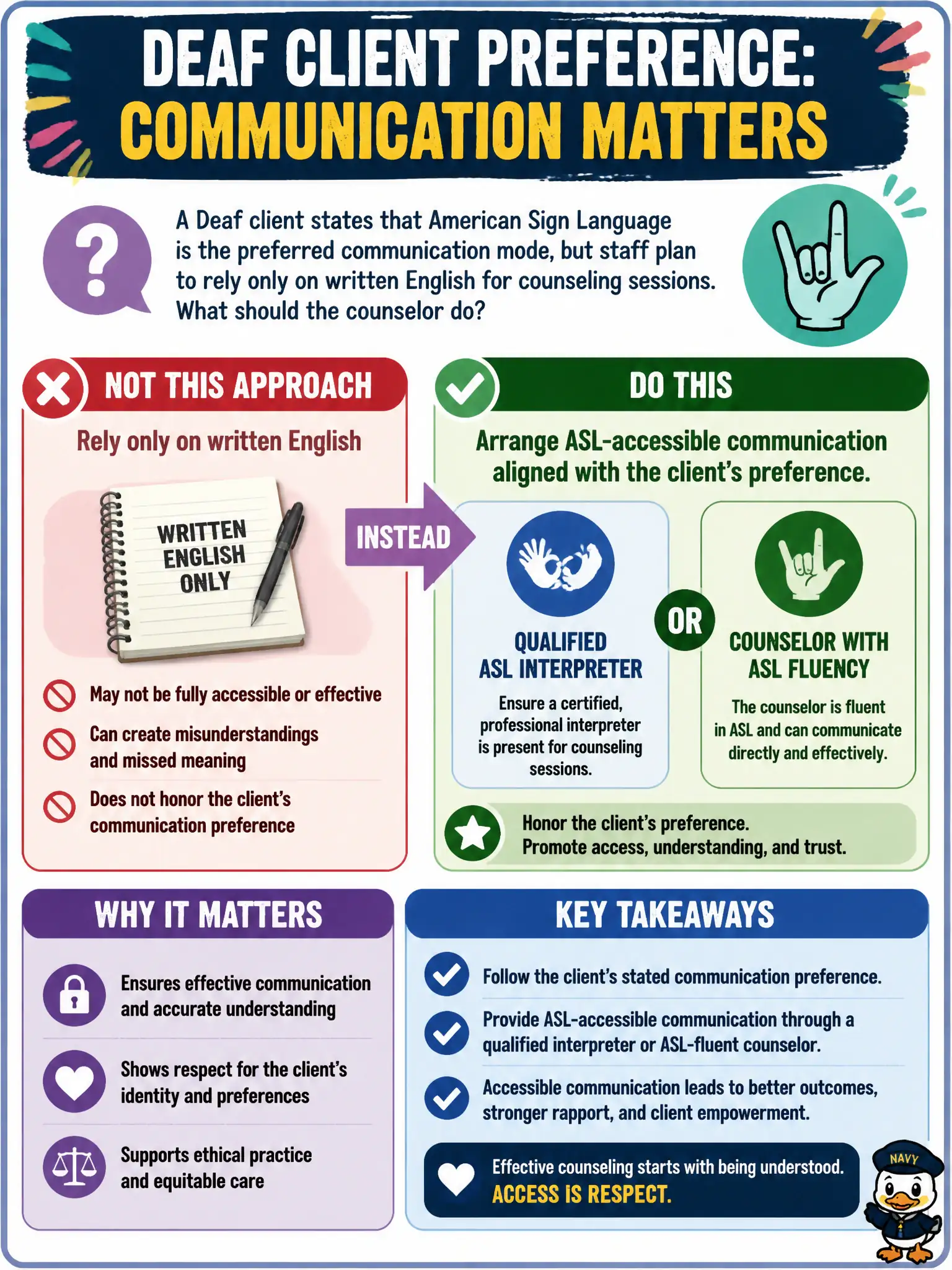
A Deaf client states that American Sign Language is the preferred communication mode, but staff plan to rely only on written English for counseling sessions. What should the counselor do?
Select an answer to reveal the explanation.
Short Explanation
Written English isn't ASL with a pen. Preferring sign language means the session needs a real communication bridge—qualified interpreting or fluent ASL—not a notepad workaround. Honor the modality the client actually uses.
Full Explanation
For a Deaf client who states that American Sign Language is the preferred communication mode, municipal rehabilitation counseling should arrange ASL-accessible communication through a qualified interpreter or counselor ASL fluency aligned with that preference. Language access is a rights and quality issue, not a courtesy. Written English alone does not substitute for signed language access when ASL is the client's preferred mode. Continuing written English only because literacy supposedly substitutes for signed language access ignores preferred-language rights and counseling effectiveness. Asking a family member who knows some signs to interpret all counseling content risks role conflict, incomplete fluency, and confidentiality problems. Postponing services indefinitely until the client agrees to oral-only communication coerces abandonment of ASL preference as a condition of help. Exam caveat: some clients prefer a mix of modes; the obligation is to honor stated preference and provide qualified access, not to impose staff convenience. Operational check: confirm ASL preference in the record, schedule a qualified interpreter (or verify counselor fluency adequacy) before the next session, and document that counseling proceeded in the preferred accessible mode.