
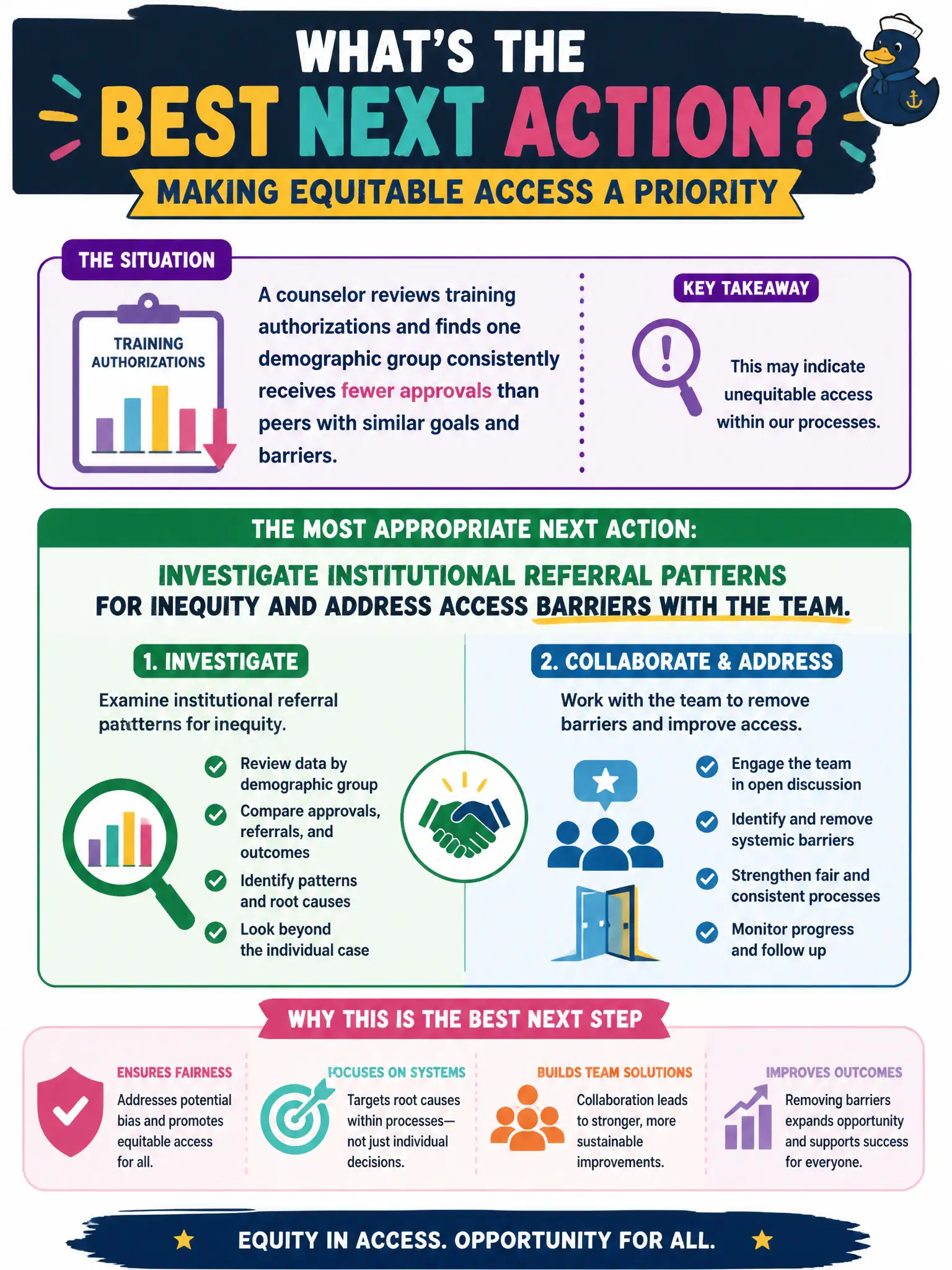
A counselor reviews training authorizations and finds one demographic group consistently receives fewer approvals than peers with similar goals and barriers. What is the most appropriate next action?
Select an answer to reveal the explanation.
Short Explanation
Think of it like a highway on-ramp that somehow only lets certain cars merge—same destination, different access. When training approvals tilt by group despite similar needs, dig into the system, not the clients. Equity work starts by challenging the pattern.
Full Explanation
When training authorizations in a municipal VR or community rehab program show one demographic group consistently receiving fewer approvals than peers with similar goals and barriers, the CRC should investigate institutional referral and approval patterns for inequity and address access barriers with the team. Disparity analysis treats patterns as potential systems problems rather than assumed client deficits. Corrective action may include bias review, outreach, documentation audits, and revised decision protocols. Assuming the disparity reflects lower motivation and tightening eligibility rules for that group converts inequity into punitive gatekeeping. Stopping authorizing training for all clients until volumes match across groups harms everyone and confuses equity with across-the-board denial. Referring only the under-authorized group to job clubs while skipping formal training reviews offers a lesser track instead of fixing unequal access to training itself. Exam caveat: group differences alone do not prove intentional discrimination in every instance, but CRC ethics and equity practice expect investigation rather than motivation stereotypes when civic approval patterns diverge. Operational check: pull de-identified authorization rates by demographic group for similar goal/barrier profiles, present findings to the team, document barrier hypotheses, and implement at least one corrective process change with a re-audit date.