
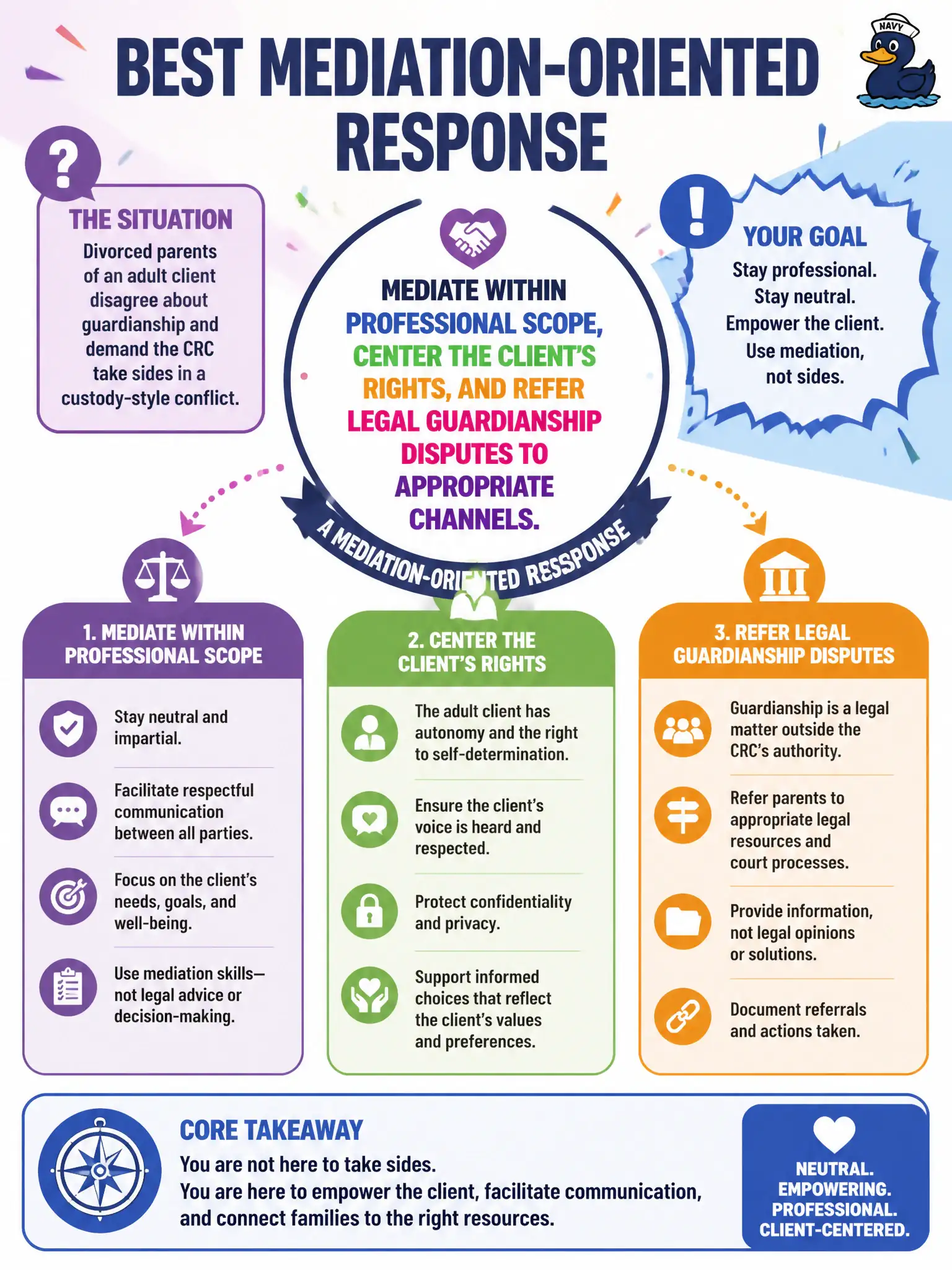
Divorced parents of an adult client disagree about guardianship and demand the CRC take sides in a custody-style conflict. What is the best mediation-oriented response?
Select an answer to reveal the explanation.
Short Explanation
Family warfare over guardianship isn't a place for the CRC to play referee with a gavel. Stay in scope—support the client's voice, cool the conflict where you can, and send legal fights to the right forum.
Full Explanation
When divorced parents of an adult client demand that the CRC take sides in a guardianship or custody-style conflict, mediation stays within professional scope, centers the client's rights and preferences, and refers legal guardianship disputes to appropriate channels. The counselor may facilitate communication about rehabilitation decisions but does not serve as a private judge of parental legal authority. Clarifying decision-making authority protects informed consent in municipal service delivery. Choosing one parent's position and enforcing it as the rehab plan improperly adjudicates a legal dispute. Ignoring the conflict and proceeding without clarifying decision-making authority risks invalid consent and later challenges. Ending all services until the parents reconcile personally holds the adult client's rehabilitation hostage to family peacemaking that may never occur. Exam caveat: if a court order or guardianship already assigns decision rights, the CRC follows that legal authority while still supporting the client's voice to the fullest extent allowed; the exam targets staying in counseling scope rather than amateur family-court practice. Operational check: pause contested decisions, document who holds legal authority if known, center the adult client's stated preferences in the rehab plan, and refer guardianship disputes to legal aid or counsel rather than picking a parental side.