
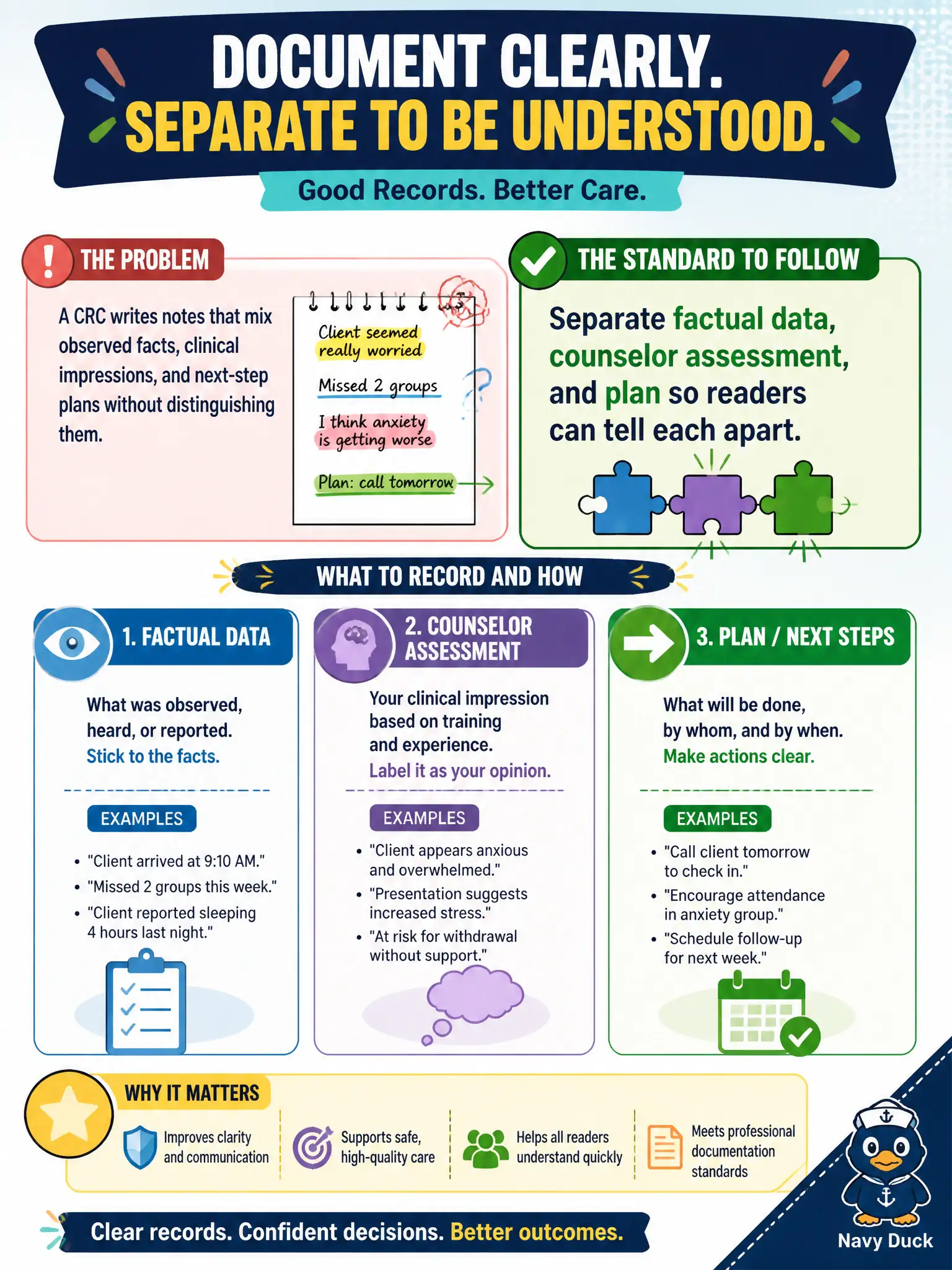
A CRC writes notes that mix observed facts, clinical impressions, and next-step plans without distinguishing them. What recording standard should guide revision?
Select an answer to reveal the explanation.
Short Explanation
Facts, your take, and the plan are three lanes—keep them marked. When they blur together, the next reader can't tell what was seen versus what was guessed.
Full Explanation
Professional recording standards in public rehabilitation separate factual data, counselor assessment, and plan elements so readers can tell observation from clinical impression and next steps. Mixing those layers into one undifferentiated paragraph makes covering counselors and auditors guess what was seen versus inferred, which weakens continuity and risk management in municipal case files. Clear separation improves ethical transparency and interdisciplinary trust. Blending all content into one opinion paragraph to save time recreates the ambiguity the standard seeks to prevent and invites misreading under coverage handoffs. Recording only impressions and omitting observable facts removes the evidentiary base for assessment and later defensibility. Listing plans without linking them to assessment or data disconnects action from rationale and weakens accountability to civic clients and funders. Exam caveat: separation can be achieved with headings, SOAP-like structure, or clearly labeled sentences; agencies differ on format, but the conceptual distinction remains examinable on the CRC. Operational check: revise a mixed note into labeled Fact / Assessment / Plan sections, ask a peer whether they can identify each layer without a hallway debrief, and adopt that habit for subsequent civic case entries.