
After referring a client to a job-coaching vendor, the CRC never checks service quality or outcomes. What case-management function is missing?
Select an answer to reveal the explanation.
Short Explanation
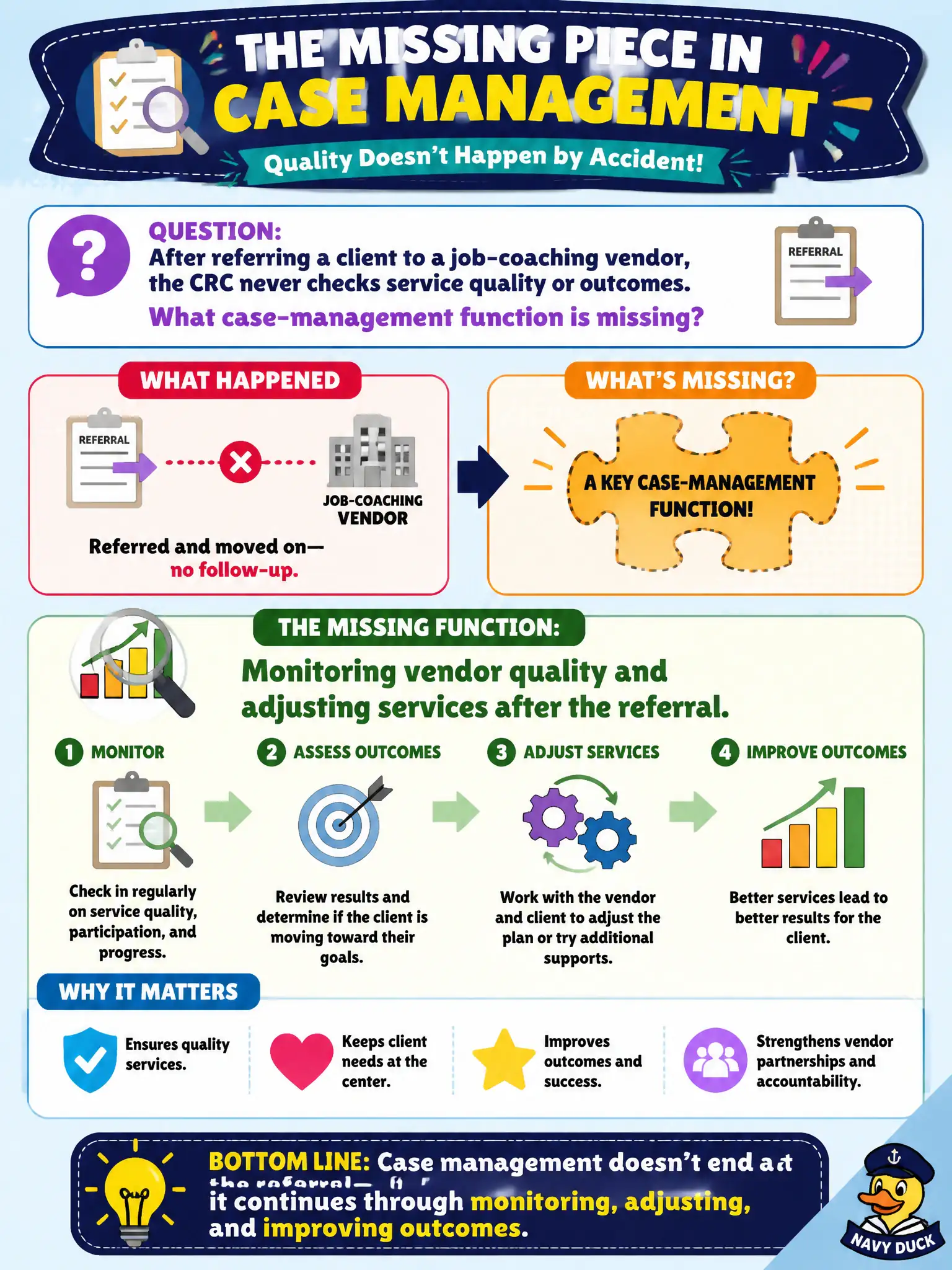
Referral isn't a parachute drop—you still watch the landing. Check whether the job coach is delivering, then tweak the plan if it's not working.
Full Explanation
After referral to a municipal job-coaching vendor, case management continues with monitoring of service quality and outcomes and adjustment of services when delivery falters. Referral is a coordination step, not a parachute drop that ends counselor duty. Quality monitoring protects the client and stewards public or insurer funds tied to the placement support, while feedback loops let the CRC change intensity, goals, or providers. Treating initial intake paperwork as the end of counselor duty after referral abandons monitoring and advocacy that define ongoing case management. Marketing the vendor to other clients without monitoring the current case confuses business development with accountability to the person already referred. Immediate case closure at the moment of referral closes the file before outcomes are known and before adjustments can be made. Exam caveat: monitoring intensity varies by risk and contract, but CRC practice expects documented follow-up on vendor performance rather than set-and-forget referrals in civic employment programs. Operational check: after a job-coach referral, schedule a check-in with client and vendor, document attendance, coaching quality indicators, and work outcomes, and revise authorizations or providers if goals are not advancing within the planned review window.