
A CRC drafts a rehab plan that links spinal-cord medical needs, adjustment counseling, and housing/supports into one coherent formulation. What model is being applied?
Select an answer to reveal the explanation.
Short Explanation
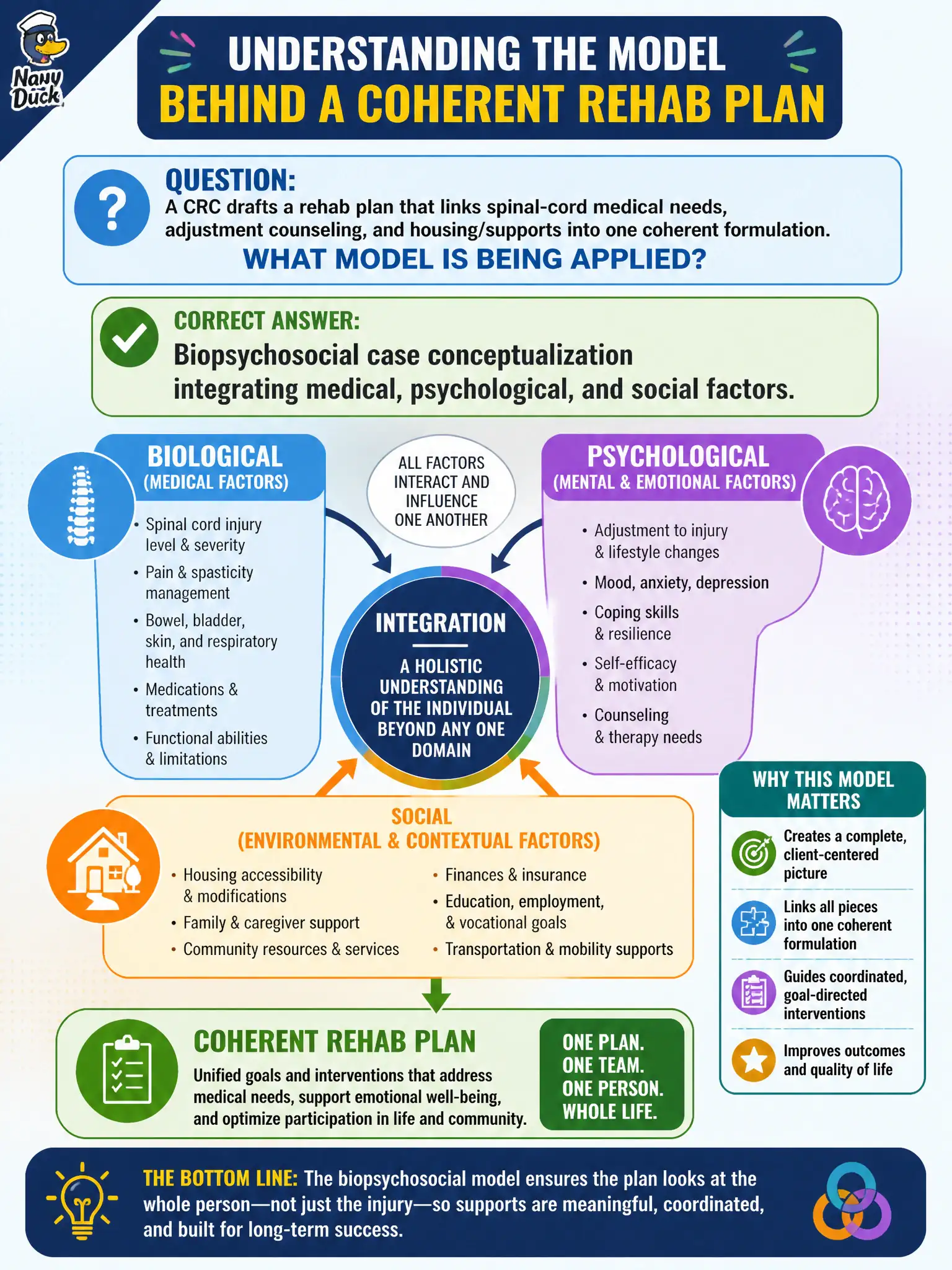
Body, mind, and life situation aren't three separate folders—they're one story. Biopsychosocial thinking braids medical, psychological, and social pieces into one rehab plan.
Full Explanation
Biopsychosocial case conceptualization integrates medical, psychological, and social factors into one coherent municipal rehabilitation formulation. Linking spinal-cord medical needs, adjustment counseling, and housing or community supports reflects that model rather than treating the body, mind, and environment as unrelated folders. The approach guides comprehensive planning across civic healthcare, counseling, and community living domains. A single-factor medical model that excludes psychological and social domains cannot explain housing barriers or adjustment needs that shape outcomes. A placement-only model that delays all counseling until after job start postpones psychological support and social planning that often determine whether placement sticks. An actuarial scoring model that replaces individualized clinical judgment may inform risk statistics but does not itself constitute individualized biopsychosocial formulation. Exam caveat: biopsychosocial thinking organizes assessment; it does not require every domain to receive equal service intensity at every moment, and medical stability may still gate some vocational steps. Operational check: review the rehab plan for explicit medical, psychological, and social elements; if one domain is missing despite known needs (for example, housing after SCI), add objectives and partners before calling the formulation complete.