
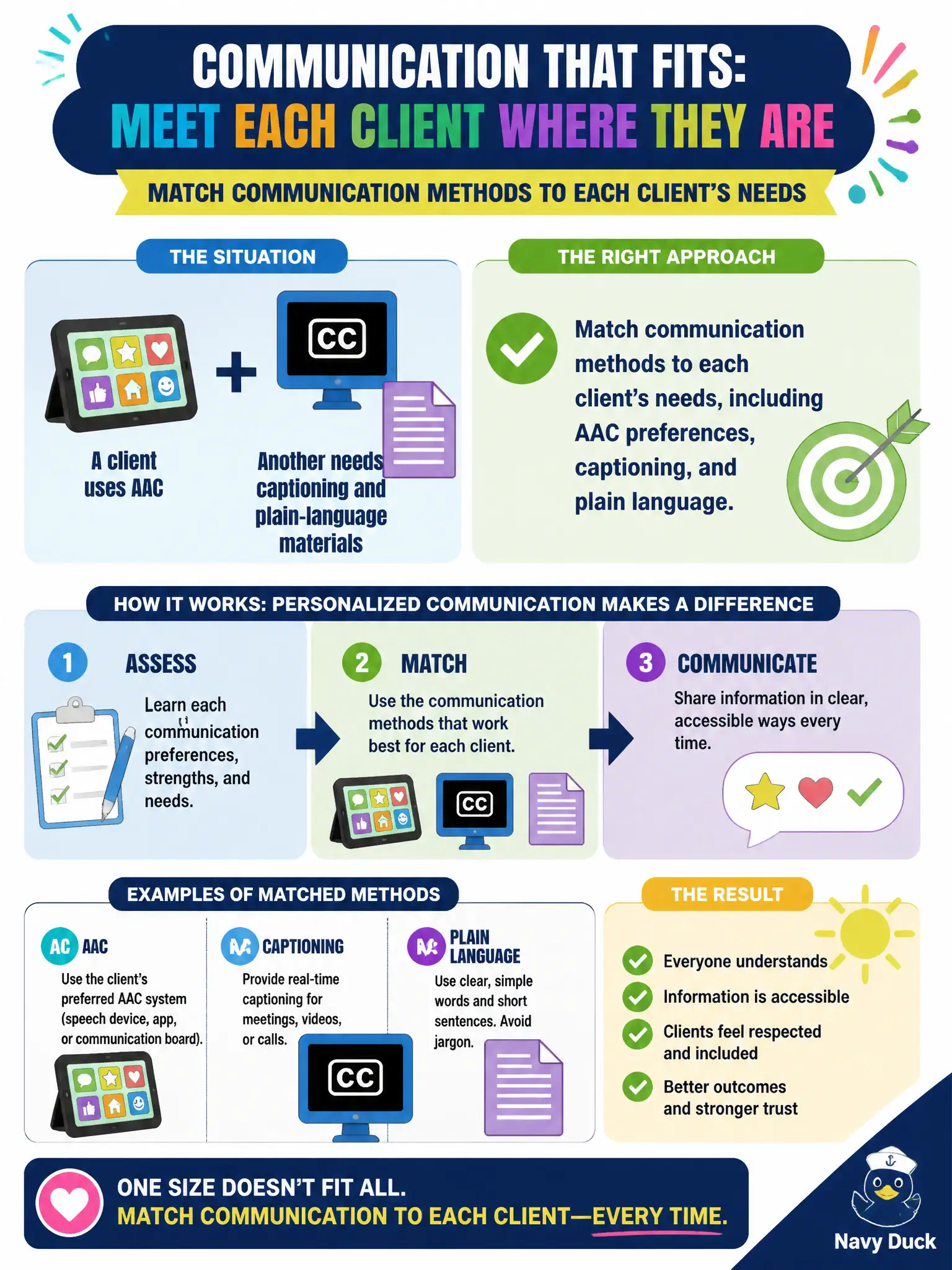
A client uses AAC and another needs captioning and plain-language materials. What case-management communication approach fits?
Select an answer to reveal the explanation.
Short Explanation
Communication isn't one megaphone for the whole caseload. Meet people where they are—AAC, captions, plain language—so the message actually lands.
Full Explanation
Case-management communication in public rehabilitation matches methods to each client's needs, including AAC preferences, captioning, and plain-language materials. Accessibility is individualized so municipal clients can understand plans, rights, and vocational information. One caseload may require multiple modalities without forcing a single spoken-English standard. Requiring all clients to use spoken English only for consistency across the caseload prioritizes administrative uniformity over access and excludes AAC users. Providing the same dense brochure to everyone without adaptation ignores literacy, sensory, and language access needs. Deferring accessible communication until after placement decisions are finalized withholds the very information clients need to participate in those decisions. Exam caveat: matching methods still requires documenting preferred modes, confirming comprehension, and following agency language-access and disability accommodation policies rather than improvised one-off shortcuts. Operational check: for each open civic case with communication access needs, record the preferred mode (AAC, captioning, plain language, interpreter), verify materials were adapted accordingly before major decisions, and ask the client to teach-back key plan points.