
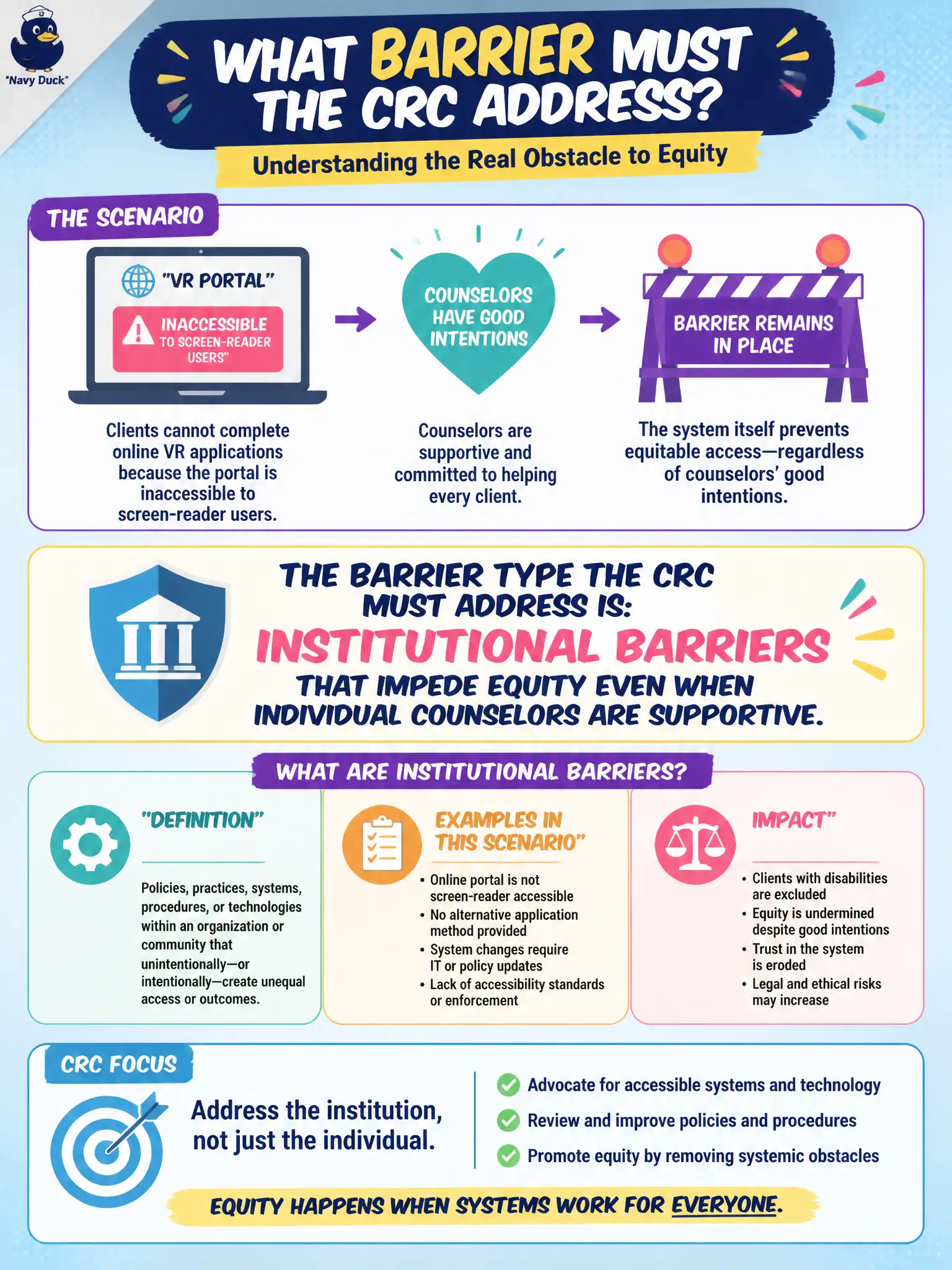
Clients cannot complete online VR applications because the portal is inaccessible to screen-reader users, despite counselors' good intentions. What barrier type must the CRC address?
Select an answer to reveal the explanation.
Short Explanation
If the portal blocks screen readers, kindness at the desk won't fix the door. That's an institutional barrier—push for accessible systems, not just pep talks.
Full Explanation
Institutional barriers impede equity in municipal vocational rehabilitation even when individual counselors are supportive and well-intentioned. An online VR application portal that is inaccessible to screen-reader users blocks civic access at the systems level and cannot be fixed by pep talks about motivation alone. The CRC must address the technology and policy barrier through advocacy, alternate access paths, and collaboration with IT and administrators so applications become usable. Treating the problem as only individual motivation deficits wrongly relocates a systems failure into client character and places technology barriers outside rehab scope when they directly gate services. Framing personality conflicts between clients as the primary access problem misdiagnoses a digital accessibility failure. Focusing exclusively on raising reading grade levels before any systems advocacy delays needed portal remediation and confuses literacy tutoring with screen-reader accessibility. Exam caveat: individual skill-building can still help some applicants, but it does not substitute for fixing inaccessible civic systems that unlawfully or inequitably exclude qualified users. Operational check: test the municipal VR portal with a screen reader or accessibility checklist, document barriers, open an alternate paper or assisted application pathway immediately, and escalate a remediation request with dates and owners.