
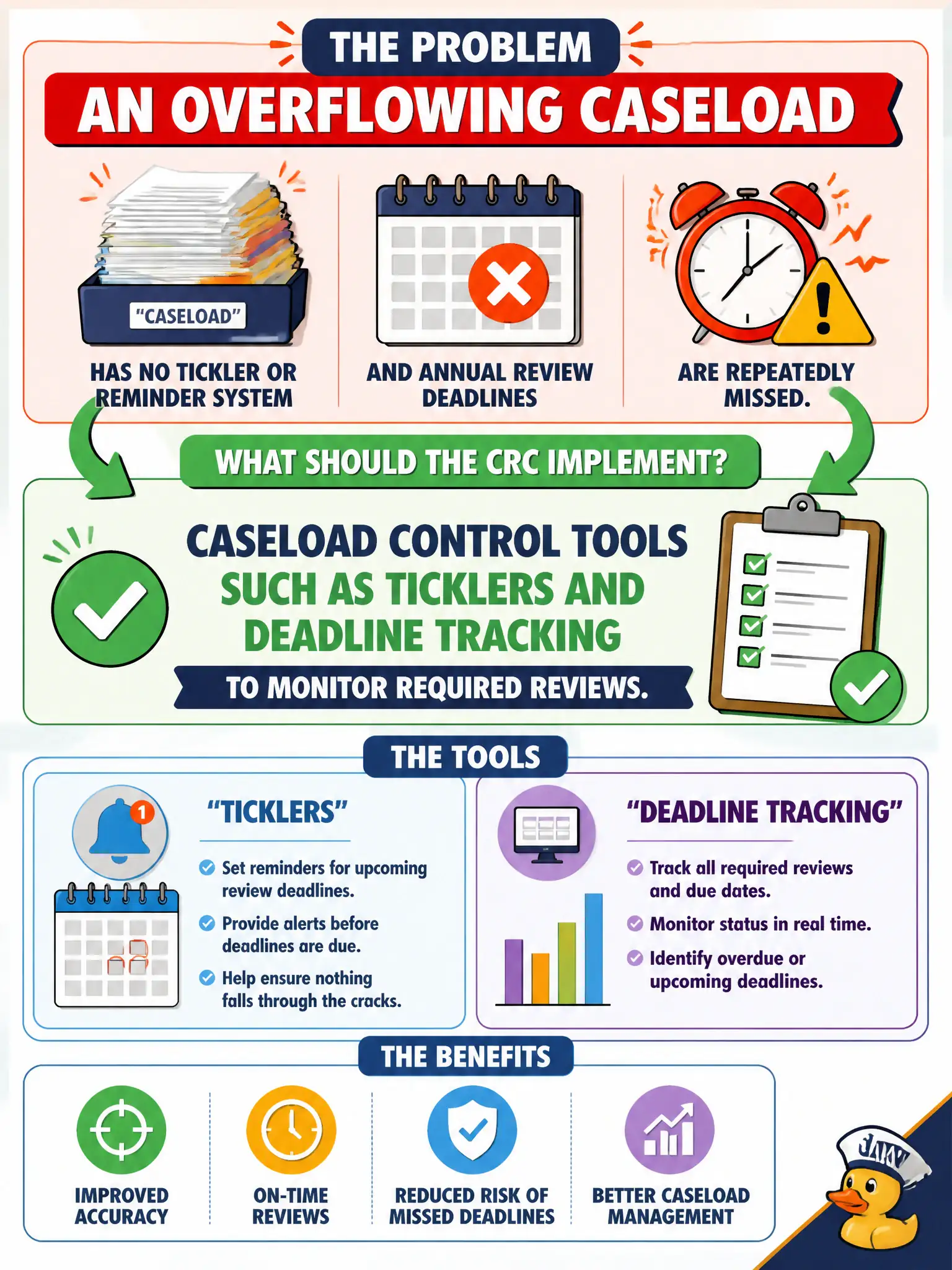
An overflowing caseload has no tickler or reminder system, and annual review deadlines are repeatedly missed. What should the CRC implement?
Select an answer to reveal the explanation.
Short Explanation
No tickler system is like a kitchen with no timer—things burn. Put deadlines on a tracking system so reviews don't vanish under a mountain of cases.
Full Explanation
Caseload control tools such as ticklers, calendars, and deadline tracking help municipal CRCs monitor required annual reviews and other time-sensitive obligations when caseloads overflow. Without a reminder system, review deadlines are repeatedly missed, continuity suffers, and compliance risk rises for public rehabilitation programs. Implementing reliable tracking is an ethical and operational response to volume, not an optional convenience. Declaring missed reviews acceptable whenever the caseload feels busy normalizes neglect of mandated oversight. Relying on paper-only sticky notes with no backup or shared calendar visibility creates single-point failure when notes are lost or the counselor is absent. Eliminating all review dates to reduce administrative burden removes accountability rather than solving capacity. Exam caveat: tools do not replace clinical judgment or staffing advocacy; a tickler prevents missed dates but agencies may still need caseload rebalancing when volume exceeds safe capacity. Operational check: implement a shared electronic or backed-up tickler for annual and interim review dates, test that a covering counselor can see upcoming deadlines, and clear any backlog of missed civic case reviews within a defined remediation window.