
A CRC's caseload includes crisis-level clients and several stable progressors. What caseload management principle applies?
Select an answer to reveal the explanation.
Short Explanation
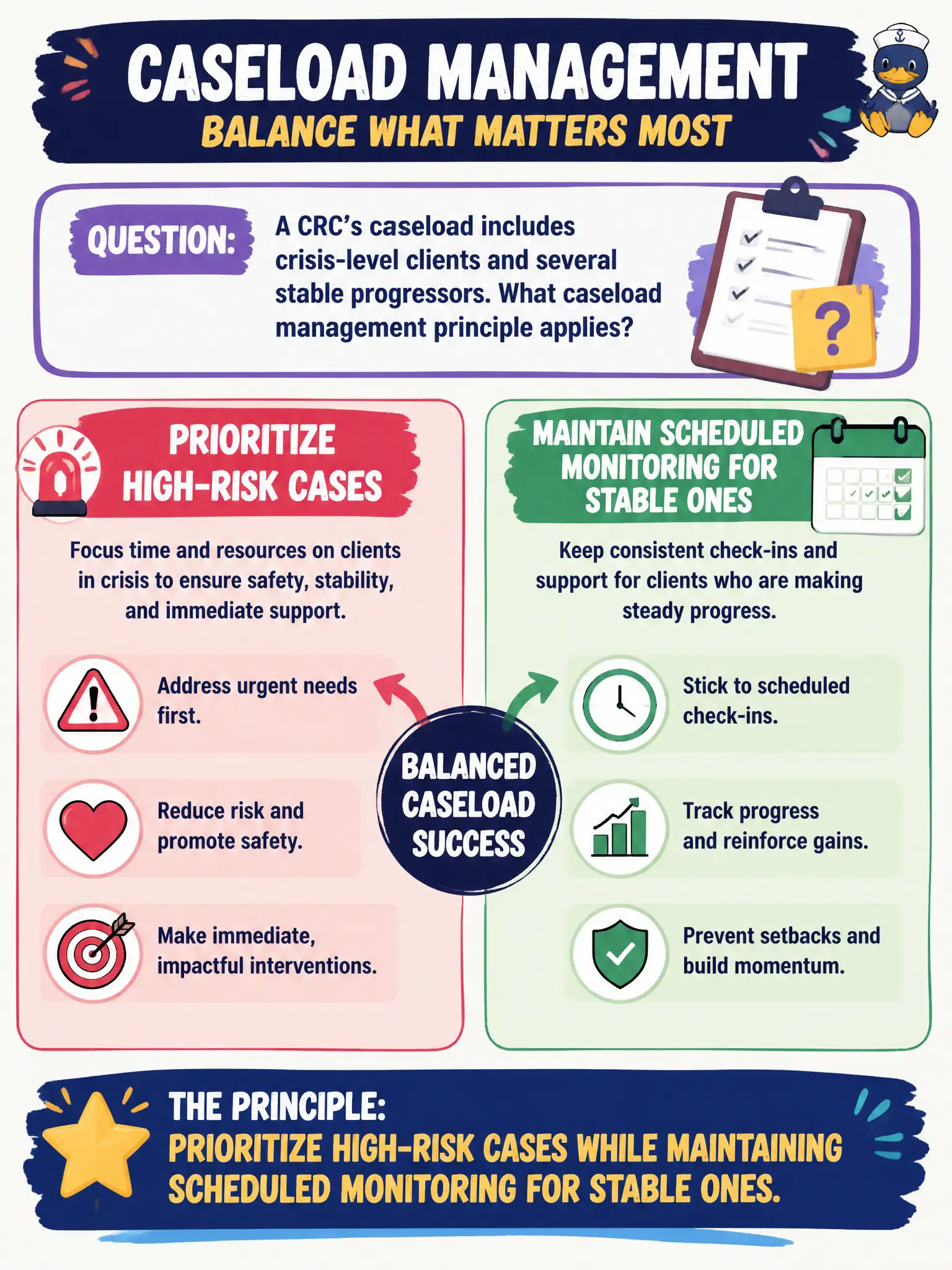
Triage isn't abandonment—high-risk cases get the siren, but stable folks still need a check-in on the calendar. Balance urgency with steady follow-through across the whole caseload.
Full Explanation
Principles of caseload management in municipal rehabilitation agencies include prioritizing intensity by risk and need while preventing neglect of lower-acuity cases. Structured monitoring schedules, triage criteria, and time allocation help counselors respond to crises without losing continuity for clients who are progressing. Effective caseload control sustains both safety and steady rehabilitation momentum across the civic caseload. Ignoring stable cases entirely until they become crises converts preventable drift into emergencies and wastes earlier progress. Giving identical weekly contact time to every case regardless of risk ignores acuity differences and can under-serve high-risk clients while over-scheduling stable ones. Closing all stable cases automatically without review risks premature closure when monitoring or residual supports are still required. Exam caveat: prioritization is not abandonment—high-risk focus must coexist with documented touchpoints for stable progressors, and agency policy may define minimum contact intervals. Operational check: classify open civic cases by risk/need tiers, ensure crisis-level clients have intensified contact plans, and verify that stable cases still have scheduled monitoring dates on a shared tickler rather than informal 'call if needed' limbo.