
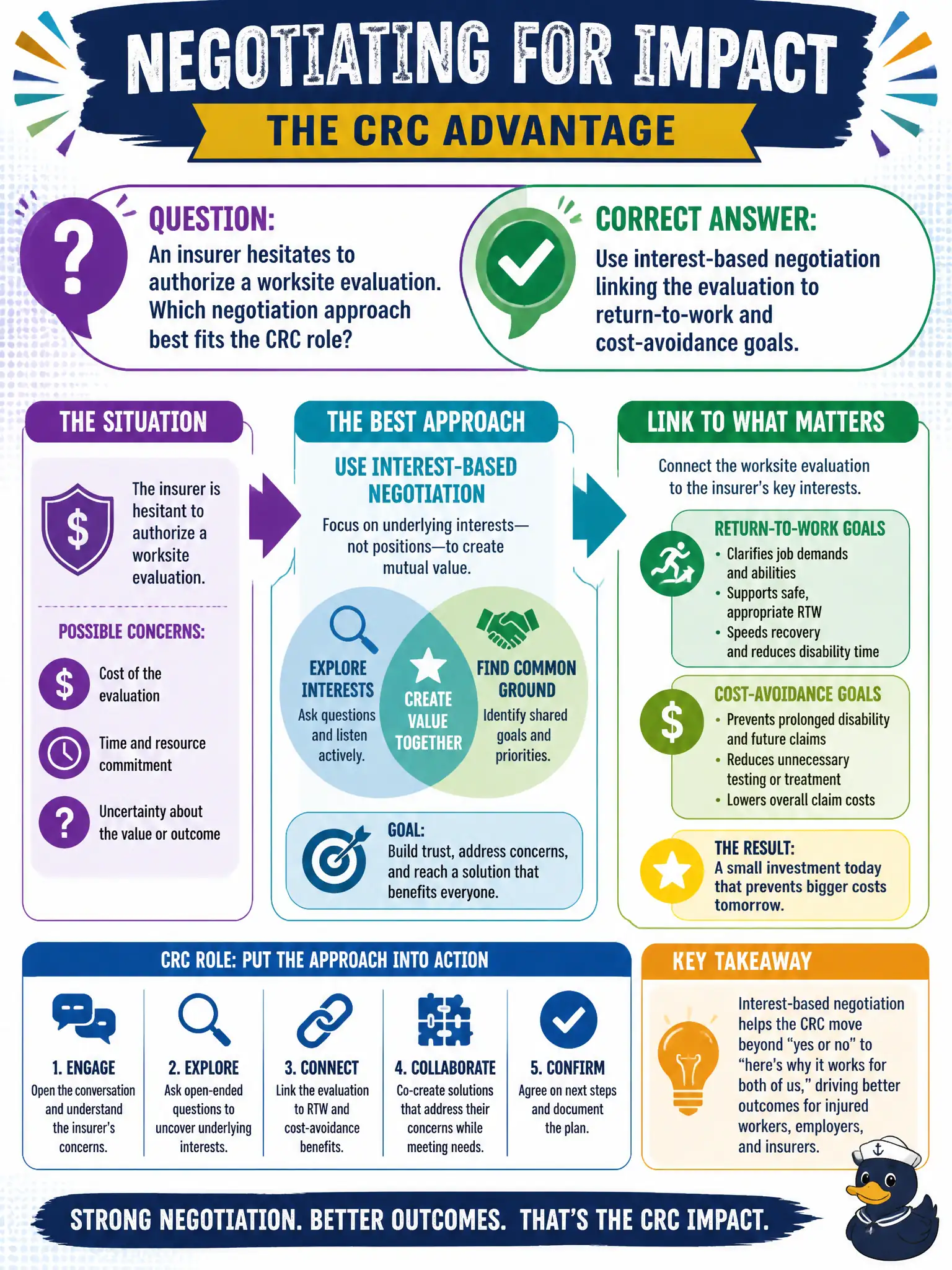
An insurer hesitates to authorize a worksite evaluation. Which negotiation approach best fits the CRC role?
Select an answer to reveal the explanation.
Short Explanation
Insurers listen when you speak their language—safer return to work and fewer repeat claims. Interest-based negotiation ties the worksite eval to shared goals instead of a shouting match.
Full Explanation
Negotiation for service authorization is a routine case-management function in insurance-funded and municipal return-to-work rehabilitation. Interest-based strategies connect a requested worksite evaluation to shared outcomes such as accurate job match, safer return to work, and reduced claim duration or disability costs. Ethical advocacy presents evidence and mutual benefit rather than coercion or misrepresentation. Threatening the insurer with immediate litigation before presenting clinical rationale burns collaborative capital and skips the substantive case for the evaluation. Accepting denial silently and stopping advocacy abandons the CRC's duty to pursue needed services when justification exists. Falsifying urgency codes to force automatic approval is unethical fraud risk and destroys trust with payers who fund civic rehabilitation cases. Exam caveat: interest-based negotiation does not guarantee approval; denials may still occur, and counselors must follow appeal pathways without fabricating clinical urgency. Operational check: before or after an authorization hesitation, prepare a brief rationale linking the worksite evaluation to specific return-to-work risks and cost-avoidance goals, document the negotiation attempt, and note the payer response and next appeal step if denied.