
A client and a training vendor disagree about attendance expectations and threaten to end services. What CRC skill is most needed?
Select an answer to reveal the explanation.
Short Explanation
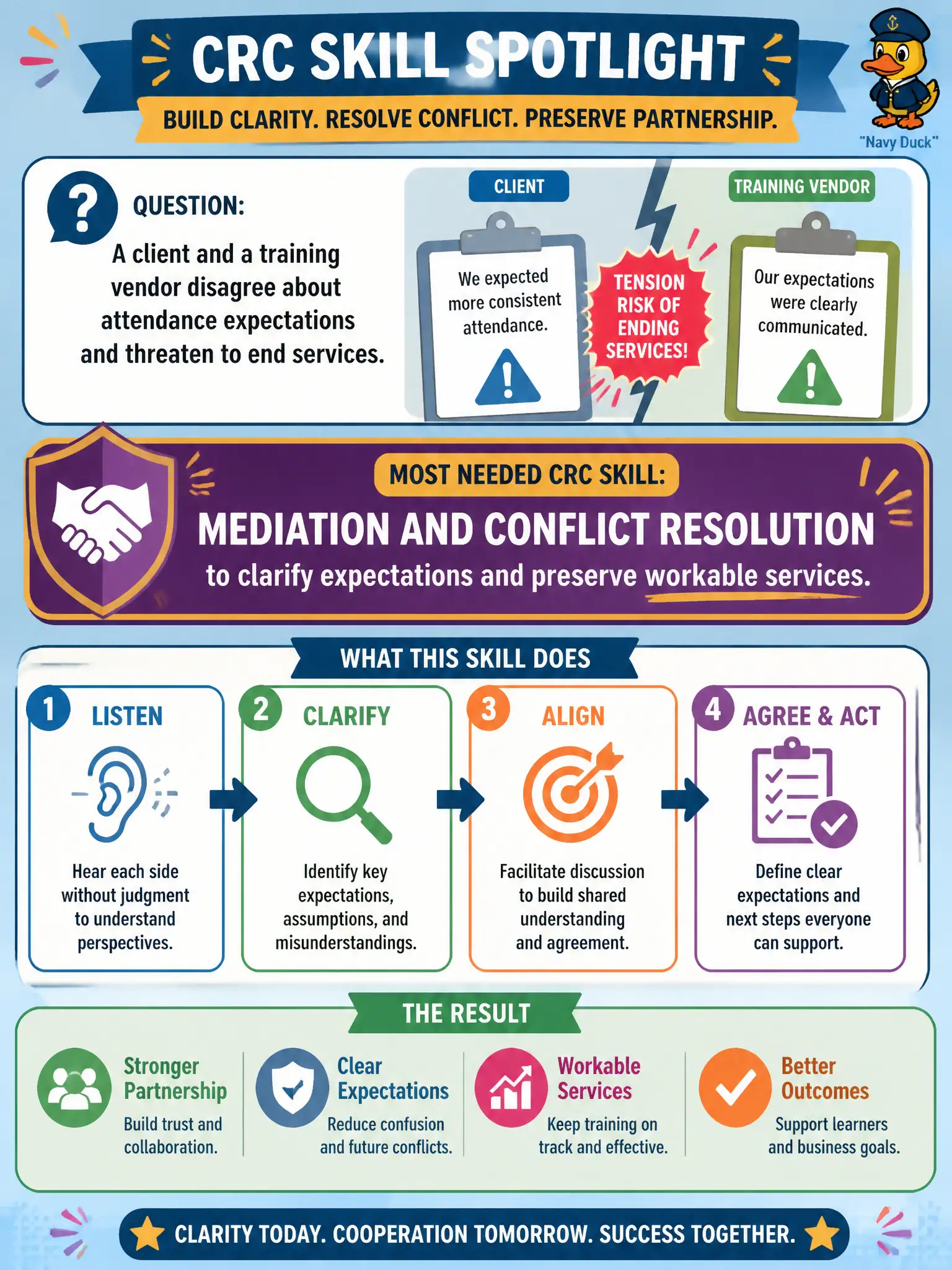
When client and vendor dig trenches over attendance, the CRC plays mediator—not judge or bystander. Get both sides talking, clear up the rules, and try to keep the training on track.
Full Explanation
Negotiation, mediation, and conflict resolution are case-management competencies when friction arises among municipal clients and service partners. When a client and a training vendor disagree about attendance expectations and threaten to end services, the CRC facilitates communication, clarifies expectations, and seeks workable agreements within ethical and contractual boundaries. Effective mediation can preserve needed civic training while respecting client rights and vendor requirements. Unilateral cancellation of the vendor without hearing either side escalates conflict and may discard a salvageable resource. Instructing the client to accept any vendor rule without discussion abandons advocacy and informed problem-solving. Referring the dispute only to criminal court as the first step is disproportionate for an attendance-expectation conflict and bypasses rehabilitation mediation skills. Exam caveat: mediation stays within professional scope—criminal, contractual litigation, or formal grievance processes may still be appropriate later, but they are not the default first move for clarifying training attendance expectations. Operational check: convene a structured three-party clarification (client, vendor, CRC), document agreed attendance rules and supports in writing, and schedule a short follow-up to verify the civic training placement remains viable.