
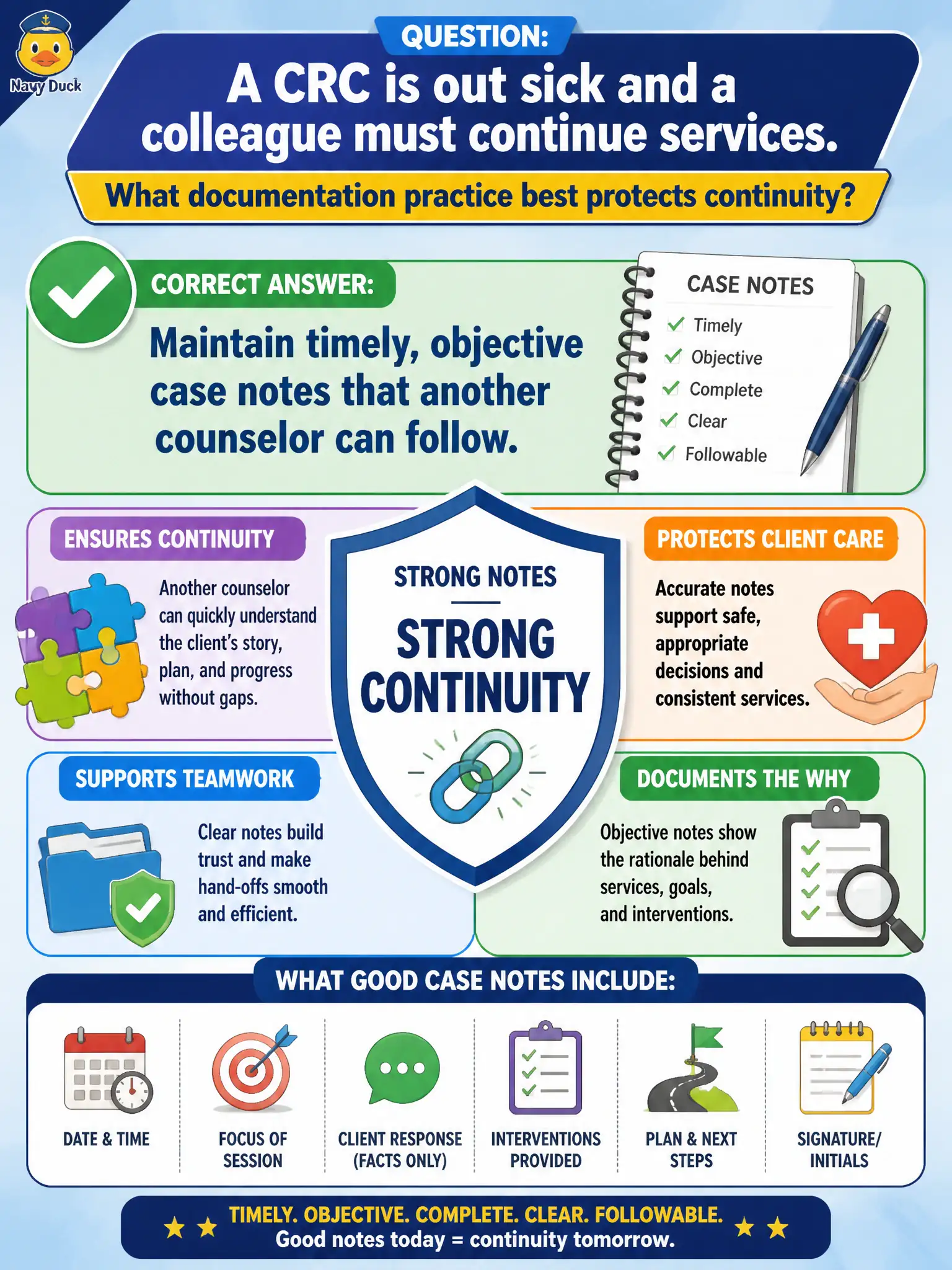
A CRC is out sick and a colleague must continue services. What documentation practice best protects continuity?
Select an answer to reveal the explanation.
Short Explanation
When you're out sick, the chart has to speak for you. Clear, timely notes are the handoff baton—vague scribbles leave the next counselor guessing and the client stranded.
Full Explanation
Case recording and documentation support continuity of care, accountability, and ethical practice in municipal rehabilitation agencies. Timely, objective notes allow a covering counselor to understand status, plans, and risks without relying on informal memory when the primary CRC is out sick. Quality documentation is a core case-management function that protects clients during staff absences, not optional busywork. Relying on memory-only updates shared verbally at staff meetings creates fragile handoffs that vanish under workload or turnover. Keeping notes intentionally vague to protect the primary counselor's style prioritizes personal voice over continuity and can hide clinically important information. Delaying all recording until monthly audits request summaries leaves gaps exactly when an unexpected coverage need arises. Exam caveat: notes must still respect confidentiality, minimum-necessary detail, and agency standards—objectivity and timeliness do not require dumping irrelevant personal data into the civic chart. Operational check: audit a sample of open cases for notes dated within the agency's required timeframe, ask a peer whether they could continue services from the chart alone, and remediate any memory-only or audit-delayed recording patterns.