
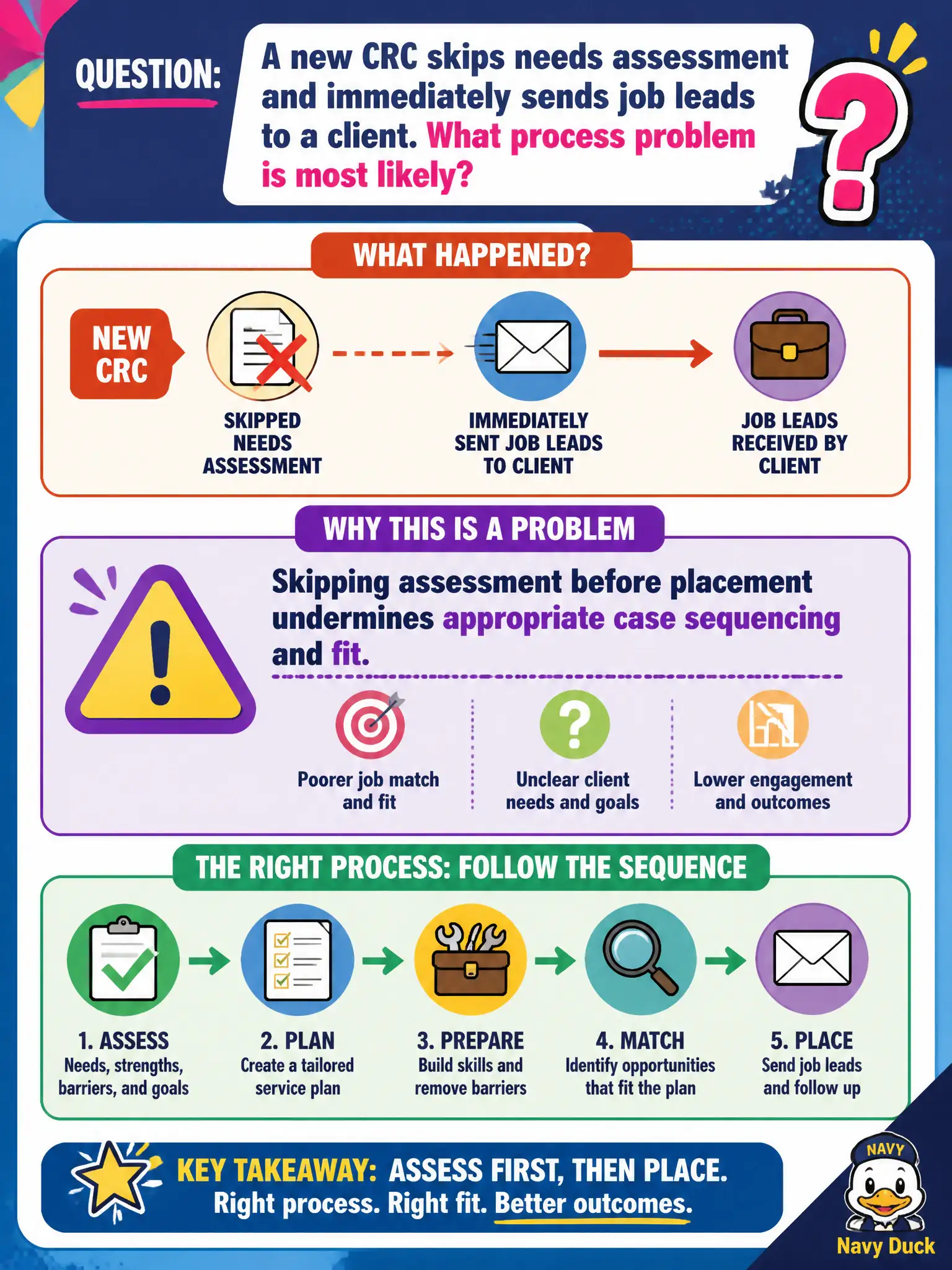
A new CRC skips needs assessment and immediately sends job leads to a client. What process problem is most likely?
Select an answer to reveal the explanation.
Short Explanation
Throwing job ads at someone before you know their needs is like prescribing shoes without measuring the foot. Assess first, then place—otherwise the case usually trips.
Full Explanation
Sound case management sequences assessment and planning before placement activities so municipal services match functional needs, goals, and barriers. Jumping to job leads without adequate needs assessment increases mismatched placements, wasted civic employer goodwill, and case failure. Process order protects individualized planning and efficient use of community and employer resources. Claiming that faster placement always improves outcomes when assessment is delayed confuses speed with fit and ignores how poor matching drives early job loss. Treating job leads as a replacement for individualized rehabilitation planning reduces counseling to vacancy surfing. Calling needs assessment optional once any employer shows interest lets labor-market opportunity override clinical and functional grounding required for ethical civic practice. Exam caveat: rapid placement models still require enough assessment to ensure safety, informed choice, and reasonable job match; the exam targets skipping assessment entirely, not every time-limited exploratory contact. Operational check: before distributing civic job leads, confirm that assessment findings and an individualized plan (or interim plan) are documented, list the functional and environmental factors guiding the match, and pause placement outreach if those elements are missing.