
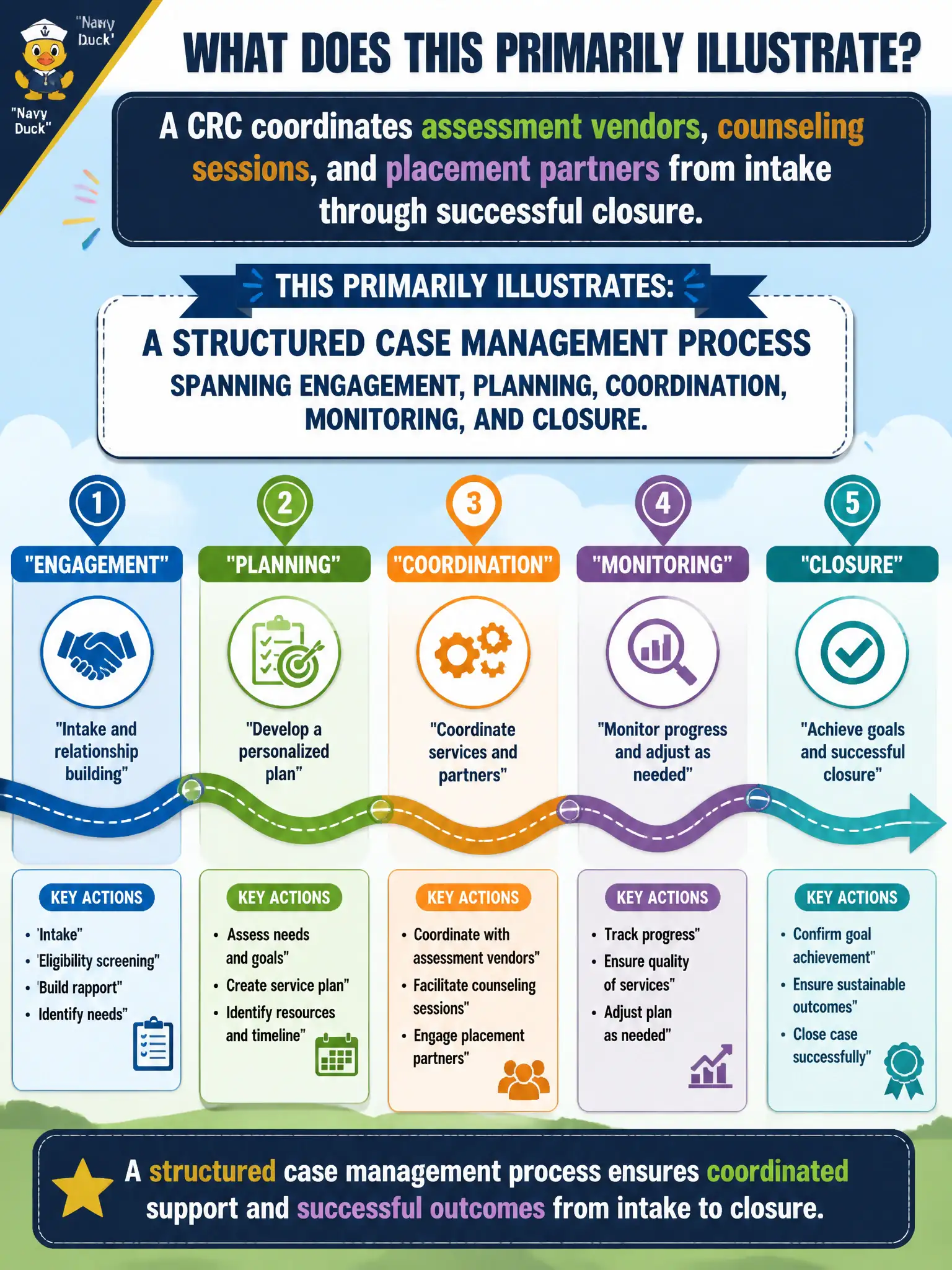
A CRC coordinates assessment vendors, counseling sessions, and placement partners from intake through successful closure. What does this primarily illustrate?
Select an answer to reveal the explanation.
Short Explanation
Think of case management as the conductor's score—intake, plan, vendors, check-ins, and closing the case all stay in time. You're not just handing out phone numbers; you're running the whole movement.
Full Explanation
The rehabilitation case management process organizes municipal and community services from engagement and assessment through planning, service coordination, monitoring, and closure. Coordinating assessment vendors, counseling sessions, and placement partners within that framework ensures continuity and accountability across the civic rehab pathway. This process orientation distinguishes comprehensive case management from isolated referrals or employer-only hiring logistics. A medical diagnosis workflow that replaces rehabilitation case management narrows the case to clinical labeling and omits vocational planning, community coordination, and outcome monitoring. A one-time referral model that ends counselor responsibility after the first vendor call abandons monitoring and adjustment functions that define case management. An HR hiring process managed solely by the employer without counselor coordination may fill a vacancy but does not illustrate CRC-led engagement-through-closure rehabilitation case management. Exam caveat: not every contact requires identical intensity at every phase, yet the CRC exam still expects recognition of the full process arc rather than equating case management with diagnosis, a single referral, or pure employer HR. Operational check: for an open civic case, map current activity to process phases (engagement, planning, coordination, monitoring, closure), identify any skipped phase, and document the next monitoring or closure milestone with a date.