
For most clients with significant disabilities, which employment-model philosophy do evidence-based practices favor?
Select an answer to reveal the explanation.
Short Explanation
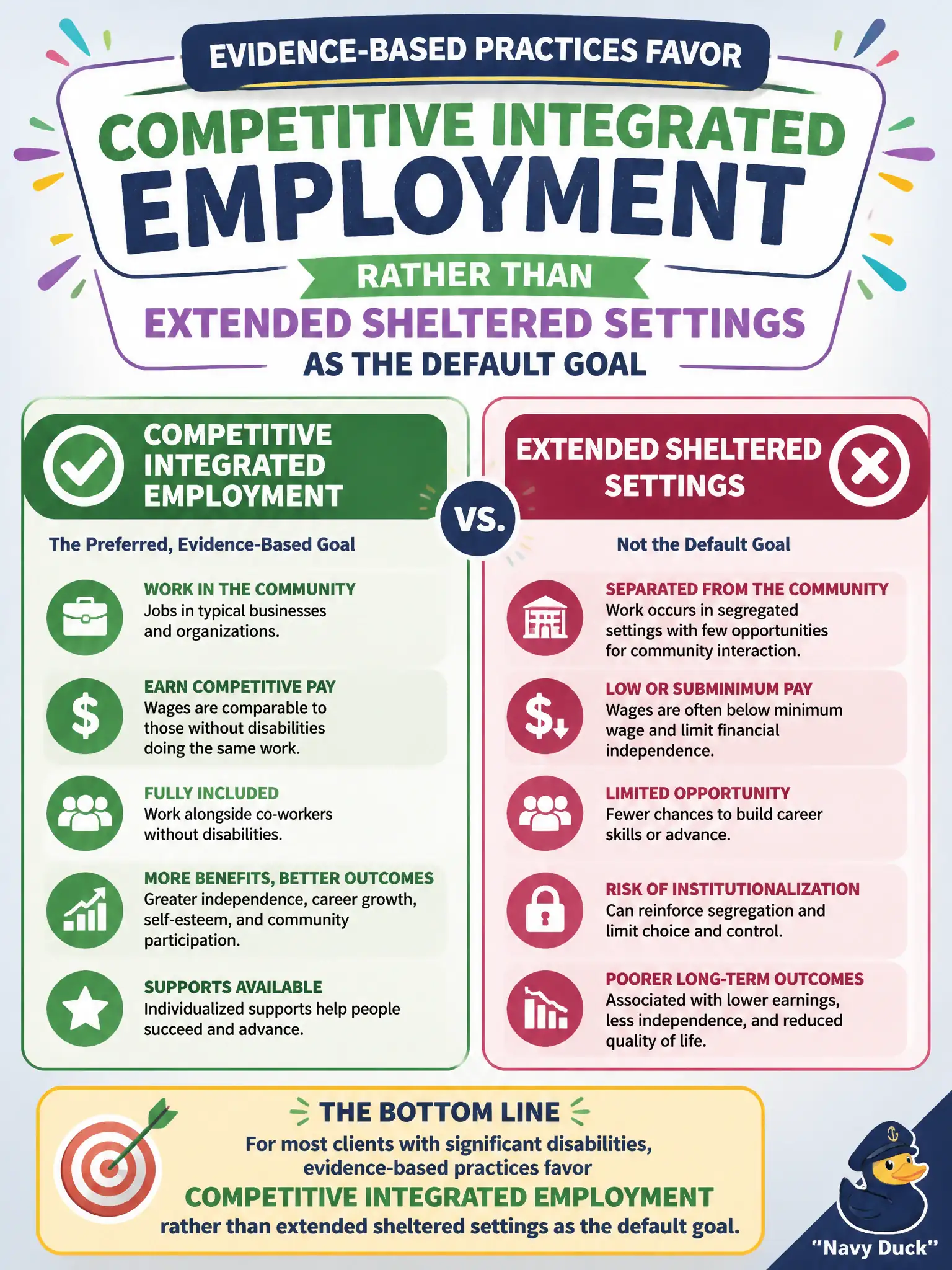
The modern playbook aims for real jobs next to real coworkers for real pay—not endless workshop holding patterns. CIE is the north star for most people with significant disabilities. Sheltered-only defaults belong in the history bin, not the plan.
Full Explanation
Evidence-based employment practice for most clients with significant disabilities favors competitive integrated employment rather than extended sheltered settings as the default goal. Integrated jobs with real wages and coworkers without disabilities align with contemporary rehabilitation philosophy, Olmstead-informed community inclusion, and public VR outcomes expectations. Lifelong sheltered workshops as the preferred outcome for nearly all clients fails because sheltered placement is not the default end goal when competitive integrated work is feasible with supports. Counting unpaid chore work at home as integrated competitive employment fails because household chores lack competitive wages, employer supervision in the labor market, and integrated coworkers. Segregated enclaves with no path to community wages or coworkers without disabilities fail as a preferred philosophy because they maintain separation rather than inclusion. Exam caveat: some individuals may choose or temporarily use more supported or facility-based services based on informed choice and support intensity, but the guiding philosophy still points toward competitive integrated employment whenever appropriate. Operational check: review the vocational objective—if it defaults to indefinite sheltered work without a documented exploration of integrated options and supports, revise the plan toward competitive integrated goals with defined support strategies.