
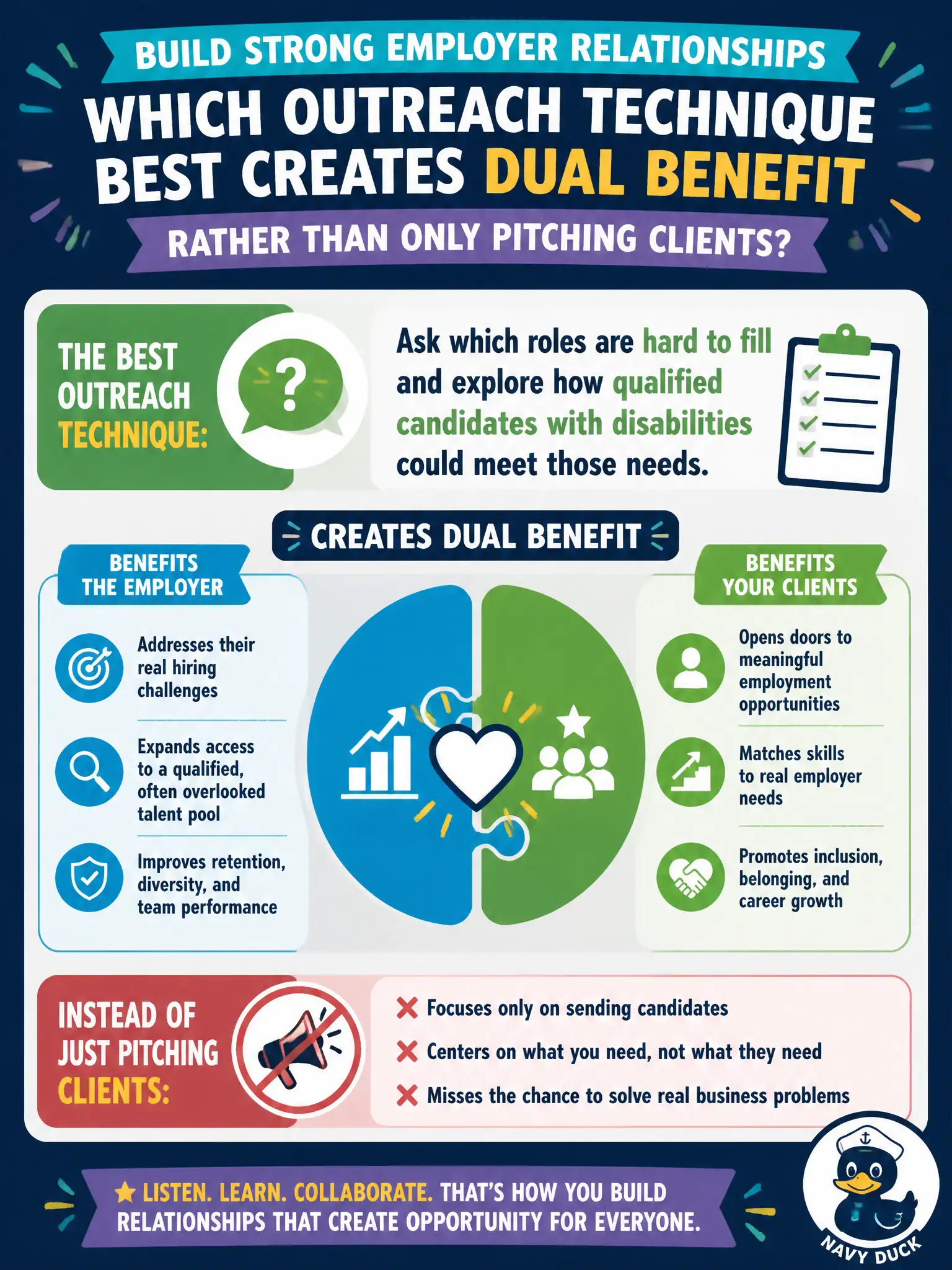
When developing an employer relationship, which outreach technique best creates dual benefit rather than only pitching clients?
Select an answer to reveal the explanation.
Short Explanation
Employers lean in when you solve their headache, not when you hand them a brochure. Asking about hard-to-fill jobs turns placement into a business conversation. Dual benefit beats charity pitch every time.
Full Explanation
Employer outreach that creates dual benefit asks which roles are hard to fill and explores how qualified candidates with disabilities could meet those staffing needs. Value-based engagement treats the employer as a customer with business problems—turnover, overtime cost, skill shortages—not merely a charity target for civic goodwill. A one-way charity pitch with no interest in the employer’s staffing problems fails because pity framing rarely sustains hiring partnerships once the awareness event ends. Refusing to discuss open jobs and only requesting unpaid tours forever fails because tours without hiring dialogue rarely produce placements or clarify essential functions. Threatening ADA lawsuits in the first meeting before learning business needs fails because adversarial openings destroy trust and misrepresent the counselor’s dual-customer role in rehabilitation placement. Exam caveat: counselors may later support clients’ rights enforcement through proper channels when discrimination occurs, but initial relationship-building centers on mutual value, accurate disability employment information, and collaborative problem-solving—not threats. Operational check: in the first substantive employer meeting, elicit at least one hard-to-fill role or turnover pain point and link a concrete candidate pipeline capability to that need before asking for a hire.