
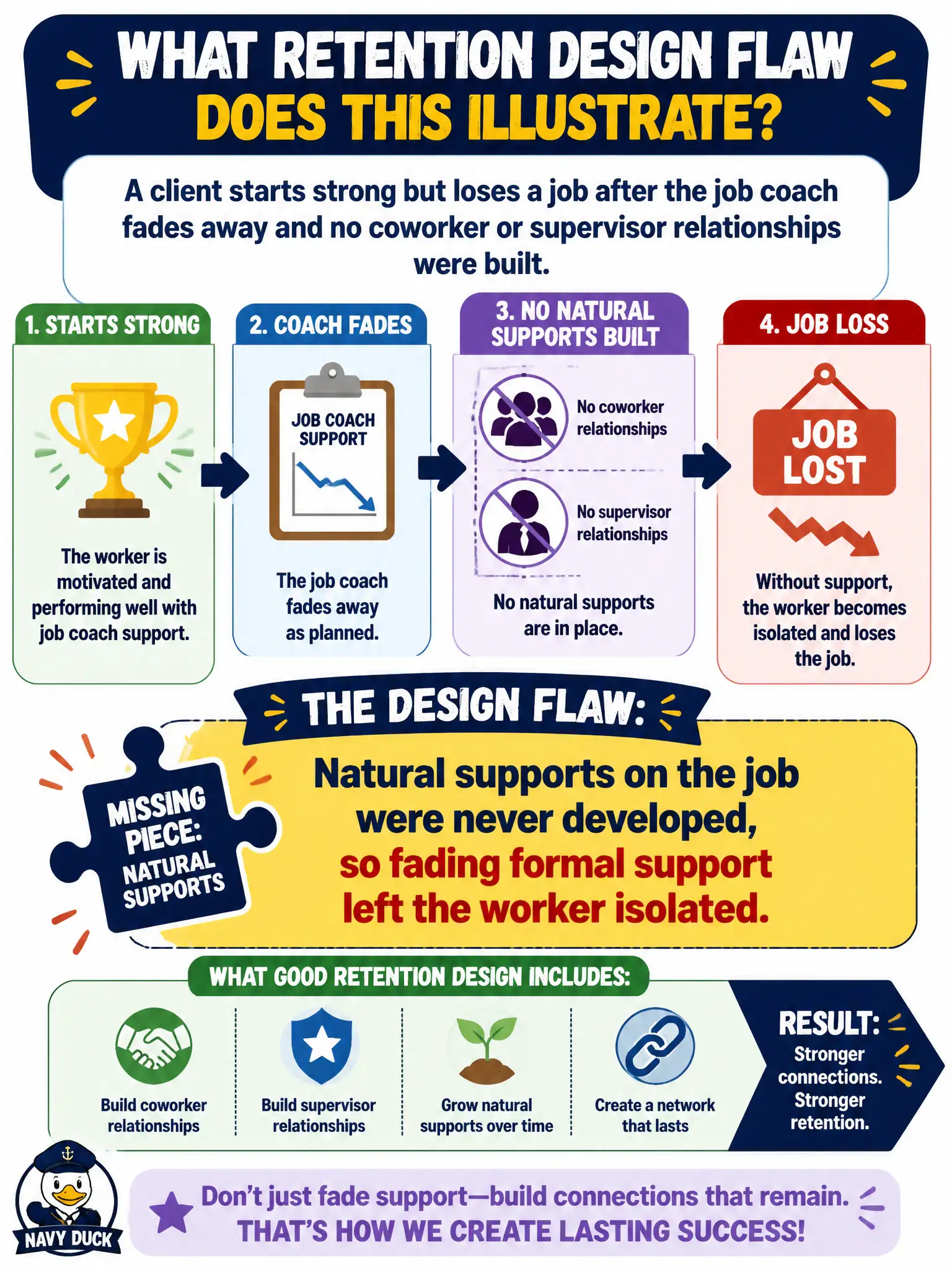
A client starts strong but loses a job after the job coach fades away and no coworker or supervisor relationships were built. What retention design flaw does this illustrate?
Select an answer to reveal the explanation.
Short Explanation
If the only lifeline is the job coach, pulling that rope leaves the worker hanging. Retention means weaving in coworkers and supervisors as everyday helpers. Natural supports are the safety net after formal help steps back.
Full Explanation
Retention design must develop natural supports—coworker and supervisor relationships—so the worker is not isolated when formal job coaching fades. When a client starts strong but loses the job after the coach withdraws and no workplace relationships were built, the flaw is missing natural-support development, not merely wage level. Assuming a wage slightly above minimum guarantees retention without supports fails because pay alone does not create feedback loops, task help, or social inclusion. Believing written policies alone replace workplace relationships fails because policies do not provide day-to-day cues, mentoring, or belonging. Insisting job coaches should never fade and that permanent one-to-one coaching is always required fails because sustainable inclusion depends on transferring support into the natural environment when possible. Exam caveat: some workers need longer or intermittent formal support; fading is a plan, not abandonment, and intensity should follow need. Operational check: before reducing coaching hours, identify named natural supporters, practiced help-seeking scripts, and a check-in schedule with supervisor; do not fade until those elements are demonstrated on the job.