
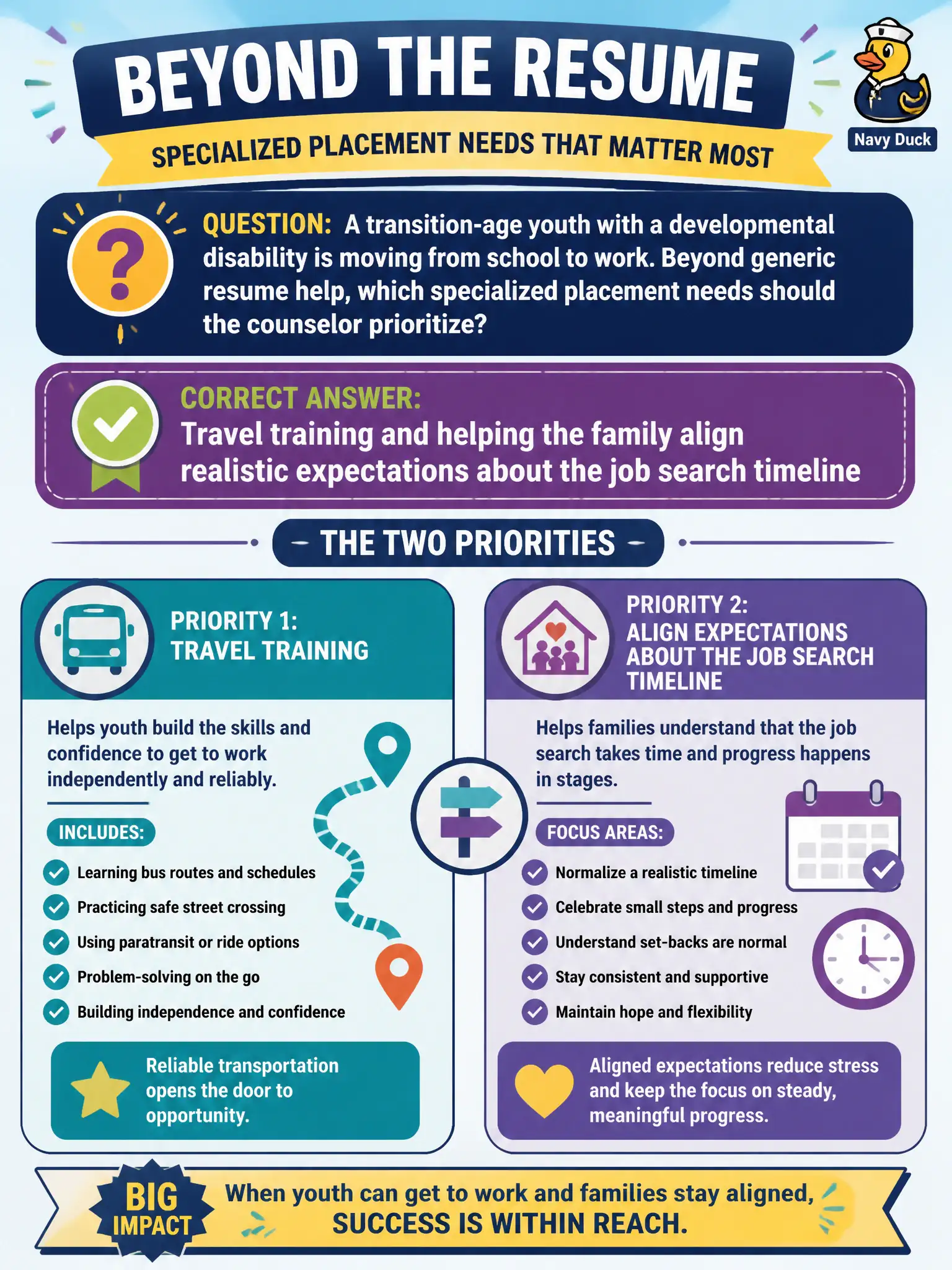
A transition-age youth with a developmental disability is moving from school to work. Beyond generic resume help, which specialized placement needs should the counselor prioritize?
Select an answer to reveal the explanation.
Short Explanation
School-to-work is not just paperwork—getting there on the bus and keeping family hopes in the real world matter. Travel training and expectation coaching are the specialized pieces that make first jobs stick. Skip those and the resume alone rarely saves the day.
Full Explanation
Transition-age youth with developmental disabilities moving from school to work need specialized placement supports beyond generic résumé help. Travel training and helping families align realistic expectations about job-search timelines are high-yield priorities because community mobility and timeline myths often determine whether interviews happen at all. Focusing only on SAT prep and college essay coaching while ignoring community mobility fails when the immediate goal is employment access in the local civic economy. Immediate full-time executive placement without community travel skills fails because the logistics of getting to work are foundational, and executive roles are rarely the realistic first step. Sheltered-only placement with no discussion of family expectations fails because it may prematurely limit integrated options and leave families unprepared for competitive search duration. Exam caveat: postsecondary education can be part of a transition plan, but it should not crowd out mobility, family alignment, and employment exploration when work is the stated goal. Operational check: before intensive search, verify the youth can travel the intended commute with supports as needed, and hold a family meeting that sets a realistic weekly activity and timeline expectation in writing.